
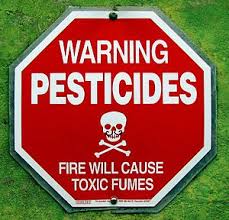
 Cancer is feared by all. It seems to strike randomly, but not always. Certain cancers that occur in both children and adults, such as brain cancer and leukemia, are linked with some commonly used pesticides. Exposures to these pesticides occur many ways - whether from nearby farm use, or in foods or the water we drink, or air (pesticide drift), or residential use (e.g., the weed killer 2,4-D on lawns). Exposure is typically not to just 1 harmful chemical, but to mixtures of pesticides, especially on farms.
Children are especially vulnerable to pesticides. Research shows that there is an increase in some cancers in children in farm areas (e.g., Nebraska and the US midwest) where pesticides are heavily used. A recent study by Dr. Taiba and colleagues found that in Nebraskan counties with heavy farm pesticide use (especially Holt county) children living there had an increase not just in "overall pediatric cancers", but in specific types of cancers. These cancers included brain and other central nervous system tumors, leukemia, and lymphoma.
Keep in mind that in the US millions of pounds of pesticides are used each year, with farm areas having the heaviest use. Dr. Taiba reported that the US is the #1 country in the world in pesticide use. Among the most heavily used in the Nebraskan farms are atrazine, 2,4-D, glyphosate, dicamba, paraquat.
But don't ignore residential use of pesticides. Many of the same pesticides, such as glyphosate and 2,4-D, are commonly used in residential areas, especially for weed and insect control. Feed and Weed, which is used on lawns for weed control, contains 2,4-D. Pesticides have harmful effects on humans, and yet pesticide use is increasing annually.
From Beyond Pesticides: Dire Pediatric Cancer Risk Linked to Pesticide Mixtures, Laws To Protect Children Found To Be Lax
Childhood cancers are on the rise globally; in the U.S. cancer is the second most common cause of death in children between one and 14 years old, and the fourth most common in adolescents. A recent study of Nebraska pesticide use and pediatric cancer incidence by researchers from the University of Nebraska Medical Center and the University of Idaho Department of Fish and Wildlife Sciences found positive associations between pesticides and overall cancer, brain and central nervous system cancers, and leukemia among children (defined as under age 20).
The authors’ emphasis on evaluating mixtures, and their innovative technical methods for doing so, highlight the direction environmental health research and regulation must take. Studying pesticides singly is an inadequate approach, according to the authors, because pesticides are not applied individually anymore, but very often in mixtures of herbicides, insecticides, and fungicides in spray tanks. They write: “By studying individual chemicals in isolation, we will underestimate the cumulative effects of coexposures within the mixture. . . "
It is well documented that farmworker families are heavily exposed to pesticides. Adults are exposed while working, and children are exposed because of pesticide drift and from parental transfer on clothes and tracked-in debris. But children doing actual agricultural labor are getting all of these kinds of exposures and more.
Children’s exposures are more problematic because small size means a higher dose per pound of body weight, with corresponding higher disease risk.
The Taiba study in Nebraska gives a close view of the dangers posed by pesticides and their consequences for children. Nebraska has a higher incidence of pediatric cancer than the U.S. average.
The researchers matched the U.S. Geological Survey’s county-level data for frequently applied pesticides from 1992 to 2014 in Nebraska’s 93 counties with pediatric cancer diagnoses from the state’s cancer registry over the same time period. They located cancer cases by county of residence at the time of diagnosis. Of the 32 pesticides considered, those that contributed most to the mixtures associated with pediatric cancers were dicamba, glyphosate, paraquat, quizalofop, triasulforon, and tefluthrin.
“Our findings revealed that herbicides were the most frequently used pesticides,” the authors write. “[O]ur examination of pediatric cancer cases within Nebraska highlighted that the most common subtypes were brain and other [central nervous system] tumors, leukemia, lymphoma, germ cell tumors, and malignant bone tumors.”
The Nebraska researchers also observe that even pesticides not currently labeled as carcinogens may be increasing the odds of cancer induction. Carcinogenic mechanisms include the generation of free radicals, which can cause single and double-strand DNA breaks, chromosomal duplications, rearrangements, and deletions. The authors point out that paraquat is one such pesticide. They found an association with acute myeloid leukemia and suggest the link may be paraquat’s known ability to cause oxidative stress and damage mitochondrial DNA. Similarly, the Nebraska study found the herbicide quizalofop was one of the mixture constituents contributing most heavily to the associations with overall cancer, central nervous system cancers, and leukemia.