
 There has been discussion over the years regarding mouthwash - what are the harms and benefits? Does using mouthwash regularly disrupt the oral (mouth) microbiome? Chlorhexidine mouthwash is generally considered the best for treating gingivitis and killing bacteria.
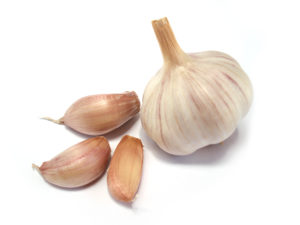
Researchers at the College of Dental Medicine, Univ. of Sharjah in the UAE, recently published a review of studies comparing garlic extract mouthwash vs chlorhexidine mouthwash. They found that garlic mouthwash can be as effective as chlorhexidine mouthwash.
Garlic (Allium sativum) has natural antimicrobial properties. The researchers found that among the studies there were some differences in effectiveness for both types of mouthwash depending on the concentration used and duration of application.
However, one negative they found is that garlic mouthwash can be more uncomfortable to use - it can cause a burning sensation and unpleasant taste.
Excerpts from Science Daily: Garlic mouthwash shows shockingly strong germ-fighting power
Garlic extract has been found to offer antimicrobial effects that are on par with commonly used antiseptics and disinfectants such as chlorhexidine, according to medical researchers at the University of Sharjah.
The study, published in the Journal of Herbal Medicine, reports that garlic-based mouthwash may produce more discomfort than chlorhexidine but appears to provide longer-lasting residual activity.
"Chlorhexidine is widely used as a gold standard mouthwash but is associated with side effects and concerns over antimicrobial resistance," the authors explain. "Garlic (Allium sativum), known for natural antimicrobial properties, has emerged as a potential alternative."
The researchers based their conclusions on a systematic review examining how garlic extract performs against chlorhexidine in clinical settings and whether it can realistically function as an herbal substitute.
The selected literature consisted of randomized controlled trials and clinical studies with varying designs and low-to-moderate risks of bias. Overall, the authors found that higher concentrations of garlic extract mouthwash showed antimicrobial results similar to those of chlorhexidine.
"The effectiveness varied based on mouthwash concentration and duration of application, contributing to differences in outcomes," the review noted. "Some studies favored chlorhexidine for maintaining higher plaque/salivary pH, while others reported garlic extract to be more effective at certain concentrations. However, garlic mouthwash may cause greater discomfort."
Although garlic extract can produce side effects, they are typically milder than those associated with synthetic chemicals. Reported issues include a burning sensation and unpleasant odor, which may influence whether patients are willing to switch from chlorhexidine to garlic-based options.
Even with these drawbacks, the review offers strong support for the clinical antimicrobial activity of garlic extract, reporting "significant reductions in bacterial counts from baseline … suggesting the possible use of garlic extract mouthwash as a viable alternative to chlorhexidine in certain contexts."
Garlic's Long History as a Natural Antimicrobial
Garlic has long been recognized as one of the most potent naturally occurring antibacterial and antifungal crops. Scientific interest has focused particularly on allicin, a compound known for its strong antimicrobial activity. Although classified botanically as a vegetable, garlic is commonly used as both an herb and a spice.
Garlic extracts are widely available in various health products over-the-counter. By comparison, synthetic agents like chlorhexidine usually require a prescription from a dentist or physician.
The review points to numerous studies that demonstrate antimicrobial effects of garlic extracts against a wide range of bacteria, fungi, and viruses. It also notes that garlic extract has been explored in areas such as denture stomatitis, dentinal tubule disinfection, and intracanal medication.
"These studies have contributed to understanding the antimicrobial role of garlic extract in comparison to synthetic agents like chlorhexidine," the authors write. "However, most studies are in vitro, vary in methods, and lack clinical standardization, highlighting the need for further research to confirm garlic's efficacy in dental practice. This uncertainty presents a significant gap in the literature on evidence-based antimicrobial therapies."