
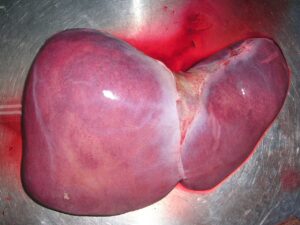
Not all cleaning products or chemicals used in dry cleaning are safe to use. A recent study found that the chemical tetrachloroethylene (PERC or PCE) can cause serious liver harm in the form of liver fibrosis, and that the effects are dose dependent for liver fibrosis. The more a person is exposed, the greater the risk of developing liver fibrosis.
PERC is a chemical that used to be found in household products, such as spot removers, furniture stripper, adhesive glues, suede protectors, spray-on water repellents, but is being phased out. It is also commonly used in dry cleaning of clothing, and it has 10 years to phase out. It will continue to be used in a number of industrial settings, for example, as a degreaser. Tetrachloroethylene (PERC) is a volatile organic compound (VOC).
Liver fibrosis is the buildup of tough scar tissue in the liver resulting from chronic inflammation and persistent damage. Unfortunately, over time this scarring can progress to liver failure or liver cancer.
Bottom line: Avoid products with PERC. The danger is in inhaling the chemical's fumes or getting it on your skin (contact with the chemical). Nowadays PERC is mainly used in industrial settings (resulting in occupational exposure). It is being phased out in consumer products and dry cleaning because it is a carcinogen (cancer causing).
From Science Daily: Hidden household toxin triples liver disease risk, study finds
Liver disease most often develops due to one of three major causes: excessive alcohol use, the buildup of fat in the liver associated with obesity, diabetes, and high cholesterol, or viral infections such as hepatitis B and C.
Researchers from Keck Medicine of USC have identified another potential cause of liver damage. A new study published in Liver International links tetrachloroethylene (PCE), a chemical widely used in dry cleaning and found in household products like adhesive glues, spot removers, and stainless steel polish, to serious liver harm.
According to the findings, exposure to PCE can triple the risk of significant liver fibrosis, a condition where scar tissue builds up in the liver. Over time, this scarring can progress to liver cancer, liver failure, or even death. The study also revealed a clear dose-response relationship: the greater the exposure to PCE, the higher the likelihood of developing liver fibrosis.
"This study, the first to examine the association between PCE levels in humans and significant liver fibrosis, underscores the underreported role environmental factors may play in liver health," said Brian P. Lee, MD, MAS, a hepatologist and liver transplant specialist with Keck Medicine and lead author of the study.
PCE is a man-made, colorless liquid widely used to remove grease in industrial and household settings, including dry cleaning. People are often exposed to the chemical through the air when it slowly evaporates from recently dry-cleaned clothes. It can also enter drinking water when spills or improper disposal contaminate soil and groundwater.
The International Agency for Research on Cancer classifies PCE as a probable carcinogen. Previous studies have connected it to bladder cancer, multiple myeloma, and non-Hodgkin lymphoma. Dr. Lee noted that other research has also linked PCE exposure to liver cancer.
Because of these health concerns, the U.S. Environmental Protection Agency has initiated a 10-year phaseout of PCE in dry cleaning and placed restrictions on its use in other industries. Still, the chemical persists in certain products and remains unregulated in some countries.
Lee and his colleagues analyzed data from the National Health and Nutrition Examination Survey (NHANES), a large, nationally representative study of U.S. adults. They examined blood samples from participants aged 20 and older collected between 2017 and 2020 and found that about 7% of people had detectable levels of PCE.
Those with measurable PCE exposure were three times more likely to have significant liver fibrosis compared to those without exposure, regardless of age, sex, race, or education level.
Interestingly, higher-income individuals appeared more likely to have detectable PCE in their blood, possibly due to greater use of dry-cleaning services. However, workers in dry-cleaning facilities may face the highest risk because of long-term, direct contact with the chemical.
For every one nanogram per milliliter increase in PCE in the bloodstream (a nanogram equals one-billionth of a gram), the likelihood of significant liver fibrosis rose fivefold.
A Hidden Explanation for Unexplained Liver Disease
The researchers found that traditional risk factors like alcohol consumption and fat accumulation in the liver did not appear to influence fibrosis when PCE was present. "Patients will ask, how can I have liver disease if I don't drink and I don't have any of the health conditions typically associated with liver disease, and the answer may be PCE exposure," said Lee.
Dr. Lee emphasized that PCE may be just one of several environmental toxins contributing to liver disease. "No doubt there are other toxins in our environment besides PCE that are dangerous to the liver," he said.