
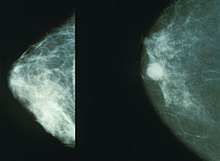
Credit: National Cancer Institute
Many studies link pesticide exposure to the development of various cancers, including breast cancer. We tend to think of pesticide exposure as occurring when there is direct contact with the pesticide - for example during application, or when walking on lawns or areas with freshly applied pesticides. Yet... there are other routes that have been neglected in studies, such as washing pesticide contaminated clothes.
At a recent webinar (42nd National Forum Series - The Pesticide Threat to Environmental Health), Carolina Panis, PhD, (Ass. Professor of Medicine at Western Paraná State University in Brazil, and Visiting Researcher at Harvard University and the University of Arizona) spoke about pesticide exposure in women and breast cancer. She discussed her recent research showing that women occupationally exposed to pesticides (e.g., as farm workers) and diagnosed with breast cancer seem to have more aggressive disease, also at younger ages, than unexposed women. An increased mortality rate went along with this.
She also discussed an interesting finding regarding women living in farm areas (with heavy pesticide use) in Brazil. Not only is occupational exposure to pesticides linked to breast cancer, but additionally - women having chronic (daily) exposure are also exposed to pesticide residues when washing clothing used by someone who had applied pesticides. Laundry exposure! Women absorb pesticide residues (e.g., glyphosate, atrazine) from the pesticide contaminated clothing, which increases the amount of pesticides in their bodies and this is also linked to breast cancer.
 The women she looked at lived in farming areas, and additionally many had their residences frequently sprayed for insects. Ultimately, women exposed to high levels of pesticides tend to develop metastatic untreatable breast cancer, and at a younger age (unlike other areas where breast cancer is highly treatable). She pointed out that pesticides also have a negative effect on the immune system.
From the article by C. Pannis and B. Lemos: Pesticide Exposure and Increased Breast Cancer Risk In Women Population Studies
Women in rural regions are at risk for exposure to pesticides by equipment decontamination, unprotected clothes washing, pesticide drift, chemical spraying in the field, and other routes of exposure in the household. Pesticides can act on mammary gland cells in direct and indirect ways, augmenting the risk for breast cancer development. ...continue reading "Pesticides and Breast Cancer"