
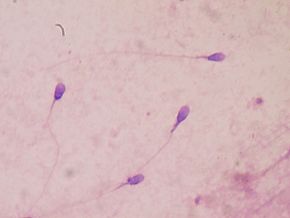
When looking at the research, it is striking that so many chemicals that we are exposed to daily are harming us. Health harms include an increase in certain cancers (e.g., brain cancer and leukemia from certain pesticides) and reproductive effects. This can be seen clearly when research shows that sperm counts are declining globally 2.64% per year since 2000.
A recent report from HEAL (Health and Environmental Alliance in the European Union) found that along with this, infertility rates, testicular cancer, and prostate cancer are increasing. This is alarming!
HEAL’s report (author Dr. Cannarella) details alarming indications of catastrophe in male reproductive health: prostate cancer, testicular cancer, crashing sperm counts, infertility, and numerous developmental problems including cryptorchidism, urogenital malformations, and hypospadias. The report highlights pesticides, microplastics, phthalates, bisphenols, PFAS and heavy metals as the likely environmental sources of the crisis. There is evidence that all of these endocrine disrupting chemicals (EDCs) adversely affect male reproductive function.
Excerpts from the latest research on the drop in sperm counts globally and declines in male reproductive health, the science report from HEAL: Chemical pollution and men’s health: A hidden crisis in Europe
A 2023 meta-analysis by Levine et al. showed that global sperm counts declined by 52% between 1973 and 2018. European countries showed similar or even steeper declines, especially in Western and Southern Europe.
The epidemiological evidence across Europe reveals consistent
and troubling trends: prostate and testicular cancers are
increasing, sperm quality is falling, and hormonal disorders
are becoming more prevalent. Many of these trends correlate
with known or suspected chemical exposures, reinforcing
the need for targeted public health measures and policy
reforms. As highlighted in EBCP, reducing pollution is also
a pathway to reducing health inequalities, since vulnerable
and disadvantaged populations are often disproportionately
exposed and affected.
The timing of exposure plays a critical role in the nature and
severity of health outcomes27:
• Prenatal exposures, during critical windows of fetal
development, can permanently alter the structure and
function of the male reproductive system and contribute
to conditions such as cryptorchidism (also known as
undescended testicles), hypospadias (a condition related to
the location of the urethral opening), and altered testicular
function later in life.
• Early postnatal and childhood exposures can interfere
with hormonal signaling pathways involved in growth,
neurodevelopment, and the maturation of the endocrine
system.
• Adult exposures are associated with reduced semen quality,
testosterone disruption, erectile dysfunction (ED), metabolic
disorders, and an increased risk of hormone-sensitive cancers
such as prostate cancer.
Among the most studied and policy-relevant groups are
endocrine-disrupting chemicals (EDCs), persistent organic
pollutants (POPs), per- and polyfluoroalkyl substances
(PFAS), heavy metals, and microplastics.