
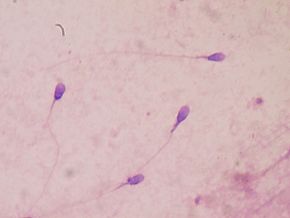
A recent study reviewed health effects from pesticide exposure in men. The review of studies on this issue found many adverse health effects from pesticides, including harmful effects on sperm, semen quality, infertility, and other reproductive problems. In other words: male reproductive dysfunction.
Of course, the more exposure, the more problems. And certain types of pesticides have greater effects, including organophosphates (e.g., chlorpyrifos) and carbamates. Unfortunately, the US EPA disregards these reproductive health effects.
Even though study after study finds harmful effects from pesticide exposure, it doesn't seem to be having an impact on use. Billions of pounds of pesticides are applied globally. And residential use (lawn and garden pesticides) continues to be very high.
In fact, recently I've been seeing both homeowner and professional pesticide applications on lawns with one hand holding the pesticide sprayer and the other hand looking at and holding a phone! And no gloves. Yikes! Do they not understand that they are absorbing the chemicals and that there are health effects?
From Beyond Pesticides: Literature Review Captures Science On Adverse Health Effects in Men With Pesticide Exposure
A review published in Annual Research & Review in Biology, titled “Pesticide and Herbicide Exposure and Male Reproductive Health: A Critical Narrative Review of Semen Quality, Sperm Genomic Integrity and Mechanistic Evidence,” highlights the current scientific literature linking pesticides to adverse reproductive effects in men.
As the authors share: “Concern about [pesticide] effects on male reproduction is sustained by occupational cohorts, biomonitoring studies in the general population, and experimental evidence showing that several compounds can disturb redox balance, endocrine signaling, spermatogenesis [production of sperm from germ cells] and mature sperm function. This critical narrative review evaluates the strength and limitations of evidence linking adult environmental and occupational pesticide exposure with semen quality and related male reproductive endpoints.”
Through a review of scientific literature published between January 2000 and July 2026, the researchers outline the scope of peer-reviewed science that shows how pesticides can cause reproductive dysfunction in males. The evidence shows a myriad of pesticide active ingredients and chemical classes can impact reproduction. In particular, organophosphate and carbamate insecticides are associated with lower sperm concentration. “Evidence for impaired motility and sperm DNA integrity is also reasonably consistent across mixed pesticide exposures,” the researchers add, with data linking pesticide-induced alterations to oxidative, mitochondrial, endocrine, genotoxic, and sperm-signaling pathways.
Background
There is a wide body of science, as documented in peer-reviewed scientific literature, on the impacts of pesticides on sperm, infertility, and other sexual and reproductive dysfunction. These impacts add to the myriad of health threats that the U.S. Environmental Protection Agency (EPA) does not consider in its chemical registration processes. (See more on EPA failures and regulatory deficiencies here.)
To assess impacts on male reproduction, studies analyze the concentration and total sperm count to reflect sperm production and ejaculatory factors. Sperm motility is another important factor, which “can be influenced by epididymal maturation [required for motility], membrane integrity, mitochondrial function, [and] oxidative injury [from unstable chemical molecules].” Sperm morphology, as well as advanced assays to analyze sperm chromatin structure, can also indicate reproductive implications.
Methodology and Results
To answer the question of “whether individual-level exposure to pesticides, at occupational or environmental levels, is associated with reproducible changes in semen quality or other male reproductive endpoints,” the researchers review studies on adult male environmental and occupational exposure to pesticides and relevant reproductive outcomes. This includes semen quality, sperm genomic integrity, reproductive hormones, and mature sperm function. The focus is on peer-reviewed human studies, but experimental studies are also included “…that could plausibly connect measured human exposures with sperm or testicular outcomes, such as oxidative injury, mitochondrial dysfunction, endocrine receptor activity,” and more.
The review highlights oxidative stress as the most frequently involved mechanism of toxicity linking pesticides with sperm dysfunction. As the authors share: “Sperm are particularly vulnerable because their membranes are rich in polyunsaturated fatty acids and mature cells possess limited cytoplasmic repair and antioxidant capacity… Pesticides may promote oxidative injury through several routes, including mitochondrial electron leakage, depletion of antioxidant defences, inflammatory signalling and redox-active metabolism.”
Notable results from the literature review include:
-
- One study, in using a larger infertility-clinic population, reports lower vitality and motility, as well as moderately higher DNA fragmentation and chromatin decondensation, among men with self-reported pesticide exposure.
- “Giulioni et al. (2021) reported lower ejaculate volume, sperm count and concentration in organophosphate-exposed men” while “Hamed et al. (2023) found pooled reductions in sperm count, concentration, progressive and total motility and normal morphology.”
- Occupational studies, such as one conducted in South America on Peruvian pesticide sprayers, show lower semen volume and motility. (See here.)
- A study using repeated semen samples and graded occupational exposure finds “the poorest semen quality at the highest organophosphate exposure and urinary metabolite levels.”
- Lower sperm concentration and motility is noted among newly married men with higher levels of urinary dimethylphosphate, a metabolite (breakdown product) of several organophosphate pesticides. (See here.)
- Another study finds an inverse association between several dialkylphosphate metabolites and sperm concentration.
- “Cremonese et al. (2017) found that lifetime use of herbicides and fungicides among young rural Brazilian men was associated with poorer sperm morphology and altered hormone concentrations.”
- Greater concentrations of urinary 3-phenoxybenzoic acid and related metabolites, which are breakdown products of pyrethroid insecticides, are associated with poorer semen measures, comet-assay DNA damage, and altered hormones. (See study here.)
In summary, the authors state: “The available evidence indicates that pesticide exposure can adversely affect male reproductive biology… The most defensible human conclusion concerns organophosphate and N-methyl carbamate insecticides, for which multiple epidemiological studies and recent quantitative synthesis support an association between higher adult exposure and lower sperm concentration. Motility and sperm DNA integrity also show relatively consistent adverse associations across several pesticide classes and occupational settings.”