
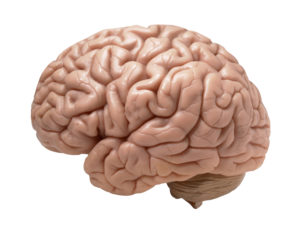
 Could it be that rescue boat crews (surf rescuers) can suffer with brain damage from constant or frequent exposure to very high waves? And that this is being ignored by the Coast Guard? The answer is YES - brain damage is occurring and it is not being acknowledged by the US Coast Guard.
The NY Times just published a very interesting article about this issue. Highly trained elite rescuers rescue people in the roughest seas - which involves driving lifeboats multiple times each day through crashing waves as high as 25 feet, which they describe as similar to "being in a car crash". The rescuers go through training and rescues for years. But now many are reporting neurological issues typical of brain injuries, including headaches, memory problems, cognitive problems, anxiety attacks, and mood swings.
But only from questioning by NY Times reporters has the Coast Guard finally admitted: "brain injuries caused by impacts with waves were an emerging concern". But so far the Coast Guard has not studied the "hazard that waves may pose to the brain and knows little about the force of the hits or the consequences of years of exposure".
Excerpts from NY Times: Rescue Boat Crews Show Signs of Brain Injuries, but Coast Guard Isn’t Looking
Brett Bonner saved hundreds of lives during 21 years on rescue boats in the Coast Guard. When he died, his teenage daughter Kayleigh wondered why he couldn’t save his own.
He was a big, gregarious man who seemed able to handle anything. But as Kayleigh grew up, she watched him slowly fall apart. First came headaches. Then sleeplessness. His memory frayed and his moods turned raw.
When he retired from the Coast Guard at age 40 in 2022, things only grew worse. He would rant and scream. One afternoon he dropped her grandfather with one punch. In the months after, he started setting things on fire.
On a winter evening in 2025, with a pile of Coast Guard files burning on the living room floor, he walked out the front door and shot himself dead.
Her father was a surfman — an elite rescuer whose job was to drive lifeboats through crashing waves as high as 25 feet. Maybe all those years crashing into waves had left her father with an unseen brain injury, like a linebacker who had too many tackles. And maybe he wasn’t the only one.
She looked for answers from the Coast Guard but found nothing. The service has never studied the hazard that waves may pose to the brain and knows little about the force of the hits or the consequences of years of exposure.
With no official sources to rely on, Kayleigh turned to the only source that might offer some clues: other surfmen.
She sent questionnaires to scores of them, using a survey of Navy crews as a template, and asked 36 questions about their service and their health. In all, 77 active and retired surfmen responded. Their answers were so stunning that they changed her whole perspective on her father.
They showed few surfmen had been diagnosed with a head injury by the Coast Guard, but a vast majority were struggling with the same issues as her father: headaches, memory lapses, cognitive problems, anxiety attacks, mood swings and a list of other ailments that can be symptomatic of brain injuries.
Some said the problems were growing worse with time.
“My brain has started to fail me. I feel it, I see it,” one responder in his early 50s wrote. “It is difficult to do things that used to be natural to me.”
“It has been a struggle for me to keep my life together,” another in his mid-40s wrote.
Looking for a pattern of brain injury among elite rescue crews was a remarkable thing for a grieving daughter to do. Even more remarkably, the Coast Guard had never done it on its own.
The problem is hardly unique to the Coast Guard, but the service has lagged well behind the other branches in recognizing it.
As the military develops more powerful vehicles and weapons, it has repeatedly exceeded what the human brain can handle. This has happened to artillery crews firing high-powered cannons, Navy SEALs training with shoulder-fired rockets, fighter pilots catapulted from aircraft carriers, and Navy fast-boat crews pounding across waves.
In all these fields, the military missed the threat for decades because the injuries accrue slowly and the symptoms — which can include nightmares, jumpiness and erratic moods — often look like normal reactions to traumatic stress.
Unlike other military branches, though, the Coast Guard has no regular testing for brain injuries and no formal briefings on the dangers of wave pounding, surfmen say. Its boat crews face many of the same hazards as Navy crews, but it has not participated in the Navy’s studies. The brain injury website it maintains is more than a decade out of date. Many of the links under the heading “Where to get help” are dead.
“The problem is being overlooked; we are not taking care of these people,” said Jay Nilles, 51, a surfman who worked alongside Mr. Bonner and also retired in 2022. “We all signed up knowing this job was dangerous, but no one ever warns you at the end you’ll have serious anxiety, paranoia, headaches — that you’ll go out to the garage to take out the trash and forget why you are there.”
Surfmen race to rescues in 47-foot motor lifeboats built to smash through surf and right themselves if capsized, like a rubber ducky.
The boats, known among crews as 47s, are designed to protect from the immediate threats of the ocean, but the crews are exposed to thousands of dangerous jolts as the 40,000-pound boats punch through waves and flop into troughs.
“A 20-foot wave breaking on you is like being in a car crash,” said Aaron Harris, who was a surfman for 22 years and retired in 2024. “If you are out training in big surf, that’s like 20 car accidents a day.”
At the end of his career, Mr. Harris started to struggle with panic attacks, insomnia, migraines and wild mood swings. After the Coast Guard he was diagnosed with a brain injury by the Department of Veterans Affairs.
All along the Pacific Coast, crews exposed to the same waves were experiencing similar problems.
NATO is conducting a study of the problem across 15 countries, and several Coast Guards have joined. The U.S. Coast Guard has not.
The Swedish doctor leading the NATO effort, Johan Ullman, started placing sensors on boat decks and on crew members in the Swedish Navy years ago to measure the impacts. The results defied logic. The sensors showed that the force of each hit was several times greater on the crews’ heads than on the deck.
“I thought this must be a mistake — how is that possible?” he said in an interview. “Eventually we realized that the force of the heels hitting the deck travels up through the legs and spine and neck like the crack of a whip.”
The U.S. Navy uses models that show a similar effect. A wave hit measuring a relatively manageable six times the force of gravity on a fast boat deck can produce a sudden jolt to the head measuring 60 times the force of gravity — the force of a car crash.
Repeated jolts of that intensity can trigger a cycle of inflammation and cell death that can lead to permanent damage. One Navy fast-boat driver was found to have severe chronic traumatic encephalopathy, or C.T.E., the progressive brain disease found in athletes who repeatedly hit their heads. Other fast-boat veterans say the problems are widespread.
Because the Coast Guard has never studied the problem, there is no clear evidence that time on 47s is producing brain injuries. But Dr. Ullman said there was a good chance that all small-boat crews that repeatedly hit waves were at risk.
If you are having thoughts of suicide, call or text 988 to reach the 988 Suicide and Crisis Lifeline or go to SpeakingOfSuicide.com/resources for a list of additional resources. Go here for resources outside the United States.