
Credit: Wikimedia Commons/ Anton Nosik
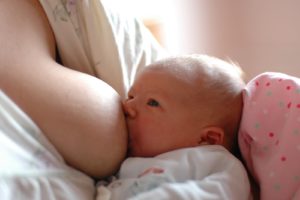
Breast milk is considered the best food for infants, but it can be contaminated with chemicals the mother is exposed to in daily life.
A group of scientists analyzed samples of breast milk from nursing mothers in Canada and South Africa for contaminants and found low levels of pesticides, parabens (endocrine disruptors in plastics), and bisphenols, including bisphenol A and S (endocrine disruptor) in many of the samples.
They published several research papers with their findings. They found contaminants, but at different levels, in the 594 breast milk samples of Canadians and South African women. Unfortunately, all breast milk samples showed some contamination - which can occur from personal care products, the packaging used in foods, in medications, household cleaning products, or even as a food additive.
For example, methyl paraben was detected in 96% of the Canadian human milk samples, followed by ethyl paraben (57%) and propyl paraben (37%). The pesticide propanil (an herbicide) was detected exclusively in South African breast milk samples, as was the antiretroviral drug Efavirenz used in HIV treatment.
BOTTOM LINE: The researchers stress that breast milk is the best food (the gold standard) for infants, but women should realize that chemicals they are exposed to do get into breastmilk. Therefore, try to avoid pesticides, read ingredient labels, and try to minimize exposure to harmful chemicals.
From Newsweek: Scientists Discover Pesticide Traces in Breast Milk
Researchers at McGill University have identified several unexpected chemical contaminants in human milk, finding traces of pesticides, antimicrobials and additives used in plastics and personal‑care products.
The team said the data, drawn from Canadian and South African samples, could help strengthen chemical safety regulations and improve protections for infants and parents. ...continue reading "Breast Milk Can Contain Traces of Pesticides and Other Chemicals"