
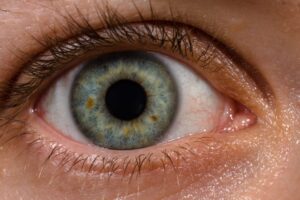
Scientists are now working on a treatment for vision problems that would avoid the need for lasers or surgery (e.g., LASIK). This would be an amazing development.
The new technique called electromechanical reshaping (EMR) is still experimental, but very promising. Instead of carving away tissue, which is done in LASIK, the new method temporarily softens the cornea so it can be gently molded into a new shape.
But studies need to be done in animals (only rabbit eyeballs tested so far), and only then can it be tested in humans. Stay tuned...
From Science Daily: Forget LASIK: Safer, cheaper vision correction without lasers or surgery
Millions of Americans live with blurry vision, nearsightedness, or more severe sight problems. While glasses and contact lenses help many people, millions have turned to corrective procedures such as LASIK to sharpen their eyesight. But scientists are now exploring a very different approach that could someday reshape the eye without lasers, cutting, or invasive surgery. ...continue reading "New Technique Being Developed For Vision Correction"
 LASIK is an incredibly popular eye surgery to correct vision problems such as nearsightedness and farsightedness. But it turns out that LASIK surgery has more short and long-term complications than we realize. Studies show that the persistant "minor problems" (depends on who you ask if they're minor) are more frequent than we realize - up to 55% report symptoms such as dry eyes or visual distortions. But the really serious ones, such as corneal ectasia, and which occur rarely (less than 1%), typically occur a year or two after the LASIK surgery. And unfortunately ectasia can result in total loss of vision.