Skip to content

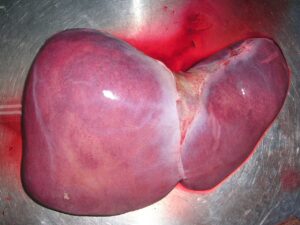
Human liver Credit: Wikipedia

Not all cleaning products or chemicals used in dry cleaning are safe to use. A recent study found that the chemical tetrachloroethylene (PERC or PCE) can cause serious liver harm in the form of liver fibrosis, and that the effects are dose dependent for liver fibrosis. The more a person is exposed, the greater the risk of developing liver fibrosis.

PERC is a chemical that used to be found in household products, such as spot removers, furniture stripper, adhesive glues, suede protectors, spray-on water repellents, but is being phased out. It is also commonly used in dry cleaning of clothing, and it has 10 years to phase out. It will continue to be used in a number of industrial settings, for example, as a degreaser. Tetrachloroethylene (PERC) is a volatile organic compound (VOC).

Liver fibrosis is the buildup of tough scar tissue in the liver resulting from chronic inflammation and persistent damage. Unfortunately, over time this scarring can progress to liver failure or liver cancer.

Bottom line: Avoid products with PERC. The danger is in inhaling the chemical's fumes or getting it on your skin (contact with the chemical). Nowadays PERC is mainly used in industrial settings (resulting in occupational exposure). It is being phased out in consumer products and dry cleaning because it is a carcinogen (cancer causing).

From Science Daily: Hidden household toxin triples liver disease risk, study finds

Liver disease most often develops due to one of three major causes: excessive alcohol use, the buildup of fat in the liver associated with obesity, diabetes, and high cholesterol, or viral infections such as hepatitis B and C.

Researchers from Keck Medicine of USC have identified another potential cause of liver damage. A new study published in Liver International links tetrachloroethylene (PCE), a chemical widely used in dry cleaning and found in household products like adhesive glues, spot removers, and stainless steel polish, to serious liver harm. ...continue reading "Chemical Exposure Linked to Liver Scarring"

Read the labels on personal care products, and do NOT buy those with triclosan! (See earlier posts for other reasons to avoid triclosan.) From Science Daily:

The 'dirty' side of soap: Triclosan, a common antimicrobial in personal hygiene products, causes liver fibrosis and cancer in mice

Triclosan is an antimicrobial commonly found in soaps, shampoos, toothpastes and many other household items. Despite its widespread use, researchers report potentially serious consequences of long-term exposure to the chemical.The study, published Nov. 17 by Proceedings of the National Academy of Sciences, shows that triclosan causes liver fibrosis and cancer in laboratory mice through molecular mechanisms that are also relevant in humans.

"Triclosan's increasing detection in environmental samples and its increasingly broad use in consumer products may overcome its moderate benefit and present a very real risk of liver toxicity for people, as it does in mice, particularly when combined with other compounds with similar action," said Robert H. Tukey, PhD, professor in the departments of Chemistry and Biochemistry and Pharmacology. 

Tukey, Hammock and their teams, including Mei-Fei Yueh, PhD, found that triclosan disrupted liver integrity and compromised liver function in mouse models. Mice exposed to triclosan for six months (roughly equivalent to 18 human years) were more susceptible to chemical-induced liver tumors. Their tumors were also larger and more frequent than in mice not exposed to triclosan.

The study suggests triclosan may do its damage by interfering with the constitutive androstane receptor, a protein responsible for detoxifying (clearing away) foreign chemicals in the body. To compensate for this stress, liver cells proliferate and turn fibrotic over time. Repeated triclosan exposure and continued liver fibrosis eventually promote tumor formation.

Triclosan is perhaps the most ubiquitous consumer antibacterial. Studies have found traces in 97 percent of breast milk samples from lactating women and in the urine of nearly 75 percent of people tested. Triclosan is also common in the environment: It is one of the seven most frequently detected compounds in streams across the United States.

More about this study plus a discussion about the FDA's lack of action. From The Atlantic:

The Ingredient to Avoid in Soap