
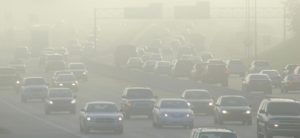
 There is much concern over the amounts of microplastics and nanoplastics in the environment, especially since they are turning up wherever we look. Including inside human bodies (e.g., the brain, blood, lungs, our bones), with mainly unknown health effects. A recent study found that an important source of microplastics and nanoplastics in urban air (in heavy traffic areas) comes from vehicle tires.
This occurs from tire abrasion - tires get worn down when vehicles are driven and also when braking occurs, and the tire abrasion particles get released into the air. In this study, they accounted for about 65% of the total plastic particles in the air in a heavy traffic area in Leipzig, Germany. Microplastics are smaller than 5 mm, and nanoparticles are even smaller (smaller than 1 micrometer).
According to the researchers, residents spending 24 hours a day in the high traffic area would inhale approximately 2.1 micrograms of plastic particulates per day, which is about 0.7 milligrams per year. So far it other studies find that this can result in oxidative stress and chronic inflammatory reactions in the lungs.
From Phys.org: Microplastics and nanoplastics in urban air originate mainly from tire abrasion, research reveals
Although plastic particles in the air are increasingly coming into focus, knowledge about their distribution and effects is still limited. Chemical analyses from Leipzig now provide details from Germany for the first time: Around 4% of the particulate matter consists of plastic. Around two-thirds of this comes from tire abrasion.
Extrapolated, this means that people in a city like Leipzig inhale approximately 2.1 micrograms of plastic per day through the air, which increases the risk of death from cardiovascular disease by 9% and from lung cancer by 13%. These findings underscore the need to take global action against plastic pollution and to examine air quality and health at the regional level, write researchers from the Leibniz Institute for Tropospheric Research (TROPOS) and Carl von Ossietzky University of Oldenburg in the journal Communications Earth & Environment.
Plastic particles in the air have become the focus of scientific attention in recent years because they have been detected even in uninhabited regions such as the polar regions and high mountains, and because they have the potential to disrupt ecological processes and affect human health. There are many possible sources of this type of air pollution, such as tire wear, brake wear, textile fibers, dust and urban surfaces.
However, plastic that enters the oceans in large quantities via rivers can also later return to the air as microplastics and nanoplastics via sea spray. Nanoplastics are defined as all plastic particles smaller than one micrometer, while microplastics are defined as all particles between one micrometer and one millimeter. Although the amount of plastic is clearly increasing, too little is known about the risks posed by inhaled plastic particles.
Health risks and regulatory blind spots
What is clear so far is that inhaled nanoplastics can enter the lungs and cause oxidative stress or inflammatory reactions that contribute to respiratory diseases. In addition, these particles can carry heavy metals, polycyclic aromatic hydrocarbons (PAHs) and other substances on their surface, which increase toxicity. The lack of knowledge about microplastics and nanoplastics is also one reason why neither the World Health Organization (WHO) nor the European Union currently has any recommendations or limit values for plastics in the air.
The fact that research into plastic in the air has only gained momentum in the last ten years. One reason is that "plastic" is not just one material, but a whole group of different substances with different chemical properties. Because of this diversity, scientists use several complementary analytical methods. Spectroscopic techniques can provide information about particle structure and surface characteristics, while mass-based approaches are used to determine overall quantities.
Particulate matter (PM) samples of PM10 (smaller than 10 micrometers) and PM2.5 (smaller than 2.5 micrometers) were taken using two high-volume samplers, as are used at air monitoring stations in accordance with European standards. In this process, 500 liters of air per minute are sucked through a filter system and the filter is changed every 24 hours. The filters are later analyzed in the laboratory using pyrolysis gas chromatography and mass spectroscopy.
Measurements were taken over a two-week period (1 to 14 September 2022) in the Science Park on Torgauer Strasse, an arterial road in the Leipzig city area—in other words, at a hotspot. "This gave us a focused and detailed overview of the composition of micro–nano plastics in areas with heavy traffic."
Micro- and nano plastic particles in urban air had previously been identified by other research teams in Graz (Austria), Kyoto (Japan) and Shanghai (China). The Leipzig study is the first in Germany and provides important insights into the composition and origin of the fine dust particles: tire abrasion particles dominated with a share of about 65% of the total plastics, followed by polyvinyl chloride, polyethylene and polyethylene terephthalate. These polymers correlated strongly with carbon-containing aerosol markers, suggesting common emission and mixing in the atmosphere.
According to their findings, residents of Leipzig who spend around 24 hours a day on Torgauer Strasse would inhale approximately 2.1 micrograms of plastic particulate matter per day, which corresponds to 0.7 milligrams per year. Estimates of how much microplastic humans breathe in have also been made for megacities in China and India. However, these estimates vary strongly. This wide range underlines how important it is to record all relevant types of plastic and how necessary standardized measurements are.
Due to their small size, the smaller nanoplastic particles in particular can penetrate deeper into the respiratory tract, which carries a higher potential for long-term illness. To investigate possible health effects, the Leipzig study calculated the relative risk based on existing epidemiological models to estimate environmental exposure. These projections resulted in a potentially increased mortality risk of 5–9% for cardiopulmonary diseases (RR: 1.08) and 8–13% for lung cancer (RR: 1.12).
Current findings such as this study from Leipzig increasingly suggest that inhaling plastic particles, especially nanoplastics, could have health implications. However, research in this area is still relatively new.