
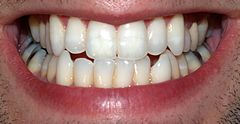
The idea of regrowing lost teeth is fabulous. A study focusing on a tooth regeneration treatment came out last year, but I just read about the study in Popular Mechanics and Dentistry Today.
The Japanese scientists pointed out that humans already have a third set of teeth available in their mouths as buds, and these have the potential to grow as needed. Some people with hyperdontia can already grow more than one full set of teeth (about 1% of the population). The scientists are now working on how to promote tooth regrowth by using an experimental drug.
Human trials are now ongoing. They hope to have a tooth-growing treatment available for general use by 2030. Stay tuned...
From Popular mechanics: Grow New Teeth Within Just 4 Years
-
- While bones can regrow themselves when they break, teeth aren’t so lucky, and that leads to millions of people worldwide suffering from some form of edentulism, a.k.a. toothlessness.
- Now, Japanese researchers are moving a promising, tooth-regrowing medicine into human trials.
- If the trial is successful, the researchers hope the drug will become available for all forms of toothlessness sometime around 2030.
The average adult human body contains 206 bones—the hardened mixtures of calcium, minerals, and collagen that provide the biological scaffolding that walks us through our day. While we may not think of them much, bones are incredibly resilient. But if they do break, they have this nifty trick of regrowing themselves.
Teeth, however, are not bones. Although they’re made of some of the same stuff and are the hardest material in the human body (thanks to its protective layer of enamel), they lack the crucial ability to heal and regrow themselves. But that may not always be the case. Japanese researchers have moved forward with an experimental drug that promises to regrow human teeth. Human trials began in September 2024.
This development follows years of study around a particular antibody named Uterine sensitization–associated gene-1 (USAG-1), which has been shown to inhibit the growth of teeth in ferrets and mice. Back in 2021, scientists from the Kyoto University—who will also be involved in future human trials—discovered a monoclonal antibody (a technique usually used in fighting cancer) that disrupted the interaction between USAG-1 and molecules known as bone morphogenetic protein, or BMP.
“We knew that suppressing USAG-1 benefits tooth growth. What we did not know was whether it would be enough,” Kyoto University’s Katsu Takahashi, a co-author of the study, said in a press statement at the time. “Ferrets are diphyodont animals with similar dental patterns to humans.”
So now, scientists are seeing just how similar, because humans are undergoing a similar trial. This study focuses on 30 males between the ages of 30 and 64—each missing at least one tooth. The drug will be administered intravenously to prove its effectiveness and safety, and luckily, no side effects have been reported in previous animal studies.
If all goes well, Kitano Hospital will administer the treatment to patients between the ages of 2 to 7 who are missing at least four teeth, with the end goal of having a tooth-regrowing medicine available by the year 2030. While these treatments are currently focused on patients with congenital tooth deficiency, Takahashi hopes the treatment will be available for anyone who’s lost a tooth.