
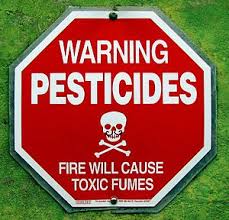
 For years it has been known that the pesticide paraquat has serious health effects, which is why it is banned in so many countries - but not the US. But California, the US's largest user of the toxic pesticide, is now the second state to ban the use of the pesticide. It is considered the deadliest pesticide used in agriculture in the US.
Paraquat is a herbicide (weed-killer) that is strongly linked to (causes) Parkinson's disease, and is known to damage the lungs, kidneys. liver, cardiac system, and other bodily systems. While it is banned in more than 70 countries world-wide (e.g., the EU, China, UK, Brazil), the EPA reapproved its use in 2024. More than 10 million pounds annually are sprayed on US crops (e.g., soybeans, almonds, walnuts, cotton), with the most used in California.
Once again, the US is lagging behind other countries in safety and health regulations. Unfortunately, the current EPA is led by persons affiliated with the chemical industry. No wonder it's big industry first in all decisions!
Excerpts from The Guardian: California bans paraquat, highly toxic herbicide outlawed in more than 70 countries
California is banning paraquat, a highly toxic, controversial herbicide used across millions of acres of American cropland.
Public health advocates characterize it as a deadly substance that is virtually proven to cause Parkinson’s disease. It is already outlawed in more than 70 countries, including China, the UK and the EU. Yet in the US, the Environmental Protection Agency (EPA) reapproved it for use in 2021 and 2024.
California is the US’s largest user of the pesticide, and largest agricultural producer, so advocates have hailed the decision as a major public health win. It is the second US state to prohibit paraquat, following Vermont, and its decision comes after the state legislature passed a 2024 law requiring the pesticide division to re-evaluate the substance’s health risks.
“Paraquat is the most acutely lethal pesticide ever made,” said Nathan Donley, environmental health science director with the Center for Biological Diversity, which has for years helped lead a coalition of public health and farm worker groups that have pressured state and federal governments to prohibit the substance.
Paraquat has been used for decades as a powerful herbicide that can rapidly kill weeds. About 14m pounds annually are sprayed on US wine grapes, pistachios, almonds, walnuts, pears, citrus, soya beans, cotton and other crops, most commonly in California’s Central valley and the Mississippi River valley. The substance’s use tripled in the US between 2008 and 2018, and has since continued to shoot up.
Exposure to paraquat via skin or inhalation is linked to death, cancer, heart failure, kidney failure, liver failure and scarring of the lungs. There is no antidote for paraquat poisoning and the pesticide’s severe toxicity is highlighted on an Environmental Protection Act website titled Paraquat Dichloride: One Sip Can Kill.
The department began requesting updated data from pesticide makers on health and environmental risks. Instead of sharing that information, the pesticide makers decided to stop using paraquat in the state. Syngenta, the Chinese-owned firm that made the largest amount of the pesticide, withdrew its use permit in April, and announced it would stop producing the substance altogether. Advocates say industry almost certainly made the decision to withdraw instead of sharing the health science because the data is so alarming.
Donley said several issues are behind the EPA’s steadfast refusal to ban paraquat – industry influence at the agency and weak federal pesticide laws. Whistleblowers have said the EPA’s pesticide division is captured by industry. The Guardian in 2023 revealed how internal corporate documents showed Syngenta had sought to influence regulators’ decision-making around the chemical, withheld risks from the public and attempted to edit unfavorable studies.