
 People are always looking for ways to lower their risk of dementia in their senior years. For a while now there has been research suggesting that older adults getting vaccines (e.g., annual flu shots) lower their risk of dementia and Alzheimer's disease. A recent study found that the shingles vaccine (herpes zoster vaccine) has a similar protective effect.
Adults in their 70s who received the shingles vaccine had a lower incidence of dementia. They were 20% less likely to develop dementia over the next 7 years. And the differences in rate of dementia among those who received or didn't receive the vaccine started within 1 1/2 years of getting the vaccine.
The study also showed that the protection against dementia was stronger in women than in men - that is, the shingles vaccine benefited women more than men.
By the way, one could view lower incidence of dementia as a non-target effect. The target was shingles, but other protective health effects are non-target effects.
Excerpts from Science Daily: Study strengthens link between shingles vaccine and lower dementia risk
An unusual public health policy in Wales may have produced the strongest evidence yet that a vaccine can reduce the risk of dementia. In a new study led by Stanford Medicine, researchers analyzing the health records of Welsh older adults discovered that those who received the shingles vaccine were 20% less likely to develop dementia over the next seven years than those who did not receive the vaccine.
The remarkable findings, to be published April 2 in Nature, support an emerging theory that viruses that affect the nervous system can increase the risk of dementia. If further confirmed, the new findings suggest that a preventive intervention for dementia is already close at hand.
...continue reading "Research Finds Lower Risk of Dementia After Receiving Shingles Vaccine"
 Some people have unexplainable or mystery illnesses - whether it is unknown what exactly they have, but also how to treat the rare disease. And if somehow a doctor figures out how to treat the disease, then they may not know how to get the word out to other medical professionals. But it turns out there is a way to tell others this valuable information -
 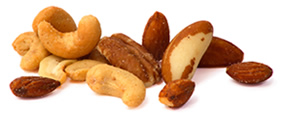 Many people to this day avoid eating nuts because they view them as high calorie and high fat (umm...probably because the medical establishment said that for years). However, studies in the past decade repeatedly found that frequent nut consumption has health benefits.
 How's your sense of smell? Hopefully, it's good. A recent
 One message keeps being supported by research: Eat a diet rich in fruits, vegetables, seeds, nuts, whole grains, legumes, and olive oil. A reason is because this diet is anti-inflammatory. And it turns out that inflammation is at the root of many diseases, including heart disease. And dementia.