Skip to content

Breastfeeding
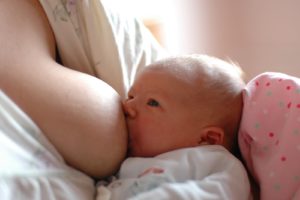
Credit: Wikimedia Commons/ Anton Nosik

It has long been known that breast milk contains hundreds of microbial species (the milk microbiome), which help seed the infant's gut microbiome. Over the weeks and months of breast feeding, the microbial species in the milk change. All this is normal and good.

A recent study of human breast milk examined the species in breast milk and found that that the species could be viewed as a microbial ecosystem - one that is important in helping seed the infant's gut. The milk contained species that are considered beneficial (e.g., Bifidobacterium), but also some that can be viewed as not beneficial (e.g., E.coli). The milk was from healthy mother-infant pairs, so it was clear that this variety was normal.

Researchers analyzed 507 breast milk and infant stool samples from 195 healthy mother-infant pairs at one, three, and six months postpartum. They found characteristic mixes of bacteria dominated by Bifidobacteria (especially B. longum, B. breve, and B. bifidum). More than half of the milk samples contained B. longum, and that same species was abundant in over 98% of the infants' gut microbiomes.

The paper mentioned that numerous times they found the exact same bacterial strain in both the mother and infant pairs - thus evidence that the mothers transmitted that bacteria to the babies in the breast milk (this is referred to as vertical transmission).

From Medical Xpress: Breast milk microbes help shape infants' gut microbiomes, study finds

Most conversations about breast milk tend to focus on topics like nutrients, antibodies and bonding time rather than bacteria. But it turns out that human milk carries its own tiny community of microbes, and those passengers may help shape a baby's developing gut microbiome—which in turn can impact nutrient absorption, metabolic regulation, immune system development, and more. ...continue reading "Breast Milk Transmits Important Bacteria to the Infant Gut Microbiome"
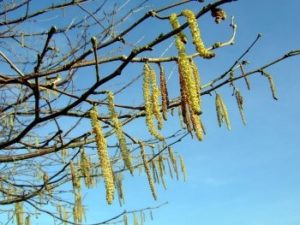
Could this be true? Probiotics for seasonal allergies? A study by Univ. of Florida researchers reported that taking a combination probiotic of Lactobacillus gasseri, Bifidobacterium bifidum, and Bifidobacterium longum (sold as Kyo-Dophilus) for 8 weeks during spring allergy season resulted in an improvement in seasonal allergy symptoms. It must be noted that the people participating had mild seasonal allergies, not severe allergies. While they reported overall allergy symptom improvement, there was no significant improvement with eye symptoms. Too bad, because for those suffering from itchy eyes, it is a symptom that causes anguish during allergy season.

All participants had their stool (fecal) samples tested (with modern genetic sequencing) and it was found that the group taking the probiotic supplements had a beneficial shift in their overall microorganisms in the gut - with some bacteria such as Escherichia coli decreasing and the very beneficial and anti-inflammatory bacteria Faecalibacterium prausnitzii increasing. (See posts here and here on F. prausnitzii.) What was really good about the study was that it was a "double-blind, randomized clinical trial", meaning that people were randomly  assigned to the probiotic treatment or placebo group, and no one knew who was getting a placebo or the probiotic until the end of the study. The researchers say that why the probiotics improved allergy symptoms is s till not clear, but they have some theories. From Science Daily:

Allergies? Probiotic combination may curb your symptoms, new study finds

As we head into allergy season, you may feel less likely to grab a hanky and sneeze. That's because new University of Florida research shows a probiotic combination might help reduce hay fever symptoms, if it's taken during allergy season. Many published studies have shown a probiotic's ability to regulate the body's immune response to allergies, but not all of the probiotics show a benefit, UF researchers say. Scientists already know that the probiotic combination of lactobacilli and bifidobacteria, sold as Kyo-Dophilus in stores, helps maintain digestive health and parts of the immune system. They suspect that probiotics might work by increasing the human body's percentage of regulatory T-cells, which in turn might increase tolerance to hay fever symptoms.

UF researchers wanted to know if the components in this combination probiotic would help alleviate allergy symptoms. To do that, they enrolled 173 healthy adults who said they suffered seasonal allergies and randomly split them into two groups: Some took the combination probiotic; others took a placebo. Each week during the eight-week experiment, participants responded to an online survey to convey their discomfort level. Scientists also analyzed DNA from participants' stool samples to determine how their bacteria changed, because probiotics aim to deliver good bacteria to the human's intestinal system.

Participants who took the probiotic reported improvements in quality of life, compared to those taking the placebo, the study showed. For example, participants suffered fewer allergy-related nose symptoms, which meant that they were less troubled during daily activities. Researchers note that this study did not include severe allergy sufferers. But the combination of probiotics showed clinical benefit for those with more mild seasonal allergies, Langkamp-Henken said. [Original study.]