Skip to content

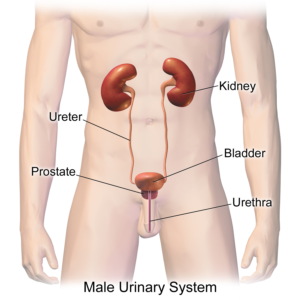
MALE URINARY SYSTEM Credit: Wikipedia

Chronic kidney disease (CKD) is a growing problem globally, especially in aging populations. As people age, their kidney function declines - and this is a normal part of aging. A recent study found that physical activity slows this kidney function decline.

The study followed healthy individuals (aged 50 to 64 years at the start), who had varying physical activity levels, over an 11 year period. The researchers found that there is a dose response effect from physical activity - more active persons had a slower annual kidney function decline, as well as a much lower risk of accelerated kidney function decline.

The slowest level of kidney decline was in persons who were physically active almost every day (at least 5 days a week) and who engaged in more intense exercise. Note that physical activity is not just doing exercises - it's physical activity of all sorts. Yes, walking counts.

The researchers viewed physical activity as having reno-protective effects - in both the general population and in persons with CKD. This is because it lowers the risk of developing CKD, but it also slows kidney function decline. By the way, other studies have also found physical activity or exercise beneficial in slowing down the kidney function decline that occurs with aging.

From Medscape: Physical Activity May Slow Kidney Function Decline

Increased physical activity was associated with a substantially lower risk for kidney function decline, with the strongest effects seen with higher frequencies and intensities of activity, according to a new longitudinal study. ...continue reading "Physical Activity Slows Down Kidney Function Decline That Occurs With Aging"
MALE URINARY SYSTEM Credit: Wikipedia

Our kidneys are incredibly important for our health. Unfortunately, some conditions (e.g., diabetes) and just getting older results in a decline in kidney function. Let's face it - as we age, our organs age.

But there is some good news. A recent study found that moderate and high intensity exercise slows down the risk of rapid kidney function decline in older adults. Exercise actually helps preserve kidney function.

A large study randomly assigned older adults (aged 70 to 77 years) to one of three groups: 1) moderate intensity exercise (peak heart rate 70%) for 50 minutes twice a week, or 2) high intensity interval training (peak heart rate 90%) for four minutes 4 times per week (with first a 10 minute warm-up), or 3) a control group that just received education.

There was a dose response relationship over the 5 years - the more exercise, and the more vigorous exercise - the better kidney function was, and less of a decline from aging. Also, the more exercise, the better the oxygen uptake. There were no heart disease related events (cardiovascular events) during the supervised exercise sessions.

Bottom line: Exercise at all ages, including older adults in their 70s, is good for health, including the kidneys. Move, move, move!

From Medscape: High-Intensity Interval Training Reduces Risk for Kidney Function Decline in Seniors

Supervised high-intensity interval training (HIIT) over 5 years reduced the risk for rapid decline in estimated glomerular filtration rate (eGFR) in community-dwelling adults aged 70-77 years. ...continue reading "Exercise Is Beneficial For the Kidneys In Older Adults"

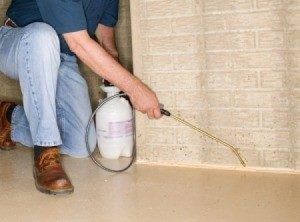
Indoor pesticide application Credit: Wikipedia

A recent study found that indoor use of pesticides is associated with a higher risk of chronic kidney disease (CKD). Especially in women.

The researchers found that the longer the pesticide exposure time, the higher the risk, even among persons without any underlying risk factors such as diabetes and hypertension. This type of CKD, without known causes, is known as chronic kidney disease of unknown origins (CKDu).

CKDu has already been linked with outdoor use of pesticides, including glyphosate and malathion. This disease is on the rise globally, so studies like this one looking at indoor pesticides are important. When pesticides are applied indoors, persons living there are exposed (breathe in) pesticides for a long time. They do not break down like outdoors, where there is sunlight and rain.

The kidneys are one of the most important organs for filtering waste out of the human body. We need to protect them! One way is to use least-toxic Integrative Pest Management (IPM) when needing to control pests indoors (e.g., by caulking holes, using baits or traps).

Excerpts from Beyond Pesticides: Chronic Kidney Disease of Unknown Origins Linked To Indoor Pesticide Use, Disproportionately Affecting Women

A study published in PLOS ONE finds a pointed, positive association between chronic kidney disease (CKD) of unknown origins (CKDu) and the use of indoor pesticides. Longer exposure times have an especially detrimental impact on kidney function, even among individuals without underlying diseases like diabetes mellitus and hypertension. The innovation of this study’s purpose highlights the lack of exposure-related studies on kidney health outcomes associated with indoor pesticide use. ...continue reading "Indoor Use of Pesticides and Chronic Kidney Disease"

The US Food and Drug Administration (FDA) just issued a new warning about taking non-prescription and prescription pain relievers known as nonsteroidal anti-inflammatory agents (NSAIDS) during pregnancy. The FDA warned that using them from week 20 or later during pregnancy can cause rare, but serious, kidney complications in the unborn baby. This can lead to low levels of amniotic fluid (called oligohydramnios) surrounding the baby and possible complications.
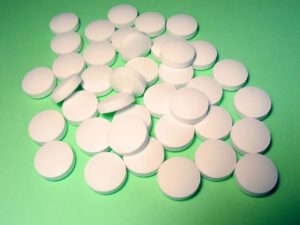
The FDA advice is to avoid the following NSAIDs from week 20 and later of pregnancy: ibuprofen (Advil, Motrin), naproxen (Aleve), diclofenac, and celecoxib (Celebrex). However, low dose (81 mg) aspirin is excluded from this warning. [See FDA warning for more information.]

The FDA had earlier warned about those same NSAIDs - cautioning to avoid taking them during pregnancy after week 30 because of heart-related risks.

The full warning and information from US FDA: FDA recommends avoiding use of NSAIDs in pregnancy at 20 weeks or later because they can result in low amniotic fluid

Excerpts from Medscape: FDA Issues New NSAIDs Warning for Second Half of Pregnancy

The US Food and Drug Administration released new warnings today that most nonsteroidal anti-inflammatory agents (NSAIDs) carry an elevated risk for kidney complications in an unborn children when taken around weeks 20 or later in pregnancy.  ...continue reading "New FDA Warning About Using Common Pain Relievers During Pregnancy"

1

Normal aging. We all wonder what happens in normal aging, and now a large study confirms what many already thought: kidney function deteriorates as a normal part of aging. It's not an illness, it's normal.

The international study found that whether a person is healthy or has some existing problems doesn't matter - the kidneys normally deteriorate as we age. Just quicker and with more loss in some people, and more so in those with illnesses such as diabetes. Yup, normal aging is tough.

From Medical Xpress: Kidneys deteriorate with age, regardless of health

An international study carried out on nearly 3000 people in Norway, Germany and Iceland shows that human kidney function deteriorates with age regardless of the presence of other diseases. The results from the study have recently been published in the Journal of the American Society of Nephrology (JASN). To discover how kidney function progresses, the researchers examined the kidney function of a group of people between the ages of 50 and 70, and two groups of people between the ages of 70 to 95.  ...continue reading "Kidney Function Normally Deteriorates As We Age"