
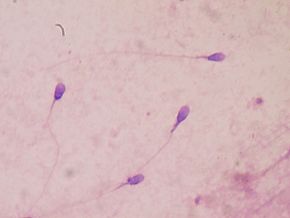
Studies find that male fertility is diminishing, with sperm counts decreasing globally every year in the past few decades. Scientists have been searching why this is occurring, suggesting a number of possible causes (e.g., environmental pollutants, pesticides, microplastics, endocrine disruptors, lifestyle habits.).
Recent studies are suggesting that pollution, especially air pollution, may be also be contributing to the problem of reduced male fertility. Researchers are finding regional differences in sperm count and quality.
Two recent studies presented similar findings at the recent European Study of Human Reproduction this past week, with both finding that where you live could have a bigger effect on sperm count, sperm quality, and fertility than lifestyle habits. In other words, the pollution in the area you live (air pollution or other environmental contaminant) has an effect on fertility - that is, sperm count and quality. [Studies show that lifestyle habits are also important.]
From Medical Xpress: Men living in different regions show marked differences in sperm quality despite similar lifestyles, novel study finds
A new study has found substantial regional differences in sperm quality, with men in the highest-performing region recording almost double the total motile sperm count of those in the lowest-performing region.
Presented at the 42nd Annual Meeting of the European Society of Human Reproduction and Embryology (ESHRE), the study found that lifestyle habits were broadly similar across regions and did not explain the differences observed, raising important questions about the role of environmental exposures in male reproductive health. The study was published in Human Reproduction.
The prospective multicenter study analyzed semen quality and lifestyle data from 386 men undergoing fertility assessment across seven assisted reproduction centers in Spain between June 2024 and December 2025.
Researchers then compared semen parameters across four regions of Spain—north, south, southeast and central—to determine whether geographical differences in sperm quality could be explained by lifestyle or sociodemographic factors.
The results revealed significant regional differences in semen volume, sperm concentration, motility, morphology and total motile sperm count, as well as the prevalence of asthenozoospermia (reduced sperm motility) and teratozoospermia (abnormal sperm morphology).
Men living in northern Spain recorded the strongest semen quality overall, with an average total motile sperm count of 94.35 million, compared with 50.11 million in central Spain. The northern region also had the highest average sperm concentration (80.96 million/mL) and sperm motility (44.79%). Reduced sperm motility affected 23.9% of men in the north, compared with 55.4% in southern Spain and 53.4% in central Spain.
Despite these differences in semen quality, lifestyle habits and overall lifestyle patterns were broadly similar across the four regions studied. After adjustment for all measured lifestyle and sociodemographic factors, only geographical location and abstinence duration remained independently associated with semen parameters.
Total motile sperm count was independently associated with both geographical location and abstinence duration, while geographical location alone remained significantly associated with the prevalence of reduced sperm motility and abnormal sperm morphology.
From The Guardian: Air pollution linked to DNA changes in sperm, research shows
Air pollution appears to alter how sperm genes function, one of the largest fertility studies of its kind has found.
Men exposed to common air pollutants while sperm were developing showed subtle DNA changes that affected whether genes were switched on or off, raising fresh concerns air pollution may harm male fertility.
The findings, presented on Tuesday at the annual meeting of the European Society of Human Reproduction and Embryology in London, identified ozone and nitrogen dioxide as the pollutants most strongly linked to these so-called epigenetic changes.
Dr Carrie Nobles, an epidemiologist at the University of Massachusetts Amherst, who led the work, said: “Our findings suggest that air pollution exposure during key stages of sperm development may be associated with changes in sperm DNA.”
The study followed more than 2,000 men in Salt Lake City, Utah, between 2013 and 2017. Participants provided semen samples when they enrolled and again after two, four and six months.
Researchers estimated each participant’s exposure to outdoor air pollutants – including ozone, nitrogen dioxide, sulphur dioxide and fine particulate matter – during the three months before each sample was collected, corresponding to the period of sperm production.
Growing evidence suggests air pollution could reduce male fertility but the biological mechanisms have been unclear. The latest work points to DNA methylation – chemical tags attached to DNA that regulate whether genes are switched on or off without changing the genetic code – as one possible explanation.
Scientists analysed sperm DNA methylation in the 1,220 men who provided a sample at the six-month follow-up. They identified 39 DNA changes linked to air pollution mixtures, with ozone and nitrogen dioxide appearing to have a strong influence.
Most epigenetic tags are erased early in embryo development but some genes are “imprinted” with these changes, meaning they have the potential to influence embryo development and beyond. One of the genes identified, GNAS, has previously been linked to poorer semen quality and foetal development.
Prof Richard Lea, a professor of reproductive biology at the University of Nottingham, said: “This is an important piece of research that adds to a growing body of evidence that sperm quality is adversely affected by airborne pollutants.”
From Medical Xpress: Men living in different regions show marked differences in sperm quality despite similar lifestyles, novel study finds