
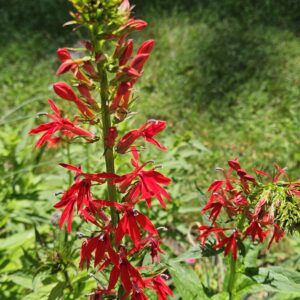
Haven't seen any bees or butterflies this past week. Not on flowers, not among the clover. None. All I can do is document the devastating effects of neighboring pesticide applications on pollinator populations in my organic suburban property.
A neighbor has had numerous applications by 3 services(!) for several years - on the lawn, in the garden, on plants around the house, the exterior of the house, and the hedges between properties. Basically everywhere, typically every 3 weeks. Of course, the pesticides drift to neighboring properties (mine!).
The worst for pollinators (bees, butterflies) appear to be the mosquito applications using a device that looks like a leaf blower, which is held at waist-height - these are high-volume applications. The mosquito applications are done using cypermethrin and pyrethroid insecticides (which are synthetic pesticides, e.g., made by Fendona). Pyrethroids are known to be highly toxic to pollinators such as bees and wasps, and there is growing evidence of harms to humans (here, here).
One study confirmed that pesticides are a major reason that wild bee populations are significantly down in the US. The researchers found that bee species are about 43% down in areas of heavy pesticide use. They singled out pesticides (insecticides) such as neonicotinoids and pyrethroids as drivers of this bee species reduction. They pointed out that using Integrated Pest Management (IPM) or organic methods would help reduce pesticide use and so help with bee species populations.
This means that businesses (e.g., Mosquito Joe) that apply long-lasting pyrethroids throughout suburban yards and hedges in the US are contributing directly to bee species reduction.
Other studies found that applying pesticides (no matter what kind) to lawns destroys bee populations and reduces the number of bee species. Think of lawns that are not treated with pesticides as having wildflowers, not weeds. These are bee habitats!