
Skip to content

For many years we have viewed 98.6 degrees Fahrenheit  (37.0°C) as the normal body temperature of a healthy adult. It turns out that is no longer true. The average body temperature has been falling for the last few decades. Studies find the temperature decrease in different parts of the world, in both rural and urban areas. Looks like it's somewhere between 97.5°F (California), 97.7°F (among the Tsimane in the Bolivian Amazon), and 97.9°F (United Kingdom).

An international team of researchers studied the body temperature of the Tsimane of the Bolivian Amazon using 16 years of data and compared the findings to the US and UK studies. The Tsimane live a subsistence lifestyle without access to running water or sanitation, have high exposure to diverse pathogens (e.g. parasites), and many infections. During the last 2 decades they have had increased access to health care (including vaccinations), and to markets, and there has been an improvement in health and lifestyle. So it was surprising that their average body temperature also declined in the last 2 decades.

The researchers think the temperature decline among the different populations is due to a combination of factors, which include improved lifestyle, better medical care and treatments, increased use of antibiotics which alter the gut microbial communities (microbiome), fewer parasitic infections, changes in physical activity, and increasing body weight.

From Science Daily: Average body temperature among healthy adults declined over the past two decades

In the nearly two centuries since German physician Carl Wunderlich established 98.6°F as the standard "normal" body temperature, it has been used by parents and doctors alike as the measure by which fevers -- and often the severity of illness -- have been assessed.  ...continue reading "Normal Body Temperature Is Lower Than We Thought"

Credit: Wikipedia

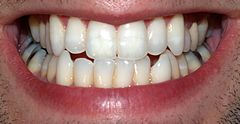
Many routine checkups have been postponed during this pandemic, including routine dental checkups every 6 months. But is it OK to put off such visits? A recent review of studies found evidence that traditional six-month visits are not necessary in healthy individuals without dental problems. The 6 month checkups don't improve oral health when compared to persons getting them every 24 months.

The researchers found that in adults there is no difference in the number of cavities (caries), gingival or gum bleeding (gum disease), and oral health whether one gets a six-month dental checkup versus a 24 month check-up. This review is published on the prestigious Cochrane reviews web-site.

In other words, it is OK to put off a routine dental visit in healthy adults. However, the researchers stress that this is in adults without any dental issues, and that if there are dental problems to go to the dentist.

From Medical Xpress: Study shows traditional six-month dental check-ups not necessary for healthy adults

A new review provides reassurance to patients who have missed routine dental check-ups due to COVID-19 restrictions by showing that six-monthly check-up appointments do not improve oral health.  ...continue reading "Routine Dental Checkups Not Necessary Every Six Months"

To boost the immune system of young children, as well as improve their skin and gut microbiomes - send them out daily to play in a natural environment. That means outdoors in a natural park-like setting with grass, plants, soil, and trees. Yes, germs and dirt!

Finnish researchers found that replacing the gravel and pavement in urban daycare playground areas with natural forest-type vegetation (forest plants, shrubs, sod, mosses, and peat blocks for climbing) resulted in beneficial changes to young children's immune systems, and skin and gut microbiomes. This happened in just one month!

The researchers studied 75 children (3 to 5 years old) at 10 daycare centers in 2 Finnish cities (urban areas). Four of the daycare centers had their gravel/paved playgrounds turned into a forest-type natural area (where the children played), 3 daycare centers weren't changed (kept the gravel/pavement), and 3 daycare centers were already nature-oriented with children visiting forests daily. All children spent the same amount of time outside each day.

An important finding was that after 28 days the skin and gut microbiomes (microbial communities) of children playing in the transformed forest-type playgrounds had shifted to become more similar to children attending nature-oriented daycares. This change was also reflected in their immune systems: they developed a higher ratio of anti-inflammatory proteins to pro-inflammatory proteins in their blood (this is good).

The researchers point out that getting exposed to all the microbes in a natural forest-type setting (environmental microbial diversity) is beneficial. On the other hand, playing outside on man-made landscaping materials does not result in beneficial changes. Translation: playing outside in the dirt and plants is good for you.

From Medical Xpress: Replacing asphalt with forest-type plants at daycare centers found to strengthen immune defenses in children

A team of researchers affiliated with multiple institutions in Finland and one in the Czech Republic found that replacing asphalt in play areas at daycare centers with natural vegetation can lead to stronger immune defenses in the children at the centers. In their paper published in the journal Science Advances, the group describes removing asphalt from play areas at several daycare centers and replacing it with forest floor vegetation, and what they found when they tested the children who attended the centers.  ...continue reading "Playing Outside In Nature Is Healthy For Young Children"

A study looked at how long the new coronavirus (SARS-CoV-2) which causes COVID-19 lives on human skin. Researchers in Japan used human cadaver skin (because they didn't want to infect living humans) to compare influenza and the new coronavirus. They found that coronavirus lives up to 9 hours on undisturbed skin! And influenza A virus (a flu strain) less than 2 hours.
They also found that both viruses are easily washed away with soap and water or a hand sanitizer containing 80% alcohol.

Yes, it is thought that aerosol and droplets are the main ways to get the new coronavirus. But you do want to wash it off your hands after exposure. Proper hand hygiene!

From Medscape: New Coronavirus Survives Nine Hours on Human Skin

Left undisturbed, the new coronavirus can survive many hours on human skin, a new study has found.  ...continue reading "Wash Your Hands!"

1

Intermittent fasting has generated much excitement over its potential  as a simple method to lose weight and improve health. It involves eating normally  during limited hours each day (e.g. 8 hours), and then abstaining from food the other hours (e.g. 16 hours). However, a recent study found that people following intermittent fasting for 12 weeks did not really lose weight or improve key metabolic markers. Bummer.

University of California researchers randomly assigned 116 adults, who were overweight or obese, to either an intermittent fasting group (16 hours fasting/8 hours allowed to eat ) or a group that ate 3 regular meals at set times each day (breakfast, lunch, dinner). The intermittent fasting group lost 2 pounds over the 12 weeks, which is not significantly different from the group that ate their meals at structured times - they lost 1 1/2 pounds. Same with metabolic markers (e.g.insulin levels, fasting glucose levels, cholesterol levels) - no real differences between the groups after 12 weeks.

Of course this was just 1 study, so we'll see what other human studies find. In contrast, other small human studies, as well as mice studies, have found health benefits from intermittent fasting, also called time restricted eating.

From Medical Xpress: Intermittent fasting is popular—but it doesn't work for weight loss

The currently popular diet of intermittent fasting that restricts eating to eight hours per day, separated by 16 hours of fasting, is not effective on its own as a means of either losing weight or for improving key metabolic health markers, according to a new study led by researchers at UC San Francisco.  ...continue reading "Intermittent Fasting Study Didn’t Find Expected Health Benefits"

Today while waiting in a line at the store, everyone wearing the required masks, the woman in front of me told me that the masks are useless and that there isn't good evidence that the coronavirus is spread through the air. Huh? Where did she get that idea? Of course there is airborne transmission of the virus!

It's true that some government agencies are hedging about airborne transmission of SARS-CoV-2 (the virus which leads to COVID-19 infection) , but the scientific evidence for aerosol and droplet transmission of the virus is growing and very clear. [Aerosols are smaller than droplets, and both carry the virus.] Fortunately, the evidence just isn't there for getting this particular virus from touching surfaces (such as doorknobs or faucets) - which originally was a big worry.

The following are some articles that discuss how airborne transmission occurs, why wearing a mask protects us from others exhaling the virus, and also protects us from inhaling the virus and lowers how much virus we are exposed to (cloth and surgical masks protect us from most virus particles, but not all). In fact, some scientists are wondering whether wearing masks so lowers the amount of virus a person is exposed to (viral load), that if a person gets the infection, the body can deal with it much better and the infections may be asymptomatic or minor.

In case you're wondering: being outdoors dilutes and disperses the virus. If you are concerned about the virus spreading indoors - then open a window (to dilute and disperse the virus).

This is a really big deal - the possibility that up to 95% of infections could be asymptomatic! Excerpts from an interesting article by Dr. Monica Gandhi (Prof. of Medicine at Univ. of California) at The Conversation: Cloth masks do protect the wearer – breathing in less coronavirus means you get less sick

It seems people get less sick if they wear a mask.   ...continue reading "Masks Protect Us Several Ways From the Coronavirus"

Exercise is good for memory and the brain. University of Geneva researchers found that even one short bout of moderate or intense exercise improves memory and acquisition of new motor skills.

In a well-designed study, 15 healthy volunteers exercised intensely for 15 minutes, moderately for 30 minutes, or rested, and were given various tests both before and after exercising. They found that exercise had beneficial effects on the hippocampus of the brain, and that physical exercise improves some types of memory. The hippocampus plays a critical role in learning and memory.

Intense physical exercise improves memory functions by increasing neural plasticity in the hippocampus. [Note: increasing plasticity of the brain is good.] The findings of this study match earlier animal research, in that "a single session of physical exercise has been shown to boost anandamide (AEA), an endocannabinoid known to promote hippocampal plasticity".

The researchers felt that this study provided additional evidence that physical exercise could possibly prevent cognitive decline as people age. Typically some cognitive decline, along with a reduction in brain volume, occurs in the aging brain, so slowing down or preventing cognitive decline is desirable. Bottom line: Get out and move, move, move for brain health! By the way, all physical activity is better than no activity.

From Medical Xpress: Sport and memory go hand in hand

If sport is good for the body, it also seems to be good for the brain. By evaluating memory performance following a sport session, neuroscientists from the University of Geneva (UNIGE) demonstrate that an intensive physical exercise session as short as 15 minutes on a bicycle improves memory, including the acquisition of new motor skills. ...continue reading "Some Intense Exercise Is Beneficial For The Brain"

Looking for  a reason to stop smoking? How about brain bleeds? A recent study found that cigarette smoking is linked to death from the extremely serious bleeding stroke called subarachnoid hemorrhage (SAH).

Researchers in Finland followed 16,282 twin pairs for over 40 years. They found that for both men and women smoking was strongly linked to death from a subarachnoid hemorrhage, and was more important than any genetic factors (which had a "modest link" to only a few deaths). They also did not find a link with high blood pressure, or levels of physical activity.

A subarachnoid hemorrhage is a type of stroke that results from bleeding in the space between the brain and the thin membrane that covers it (subarachnoid space). A SAH occurs in about 5 to 6% of all strokes. It is a medical emergency that frequently leads to death.

Excerpts from Science Daily: Smoking linked to bleeding in the brain in large, long-term study of twins

An investigation of the Finnish Twin Cohort reaffirmed a link between smoking and subarachnoid hemorrhage (SAH), a type of bleeding stroke that occurs under the membrane that covers the brain and is frequently fatal. The new study by researchers in Finland is published today in Stroke, a journal of the American Stroke Association, a division of the American Heart Association.  ...continue reading "Smoking Linked To Hemorrhagic Stroke Deaths"

A recent study found that eating higher levels of foods with flavonoids (e.g. berries, apples, and tea) may lower the risk of later development of Alzheimer's disease and other age-related dementias.

Since currently there are no effective drugs that prevent or actual medical treatments for dementia, it is great that what a person eats (the dietary pattern) long-term may be protective. Something we can do to lower our risk for Alzheimer's disease and other dementias!

Tufts University researchers followed 2801 persons (50 years and older) for 20 years and found that those with the lowest intake of flavonoid rich foods (especially 3 flavonoid classes: flavonols, anthocyanins, and flavonoid polymers) had a 20 to 40% higher chance of developing Alzheimer's disease and other dementias, when compared to those eating the most flavonoid rich foods. [Note: The lowest intake group averaged  about 1 1/2 apples, but no berries or tea per month.]

Flavonoids are naturally occurring bioactive pigments, of which there are 7 types, that are found in plant-based foods. Some good sources of different types of flavonoids include berries & red wine (anthocyanin rich), onions & apples, pears (flavonol rich), citrus fruits and juices, teas, dark chocolate, parsley, celery,and soy products.

Eating a variety of fruits and vegetables appears to be best for health benefits. There is no one super-food. Other studies also find that the Mediterranean diet, which emphasizes fruits and vegetables (thus flavonoid rich), may reduce the risk of cognitive decline and dementia, including Alzheimer's disease.

Why are flavonoid containing foods protective, specifically "neuroprotective"? Studies suggest that they do the following: antioxidant effects, protect neurons from neurotoxins and combat neuroinflammation, and favorable changes in brain blood flow,

Excerpts from Science Daily: More berries, apples and tea may have protective benefits against Alzheimer's

Older adults who consumed small amounts of flavonoid-rich foods, such as berries, apples and tea, were two to four times more likely to develop Alzheimer's disease and related dementias over 20 years compared with people whose intake was higher, according to a new study led by scientists at the Jean Mayer USDA Human Nutrition Research Center on Aging (USDA HNRCA) at Tufts University.  ...continue reading "Eating More Fruits and Berries Lowers Risk of Dementia"

We use so much plastic that we are now surrounded by plastic. But eventually all plastic degrades into tiny pieces called microplastics and nanoplastics. These tiny plastic pieces are found throughout the world, including in the food we eat and water we drink, especially bottled water. A few years ago researchers even found microplastics in the feces of people - meaning they ingested microplastics, which traveled through the intestines, and then eventually excreted.

But the big question remained: Do some microplastics get absorbed into human tissues?

Two Arizona State University researchers looked into this and found small parts of plastics (plastic monomers) in the tissues of every single person examined. They analyzed 47 human tissue samples (using mass spectrometry) taken from deceased persons who had donated their bodies to science. All had plastic particles in the lungs and adipose (fat) tissue. For example, they found BPA (bisphenol A - an endocrine disruptor) in every single sample. Other examples of plastic particles found were polypropylene and polysterene.

Currently it is unknown if there are health consequences from plastic particles being absorbed into our tissues. However, wildlife and animal research has linked microplastic and nanoplastic exposure to infertility, inflammation, and cancer. Once plastic is absorbed by tissues, it will stay there - it will not biodegrade. Whether there are human health effects is a very important issue because more and more plastic is produced each year, which means exposure to more plastic particles over time, and accumulation in our bodies.

Note that microplastics are plastic fragments less than 5 millimeters in diameter (many can be seen by the human eye), while nanoplastics are even smaller with diameters of less than 0.050 millimeters (these can not be seen by the human eye).

Excerpts from an American Chemical Society press release about research presented to the American Chemical Society in August 2020: Micro- and nanoplastics detectable in human tissues

WASHINGTON, Aug. 17, 2020 — Plastic pollution of land, water and air is a global problem. Even when plastic bags or water bottles break down to the point at which they are no longer an eyesore, tiny fragments can still contaminate the environment. Animals and humans can ingest the particles, with uncertain health consequences. Now, scientists report that they are among the first to examine micro- and nanoplastics in human organs and tissues.   ...continue reading "Plastic Particles Detected in Human Lungs and Other Tissues"