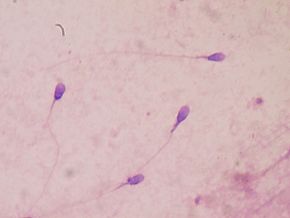
 A recent study by a team of researchers from France and Denmark highlighted the point that all medicines have side-effects, even though we may not realize it for years. Ibuprofen is a great non-prescription pain reliever - a nonsteroidal anti-inflammatory drug (NSAID), but it should be taken only when needed. Ibuprofen is found in such commonly used medicines as Advil and Motrin. The researchers found that ibuprofen has antiandrogenic effects (alters or disrupts the endocrine system) which results in a temporary condition called "compensated hypogonadism" when taken for extended periods by healthy young men (in the study 600 mg was taken daily for 6 weeks).
The researchers stress that this "depression of important aspects of testicular function, including testosterone production" was temporary from short term use, but they were concerned with those who take it daily for longer periods, such as athletes. They wondered whether this could be contributing to lowered sperm levels and the drops in male fertility that we are seeing in western developed countries. [Note that ibuprofen use has also been linked to a higher risk of cardiac arrest.] From Medical Xpress:
Taking ibuprofen for long periods found to alter human testicular physiology
A team of researchers from Denmark and France has found that taking regular doses of the pain reliever ibuprofen over a long period of time can lead to a disorder in men called compensated hypogonadism. In their paper published in Proceedings of the National Academy of Sciences, the group describes their study, which involved giving the drug to volunteers and monitoring their hormones and sperm production.
To learn more about the possible impacts of the popular anti-inflammation drug Ibuprofen on male fertility when taken for long periods of time, the researchers asked 31 men between the ages of 18 and 35 to take 600 milligrams (three tablets) a day of the drug for six weeks. Other volunteers were given a placebo. Over the course of the study, the volunteers were tested to see what impact the drug had on their bodies.
The researchers report that just two weeks into the study, they found that all of the volunteers had an increase in luteinizing hormones, which the male body uses to regulate the production of testosterone. The increase indicated that the drug was causing problems in certain cells in the testicles, preventing them from producing testosterone, which is, of course, needed to produce sperm cells. They further report that the change caused the pituitary gland to respond by producing more of another hormone, which forced the body to produce more testosterone. The net result was that overall testosterone levels remained constant, but the body was overstressing to compensate for the detrimental impact of the Ibuprofen—a state called compensated hypogonadism.
The researchers note that while compensated hypogonadism can cause a temporary reduction in the production of sperm cells, reducing fertility, it is generally not cause for alarm. What is more of a concern, they note, is using the drug for longer periods of time. It has not been proven yet, but the researchers suspect such use, as is seen with some professional athletes or others with chronic pain issues, might lead to a condition called overt primary hypogonadism, in which the symptoms become worse—sufferers report a reduction in libido, muscle mass and changes in mood. Additional studies are required, they note, to find out if this is, indeed, the case. [Original study.]