More than a year after California revised its flame retardant standards so that new furniture (the polyurethane foam in upholstered sofas, sofa beds, and chairs) does not have to use flame retardants, it is still hard to find out whether the furniture is flame retardant free. This is what I have experienced in the last few months - the store doesn't know and the manufacturer won't respond to emails.
The new furniture label should say TB 117-2013 , and then you still need to ask the retailer if there are flame retardants in the upholstered furniture. The new label means that the manufacturer does NOT have to use flame retardant chemicals anymore, but it does NOT mean they are chemical free. And flame retardants are still found in many baby products (car seats, bumpers, crib mattresses, strollers, nursing pillows, etc), some personal care products, and electronics. It's a buyer beware situation.
More and more research is finding health problems with flame retardants because they are "not chemically bound" to the products in which they are used - thus they escape over time, and get into us via the skin (dermal), inhalation (from dust), and ingestion (from certain foods and dust on our fingers). And because flame retardants are persistant, they bioaccumulate (they build up over time). They can be measured in our urine and blood.
Evidence suggests that flame retardants may be endocrine disruptors, carcinogenic, alter hormone levels, decrease semen quality in men, thyoid disruptors, and act as developmental neurotoxicants (when developing fetus is exposed during pregnancy) so that children have lowered IQ and more hyperactivity behaviors.
How does one know if the foam in your furniture has flame retardants in it? Duke University will test it for free if you send them a small piece of the furniture's foam. http://sites.nicholas.duke.edu/superfund/whats-in-my-foam/ I originally read about this service a few months ago in The Atlantic,
From The Atlantic: How to Test a Couch for Toxins
It began with a smell. Kerri Duntley had just bought a pair of large, cream-colored couches....As the scent continued to fill her living room, Duntley asked herself a troubling question: What was causing the couches to smell like industrial chemicals? The answers weren’t easy to find. Duntley searched in web forums and even tried contacting the couches’ manufacturer. “I called and called and called,” she said. “They just would not give me the information.” She grew frustrated and began looking for new couches. It was then that she discovered an unusual service run by a Duke University lab.
The lab’s offer was simple. First, the lab instructed, wield a pair of scissors. Grab something made with polyurethane foam—say, a mattress or the innards of a couch cushion. Cut a small chunk from the foam. Wrap the surgical work in tinfoil, ziplock seal it and mail the crime-scene-looking evidence off to Durham, North Carolina. Wait up to 45 days, the lab said, and it’ll arrive: a report detailing toxic flame retardants embedded in the foam.
Duntley complied. When the results came back, she learned that her couch sample had tested positive for two flame retardants, including one that has proven harmful in animal studies, a finding that she called heartbreaking. Her experience points to a vast gap in safety information about consumer goods. With the U.S. government’s limited power to regulate chemicals, many consumers, like Duntley, are left to piece together their own crude health-risk assessments. That fabric softener? It may smell like the Elysian Fields, but what if its unlisted ingredients cause cancer?
Government officials , academic researchers, the chemical industry and environmentalists agree: The U.S. system of chemical regulation is broken. But while the fight over reform continues in Washington, consumers remain blind to many of the chemicals that enter their homes.
Duke’s service is looking in its small way to change that. The lab—which offers anyone a free chemical analysis of polyurethane foam—has informed hundreds of Americans about their furniture’s toxicity. At the same time, the foam samples have given Duke’s team a large bank of crowdsourced research. By offering a free service to an anxious public, Duke’s scientists are gaining a clearer view of chemical manufacturing. And they’re learning just how much we don’t know about the chemicals that enter our homes.
Stapleton was part of a scientific cohort that found ingesting dust—say, getting our dusty hands on a burger—is by far our largest source of exposure to flame retardants; flame retardants aren’t chemically bound to their products, and so they attach themselves to airborne dust.
But what began in California soon became a de facto national standard, since furniture companies didn’t want to manufacture separate lines. Stapleton was interested to see how chemically saturated our furniture really is. So she and her colleagues asked families for samples of their baby products’ foam. After reviewing 101 samples from across thirteen states, Stapleton’s 2011 study reached a startling conclusion: Flame retardants accounted for about 5 percent of the products’ weight, and the chemicals were found in 80 percent of the samples.
Some of the chemicals were carcinogens. Others were from a chemical class known as polybrominated diphenyl ethers, or PBDEs, which have been linked to lower IQ scores, attention deficit hyperactivity disorder, and thyroid disorders. The most common flame retardant among the samples was tris (1,3-dichloroisopropyl)phosphate, or TDCPP, which researchers say is likely to harm the neurological development of infants. TDCPP, in fact, was used throughout the 1970s in children’s pajamas, until critical health research led manufacturers in 1977 to stop using it. Yet the chemical had reemerged in products like strollers and baby mattresses.
The lab offered to test some of these strangers’ furniture for free. But the requests kept coming. That’s when Stapleton and her colleagues decided to expand the scope of the testing and conceived of a free service for the public. They’d test anyone’s polyurethane foam for a suite of seven common flame retardants as something of a public service, since it would be funded by a federal grant (itself funded by taxpayer dollars). The service would also aid Stapleton’s research, offering a valuable stream of crowdsourced data about the chemicals used in furniture.
By crowdsourcing her research, Stapleton has also uncovered a flame retardant that academic literature has yet to identify. The flame retardant is a chlorinated organophosphate, like TDCPP, and its health effects are unknown, she said. Stapleton said that this recent discovery-by-accident followed the same pattern as her research on Firemaster 550, a popular flame retardant that replaced two widespread PBDEs after they were withdrawn from the market... But emerging research has raised concerns about Firemaster 550, too. One study from Boston University and Duke researchers found that the chemical mixture may cause obesity in humans. Stapleton found the same effect in rats.

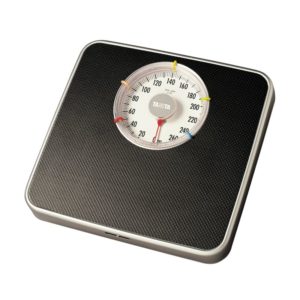 Here is an article to what I referred to in my recent Feb. 27 Feast and Famine Diet post about intermittent fasting being beneficial to health and resulting in weight loss. This definitely seems easier than sticking to very low calorie diets weeks on end. From NPR:
 Of course some foods are addictive. Anyone who tries to eat just one french fry or one piece of chocolate or one potato chip knows that it's very, very hard to do that. Do people have raw carrot cravings? Nah... Chocolate cravings? Yup..Does this research really tell us anything new? From Science Daily:
 This research suggests that emulsifiers (which are added to most processed foods to aid texture and extend shelf life) can alter the