Skip to content

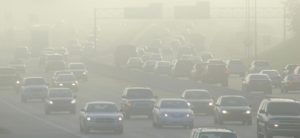
Very depressing news. The EPA plans to NOT take into account of the value of human life any more when making rules and setting policy regarding air pollutants (e.g., fine particulate matter and ozone). Meaning that the value of a human life is zero dollars. Instead, the only thing that will be considered is the cost to businesses of pollution regulations.

In other words, no more estimates of the dollar value of lives saved in the cost-benefit analyses for new pollution rules. People dying will just be a side-effect of business - eh, move on, nothing to see here.

This means that the cost to society (of human suffering and deaths) from pollutants just doesn't matter. Businesses obviously do not/will not want regulations that cost money.  Yes, this will mean dirtier air and the environment going forward. Very depressing...

Excerpts from NY Times: Trump’s E.P.A. Has Put a Value on Human Life: Zero Dollars

Government officials have long grappled with a question that seems like the purview of philosophers: What is the value of a human life?

Under both Democratic and Republican administrations, the answer has been in the millions of dollars. The higher the value, the more the government has required businesses to spend on their operations to prevent a single death.

But for the first time ever, at the Environmental Protection Agency the answer is effectively zero dollars. ...continue reading "The EPA Now Values Human Life At Zero Dollars"
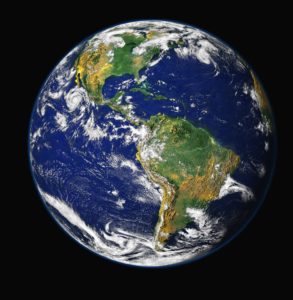
Earth. Credit: Wikipedia

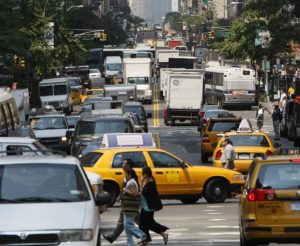
Today is Earth Day, a good day to reflect on the state of the Earth. Our home. Think about the tremendous amount of air pollution in the air we breathe, of which two pollutants of concern are ozone and fine particulate matter.

The American Lung Association released its annual State of the Air 2021 report. Unfortunately, it reports that more than 40% of American (over 135 million people) are living in places with unhealthy levels of ozone or particle pollution.

Air pollution has all sorts of negative health effects (e.g. effects on brain, heart disease, premature death) The report also points out that the burden of living with the unhealthiest air is not shared equally by everyone. A report finding: “People of color are over three times more likely to be breathing the most polluted air than white people.”

On the other hand, things would be even worse without the fifty year old Clean Air Act (passed in 1970, signed into law by President Nixon). The air quality data used in the report is collected at official monitoring sites across the United States by the federal, state, local and tribal governments. Note that wildfires added to levels of air pollution. It's not just industry, power plants, and vehicles.

Which cities in the US have the worst forms of air pollution? Los Angeles remains the city with the worst ozone pollution in the nation. Fairbanks, Alaska is currently the metropolitan area with the worst short-term particle pollution for the first time. And Bakersfield, California returned as the most polluted for year-round particle pollution (for a second year in a row).

Are you wondering about the ozone and particle pollution in X, Y, or Z locations? Go check out the report. Just keep in mind that it is NOT looking at specific chemical emissions in the air, but only 2 things: ozone and fine particulates.

Short summary, from The Hill: Shocking new study finds 4 out of every 10 Americans live in areas with unhealthy air pollution

Easy to read, with lots of links. From the American Lung Association: State of the Air 2021

The report's 25 most polluted cities for ozone and particulate matter: Most Polluted Places to Live

A study of 60 million Americans 65 years old and older (the entire Medicare population) found that long-term exposure to airborne fine particulate matter (PM2.5) and ozone at concentrations below current national standards increases the risk of premature death ("all cause mortality") even when the levels are below current national standards. This effect was most pronounced among racial minorities and people with low income. The national standards are called National Ambient Air Quality Standards (NAAQS), and they are established by the U.S. Environmental Protection Agency (EPA).

Note that PM2.5 refers to fine particles in the air smaller than 2.5 micrometers - these are truly small particles. It is thought that these tiny particles contribute to the development of potentially fatal diseases various ways - by causing chronic inflammation, and also because they slip past the body's defenses and can be absorbed deep into the lungs and bloodstream. They are not sneezed or coughed out the way larger natural particles (like airborne soil and sand) are removed from the body's airways.

These study results are a strong argument in support of the view that our air needs to be protected and standards need to be strengthened - not loosened. Earlier posts on this topic have found links between air pollution (especially fine particulate matter smaller than 2.5 micrometers) and cognitive decline and dementia in older women, strokes, high blood pressure, an increase in death (especially cardiovascular disease), etc. From Medical Xpress:

Study of US seniors strengthens link between air pollution and premature death

A new study of 60 million Americans—about 97% of people age 65 and older in the United States—shows that long-term exposure to airborne fine particulate matter (PM2.5) and ozone increases the risk of premature death, even when that exposure is at levels below the National Ambient Air Quality Standards (NAAQS) currently established by the U.S. Environmental Protection Agency. 

...continue reading "Older Adults, Air Pollution, and Premature Death"