
 Just a few years ago the type of pesticide (organophosphate, for example chlorpyrifos) looked at in this study was commonly used everywhere - in schools, homes, agriculture. It was easy to buy in stores (e.g., Raid spray), and was considered "safer" than older pesticides. Over time problem after problem has been found with them - with the latest being decreased lung function in children exposed to organophosphates early in life.
Keep in mind that with all current pesticides we know very little about long-term effects, especially on developing fetuses and children, and so we should be very, very careful about using them and avoid unnecessary use. Yes, that means using them for harmless lawn weeds is an unnecessary use. Common lawn weeds can not give a person cancer, birth defects, health problems, or illnesses, but pesticides can. From Medical Xpress:
Weaker breaths in kids linked to early pesticide exposure
Taking a deep breath might be a bit harder for children exposed early in life to a widely used class of pesticides in agriculture, according to a new paper by researchers at the University of California, Berkeley. A new study has linked the levels of organophosphate pesticide metabolites in the urine of 279 children living in California's Salinas Valley with decreased lung function. Each tenfold increase in concentrations of organophosphate metabolites was associated with a 159-milliliter decrease in lung function, or about 8 percent less air, on average, when blowing out a candle. The magnitude of this decrease is similar to a child's secondhand smoke exposure from his or her mother.
"Researchers have described breathing problems in agricultural workers who are exposed to these pesticides, but these new findings are about children who live in an agricultural area where the organophosphates are being used," said study senior author Brenda Eskenazi, a professor of epidemiology and of maternal and child health. "This is the first evidence suggesting that children exposed to organophosphates have poorer lung function."
The children were part of the Center for the Health Assessment of Mothers and Children of Salinas (CHAMACOS), a longitudinal study in which the researchers follow children from the time they are in the womb up to adolescence. The researchers collected urine samples five times throughout the children's lives, from age 6 months to 5 years, and measured the levels of organophosphate pesticide metabolites each time. When the children were 7 years old, they were given a spirometry test to measure the amount of air they could exhale.
"The kids in our study with higher pesticide exposure had lower breathing capacity," said study lead author Rachel Raanan, who conducted the research while she was a postdoctoral scholar in Eskenazi's lab. "If the reduced lung function persists into adulthood, it could leave our participants at greater risk of developing respiratory problems like COPD (chronic obstructive pulmonary disease)."
The study did not examine the pathways for the children's exposure to pesticides, but the researchers did recommend that farmworkers remove their work clothes and shoes before entering their homes. They also suggested that when nearby fields are being sprayed with pesticides, children be kept away and, if indoors, windows should be closed. Pesticide exposure can also be reduced by washing fruits and vegetables thoroughly before eating.
The authors noted that although organophosphate pesticides are still widely used, most residential uses of organophosphate pesticides in the United States were phased out in the mid-2000s. In California, use of organophosphates in agriculture has also declined significantly from 6.4 million pounds in 2000, when the study began, to 3.5 million pounds in 2013, the year with the most recent pesticide use data.
 The mother is an important source of the first microbiome for infants by "seeding" the baby's microbiome - from the
  New research showed that eight days after a concussion, the concussed athletes (football players) looked and felt like they had recovered (clinical recovery), but MRIs showed that there were still neurophysiological abnormalities (significant blood flow decrease) in their brains. They did not look at if and when the blood flow returned to normal, but that research also needs to be done.
 This new study gives further support for the role of the appendix as a "natural reservoir for 'good' bacteria". The researchers found that a network of immune cells (innate lymphoid cells or ILCs) safeguard the appendix during a bacterial attack and help the appendix "reseed" the gut microbiome. They also said that a person's diet, such as the proteins in leafy green vegetables, could help produce ILCs. Note that while it is thought that this applies to humans, the research was done on mice. From Medical Xpress:
 Loneliness or social isolation is a health risk that can increase the risk of chronic illness and premature death.
 Cold and flu season will soon be here, so it's time to review sneeze basics. Here's a nice little study looking at where our sneeze germs wind up - answer: basically all over the room within a "high propulsion sneeze cloud". From Medical Xpress;
 Another excellent reason to breastfeed premature infants - to increase the odds of preventing retinopathy of prematurity (ROP), which is the reason preemies can go blind. It occurs when blood vessels in the retinas of premature infants start to grow out of control. If the abnormal growth continues, the retinas detach, and this can cause blindness.
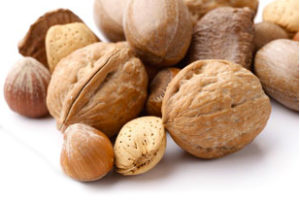 A newly published study reviewed 61 studies that looked at daily tree nut consumption on cardiovascular risk factors and found many health benefits. Tree nut (walnuts, almonds, pistachios, macadamia nuts, pecans, cashews, hazelnuts, and Brazil nuts) consumption lowers total cholesterol, LDL cholesterol, triglycerides, and ApoB, the primary protein in LDL cholesterol. It appeared that nut dose is more important than nut type in lowering cholesterol. The beneficial health effects are greater at about 60 grams (about 2 oz or 2 servings) or more nuts consumed per day, but positive health effects are also found at one serving per day. Five studies found that 100 g nuts per day lowered concentrations of LDL cholesterol by up to 35 mg/dL - an effect size comparable to some statin regimens.
 Data from 2 huge studies was analyzed and found that vigorous exercise and other healthy habits seems to cut the chance of developing aggressive and lethal prostate cancer up to 68 percent in men over 60. The beneficial lifestyle habits are: weekly vigorous exercise or activity to the point of sweating, at least 7 servings of tomatoes a week, at least one serving of fatty fish per week, reduced intake of processed meat, and being a long-term non-smoker.