
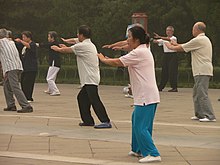
It turns out that doing the series of slow moving movements called Tai Chi reduces blood pressure more than vigorous aerobic exercise. This traditional Chinese exercise also has other benefits: it improves flexibility and balance, as well as cardiovascular and respiratory function.
A recent study found that doing the slow gentle movements and postures of Tai Chi (often called meditation in motion) for one year resulted in greater blood pressure reductions than aerobic exercises in persons with prehypertension. Half of a group of 349 adult volunteers were randomly assigned to Tai Chi for one hour 4 times per week for a year, while persons in the other group were randomly assigned to do aerobic exercises (including climbing stairs, jogging, brisk walking, and cycling) with the same frequency.
After one year, persons in both groups had lower blood pressure than at the start of the study, but in the Tai Chi group it was about 7.01 mmHg lower compared to 4.61 mmHg lower in the aerobic exercise group.
Prehypertension is blood pressure that is slightly higher than normal (between 120/80 and 139/89 mmHg), but not yet hypertension. In the study, the researchers also found that fewer persons from the Tai Chi group progressed to hypertension. A win-win.
The researchers of this study concluded that Tai Chi is a safe, moderate-intensity, mind-body exercise, which is suitable for persons of all ages and physical conditions. By the way, other studies also found that doing Tai Chi reduces blood pressure - as early as 12 weeks.
From NPR: Tai chi reduces blood pressure better than aerobic exercise, study finds
Tai chi, a traditional, slow-moving form of Chinese martial art, is known to increase flexibility and improve balance. Now, new research suggests it's better than more vigorous aerobic exercises for lowering blood pressure in people with prehypertension. ...continue reading "Study Found Tai Chi Reduces Blood Pressure Better Than Aerobic Exercises"
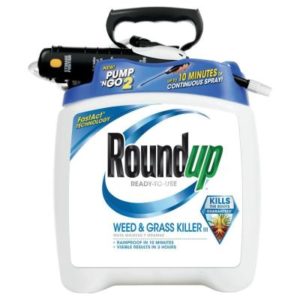 People don't realize the incredibly large amounts of pesticides applied to crops and soil in the US each year.
 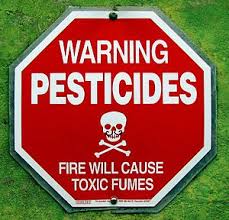 It turns out that another nasty pesticide is found in almost all of us, which we get from the foods we eat. This is the pesticide chlormequat, which is known to have harmful health effects. The use of chlormequat is on the rise in North America and Europe, where it is applied to non-organic grain crops as a plant growth regulator.
 Chemicals known as "forever chemicals" or PFAS have been in the news a lot recently. This is because PFAS (per- and polyfluoroalkyl substances) are in so many products that we all use, yet research is showing more and more health harms from them. Including to pregnant women and developing babies.
 Unfortunately, unprocessed and minimally processed foods are more expensive than ultra-processed foods. So it wasn't surprising that socioeconomic levels (including income levels) made a difference - the lower the household income, the greater the average ultra-processed food intake.
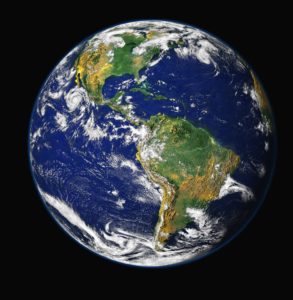 It truly is a warming world. Scientists normally label hurricanes according to their strength from Category 1 to Category 5 (wind speeds 158 mph or greater).
  It has long been known that dogs get cancers, from similar chemical exposures as humans (e.g., lymphoma from exposure to weed-killer 2,4-D on lawns). A
  A recent large Swedish
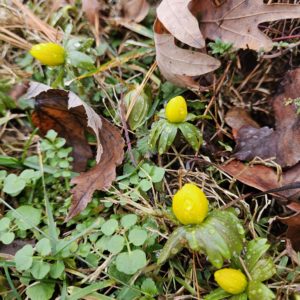 A gloomy and cold day, but the first flowers of the year have appeared.