Skip to content

While very popular in many foods and beverages, some artificial sweeteners may increase the risk of developing cancer. The results of a large study found that ingesting some artificial sweeteners (especially aspartame and acesulfame-K) are associated with an increased risk of cancer.

The study, conducted in France, followed more than 102,000 adults for an average of 8 years. The researchers found an increased risk overall of cancer, as well as breast cancer and obesity related cancers, in people who reported intake of artificial sweeteners (as compared to people who did not consume artificial sweeteners). The breast cancer and obesity related cancer risk was linked to aspartame use.

By the way, some other studies, including animal studies and in vitro studies, have suggested that artificial sweeteners, especially aspartame, have a role in cancer development, as well as other health issues and changes in the gut microbiome.

Excerpts from Science Daily: Study suggests association between consuming artificial sweeteners and increased cancer risk

Artificial sweeteners reduce added sugar content and corresponding calories while maintaining sweetness. A study publishing March 24 in PLOS Medicine by Charlotte Debras and Mathilde Touvier at the French National Institute for Health and Medical Research (Inserm) and Sorbonne Paris Nord University, France and colleagues suggests that some artificial sweeteners are associated with increased cancer risk. ...continue reading "Artificial Sweeteners Linked to Increased Risk of Cancer"

Pregnancy should last 9 months, but sometimes it doesn't. With medical advances some babies born as early as 22 or 23 weeks can now survive. Truly miraculous! But how are these extremely preterm babies doing long-term?

A University of Gothenburg study examined this issue by following up on all 383 Swedish children born before 24 weeks (most at 23 weeks) between 2007 to 2018 and who survived. At follow-up the children were between 2 to 13 years of age. The researchers found that almost all of the children had serious long-term problems, whether health or developmental problems.

75% of children born before 24 weeks of gestation had neurodevelopmental disorders, including intellectual disabilities (40%), autism (24%), and 55% required habilitation services. 88% of the group had other physical problems - for example, 63% had asthma and 39% failed to thrive and/or were short for their age. Boys were more likely to have intellectual disabilities and visual impairment than girls.

Looking at the results in the study (see Table 1), it is clear that babies born at 23 weeks had significantly fewer serious problems than at 22 weeks. Every extra week is important!

From Science Daily: Wide-ranging problems in children born before 24 weeks gestation

In a study of children born after a pregnancy of less than 24 weeks, nearly all (96 percent) proved to have any of the diagnoses studied. According to the study, lead from the University of Gothenburg, neuropsychiatric and somatic diagnoses are prevalent as these extremely preterm infants grow into adulthood. ...continue reading "Babies Born Much Too Early May Have Long-term Problems"

Parents of babies overwhelmingly want to do the right thing for their babies. When formula makers make medical claims about the formulas they sell - parents believe them. For years companies such as Danone and Nestle marketed certain formulas as reducing milk allergies and eczema in babies. But the claims were (are) not true!

A recent British Medical Journal article reported how the science behind those marketing claims has been fraudulent or flawed. Scientific evidence does not support the allergy and eczema claims regarding formula milk called hydrolysed formula.

The article said that over time formula makers were forced to stop marketing them as preventing or reducing allergies in the US, Canada, and Europe, but... they still continue to make the baseless claims elsewhere, such as China and Russia. There consumers are still being persuaded to buy expensive formulas that have little evidence of benefits for healthy infants. It's all about $$$. [Note: still find these false claims if you do an internet search on hydrolysed formula]

By the way, scientific research shows living with furry pets (e.g., dogs and cats)  in the first year of life reduces allergy development. And research supports babies eating foods that could cause allergies (e.g., peanuts, eggs, dairy) to reduce the risk of food allergies. Again in the first year - to train the immune system.

From Medical Xpress: Formula milk companies continue to push allergy products despite flawed evidence

Many countries, including the UK, have toughened their approach to formula milk products that claim to reduce allergy risks. But elsewhere, consumers are still being persuaded to buy products that make health claims without high quality evidence, reports journalist Melanie Newman in The BMJ today. ...continue reading "Formula Companies Are Still Making Claims They Shouldn’t"

There is a growing concern about what everyday exposures to phthalates in consumer products is doing to our health. For example, they're in plastic toys, plastic food containers, personal care products, and vinyl floors. The biggest concern is what these chemicals are doing to the most vulnerable among us - developing babies during pregnancy (gestational exposure), and children (childhood exposure).

A newly published study finds a link between phthalate exposure during childhood (but not pregnancy) and higher risk of specific childhood cancers. Childhood phthalate exposure was linked to a 20% increase in childhood cancers, specifically osteosarcoma (a bone cancer) and lymphoma. The study followed 1,278,685 live births in Denmark for years.

While phthalates are in many consumer products (they make plastics soft or increase durability and consistency), they are in especially high levels in certain medications. Phthalates disrupt normal endocrine signaling and are associated with reproductive problems (e.g. negative effects on sperm, miscarriages), effects on thyroid function, and an increase in some cancers.

Studies like this show that we need to move away from phthalates in consumer products. The list of phthalate health harms is increasing annually.

From Science Daily: Exposure to phthalates -- the 'everywhere chemical' -- may increase children's cancer risk

In a first-of-its-kind study, research from the University of Vermont Cancer Center has linked phthalates, commonly called the "everywhere chemical," to higher incidence of specific childhood cancers.  ...continue reading "Childhood Exposure to Phthalates in Medications and Cancer"

Pancreas with cancer (red dot) Credit: Wikipedia

Pancreatic cancer is typically discovered only when it is advanced, very hard to treat, and typically with poor outcomes. Interesting recent research found that the gut microbiome is distinctive in persons with pancreatic cancer, even in the early stages. Perhaps this finding will lead to an easy noninvasive way to screen for pancreatic cancer.

Researchers in Spain and Germany looked at both the community of microbes (microbiome) living in the mouth and the gut (shown in a person's feces). They took samples from healthy persons, individuals with pancreatic cancer, and persons with chronic pancreatitis  and found that the bacteria in the stool were predictive for pancreatic cancer (but not those in the mouth).

The "fecal microbiota signature" or pattern of microbes in those with pancreatic cancer had an increase in some microbes (e.g., Fusobacterium nucleatum) and a decrease in others (e.g., Faecalibacterium prausnitzii) - when compared to healthy individuals.

By the way, Fusobacterium nucleatum is found increased in other cancers, such as colon cancer, and beneficial and anti-inflammatory Faecalibacterium prausnitzii is reduced in a number of diseases. Eating a diet rich in high fiber foods (whole grains, fruits, vegetables, legumes, seeds, nuts) increase the numbers of F. prausnitzi in a person's gut microbial community.

From Medical Xpress: Distinct gut microbial profile may identify pancreatic cancer, irrespective of stage

A specific panel of gut microbes may identify pancreatic cancer, irrespective of how far the disease has progressed, suggests research published online in the journal Gut. ...continue reading "Pancreatic Cancer Has a Distinct Gut Microbial Pattern"

Interesting and amusing science books can be hard to find, but I found a good one. Science writer Mary Roach's book Fuzz: When Nature Breaks the Law examines all sorts of human-wildlife conflicts, from murder and manslaughter, to home invasion, to wildlife vandals. Lots of quirky and weird stories.

The big question she examines: What happens when wildlife are the perpetrators of the crime and people are the "victims"?

Researching this book she traveled around the world examining problems in different countries, including bears in Colorado, monkeys in India, poisonous beans in the U.S., vandal gulls at St. Peter's Square in the Vatican, and many more. There are discussions of terror devices, poisons, and all sorts of ways humans have tried to deal with "pests". And how many have totally backfired.

There are also examples of how coexistence between human and wildlife is sometimes the best solution. It's humans and their actions that may be the problem (not surprising!). The non-fiction book is Fuzz: When Nature Breaks the Law, by Mary Roach, published by W.W. Norton & Company, 2021.

An NPR interview (Sept. 19, 2021) with Mary Roach where she discusses her book: What Happens When Nature Breaks The Law? Mary Roach Tells You In New Book 'Fuzz'

The debate over health effects of light to moderate alcohol consumption continues. Today I read 2 studies with different conclusions about the effects of drinking small to moderate amounts of alcohol.

One study found a lower risk of type 2 diabetes when wine is drunk with meals, and the other study found that light to moderate drinking resulted in reductions in brain volume. One study health benefits, the other negative effects...

From Medical Xpress: Study finds drinking wine with meals was associated with lower risk of type 2 diabetes

An analysis of health data for nearly 312,400 current drinkers suggests consuming alcohol, most notably wine, with meals is associated with a lower risk of developing type 2 diabetes, according to preliminary research to be presented at the American Heart Association's Epidemiology, Prevention, Lifestyle & Cardiometabolic Health Conference 2022.

Consuming alcohol with meals was associated with a 14% lower risk of type 2 diabetes compared to consuming alcohol without eating food.

From Medical Xpress: More alcohol, less brain: Study finds an association that begins with an average of just one drink a day

... But according to a new study, alcohol consumption even at levels most would consider modest—a few beers or glasses of wine a week—may also carry risks to the brain. An analysis of data from more than 36,000 adults, led by a team from the University of Pennsylvania, found that light-to-moderate alcohol consumption was associated with reductions in overall brain volume.

The link grew stronger the greater the level of alcohol consumption, the researchers showed. 

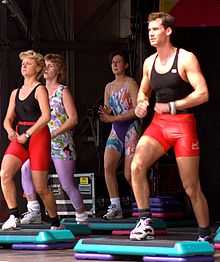
The studies are coming fast and furious about how all daily physical activity has health benefits. Ordinary daily activities that cause a person to move, such as housework, vacuuming, washing dishes, gardening, walking, cooking, even showering - all count. (On the other hand, reading and computer use do not.)

A recent study by University of California researchers found a higher rate of heart disease, stroke, and death in older women who have less than 2 hours each day of "daily life movement" (daily physical activities) compared to those who have more than 4 hours per day. At the start of the study 5416 women (63 years or older, and without heart disease) wore an accelerometer to measure their daily movements for 1 week, and then their health was followed for more than 6 years.

The researchers found that higher amounts of daily life movement or "being up and about" were associated with a lower risk of major cardiovascular disease, coronary heart disease, stroke, and cardiovascular death in older women. In other words - all movement (and not just exercise) counts towards cardiovascular disease prevention.

From Science Daily: Daily activities like washing dishes reduced heart disease risk in senior women

Seniors take note, running or brisk walking is not the only way to reduce the risk of heart disease. Simply being "up and about" performing routine activities, referred to as daily life movement, including housework, gardening, cooking and self-care activities like showering can significantly benefit cardiovascular health. ...continue reading "Ordinary Daily Activities Can Have Health Benefits"

Many people think that only exercises done in a gym, in exercise classes, or with exercise equipment can improve health. But no! Any physical activity is good, which means ordinary walks and household tasks or housework are beneficial. And the more frequently you do them, the more beneficial.

Studies show that physical activity from housework tasks (e.g., vacuuming) are associated with improved cognition, increased brain volume, and executive functioning of the brain in older adults, and with less frailty. Higher levels of physical activity are linked to a reduction in early death and heart diseases. Heavy household tasks (e.g. vacuuming, window cleaning, scrubbing, painting) have more benefits than light household tasks (e.g., dusting, ironing, doing laundry, washing dishes, cooking).

I know, I know - no one wants to get up and do such household tasks as vacuuming, but think of it as exercise class replacement.

A commentary (and video) by Dr. Stephan Martin discussing studies showing housework improving health and fitness. From Medscape: Housework Can Increase Brain Volume and Physical Fitness

Physical activity is a panacea: it protects against cardiovascular events such as myocardial infarction and stroke. Very active people are less likely to have type 2 diabetes, and the prevalence of dementia is apparently lower for them.  ...continue reading "Physical Activity of Housework Has Health Benefits"

For years it has been generally accepted that vitamin D3 is superior to vitamin D2 when taken as a supplement. Another recent study confirms that they are not equivalent in their effects in the human body, and that vitamin D3 is far superior.

Vitamin D2 (ergocalciferol) is plant and fungus-derived, and vitamin D3 (cholecalciferol) is animal-derived. Vitamin D3 is also naturally produced in the skin when exposed to sunlight, which is why it is frequently called the "sunshine vitamin".

From Science Daily: Study questions the role of vitamin D2 in human health but its sibling, vitamin D3, could be important for fighting infections

New research has found significant differences between the two types of vitamin D, with vitamin D2 having a questionable impact on human health. However, the study found that vitamin D3 could balance people's immune systems and help strengthen defences against viral infections such as Covid-19.

In a collaborative study by the Universities of Surrey and Brighton, researchers investigated the impact of vitamin D supplements -- D2 and D3 -- taken daily over a 12-week period on the activity of genes in people's blood. ...continue reading "All Vitamin D Supplements Are Not The Same"