Skip to content

Have you wondered whether a totally vegan diet for young children is healthy? Are they missing nutrients? A study from Finland attempted to answer this question by comparing young children eating vegan diets with those eating vegetarian and omnivore (both meat and plants) diets. A vegan diet contains no animal products, including eggs and dairy.

The researchers studied 40 healthy Finnish children, average age 3 1/2 years. They found that a vegan diet, even with recommended levels of supplementation (vitamin B12, iodine, vitamin D), resulted in significant effects on the children's metabolism and lower levels of certain nutrients, such as Vitamin A, vitamin D, and retinol-binding proteins (RBP). The vegan children also had a lower protein intake and lower levels of essential amino acids.

A vegan diet is practically devoid of cholesterol, EPA, and DHA, and so the children had significantly lower total cholesterol, HDL, LDL, and DHA (docosahexanoic acid) levels. DHA is a fatty acid needed for development of visual function. The researchers were concerned about the visual health of the vegan children due to the combination of low vitamin A and DHA levels. On the other hand, folate levels were high in the vegan children.

It is interesting that these differences occurred, even though all the children received nutritionist planned daily meals at high quality day care. The intake of vitamins D and A were the same in the different groups. All vegan children had followed a vegan diet since birth and were breastfed for 13–50 months by vegan mothers.

The researchers said that while a vegan diet is generally viewed as having health benefits in adulthood, they have concerns with a vegan diet for young developing children. The vegan children had low cholesterol levels, but the researchers said cholesterol is "essential for cellular growth, division, and development of physiological systems due to its major role in the synthesis of cell membranes, steroid hormones, bile acids, and brain myelin".

We currently don't know long-term health effects (whether good or bad) of a strict vegan diet from birth. Studies are needed! But we do know that young developing children need cholesterol. Another very important nutrient that may be lacking in vegan diets is choline, which is critical for brain health - a good source is eggs.

From Science Daily: Vegan diet significantly remodels metabolism in young children

The study concludes that vegan diet has a broad effect on children's metabolism. Serum biomarker levels for vitamins A and D, cholesterol forms and essential amino acids were significantly lower in children on vegan diet compared to age-adjusted omnivores. In addition, docosahexaenoic acid is absent from vegan diet. The results were recently published in a high-profile international scientific journal EMBO Molecular Medicine.  ...continue reading "Some Concerns With A Vegan Diet In Young Children"
There is strong evidence for a link between the foods a person eats, the microbes that live in the person's gut (gut microbiome), and the person's health, according to a large international study. Yes, it's all related.

The researchers were able to find clear patterns of the types of foods eaten and the microbes in the gut. They found that the presence of 15 specific bacteria are consistently associated with good health ("good microbes") and some other bacteria ("bad microbes") are associated with poor metabolic health (including inflammation, blood sugar control).

Study researcher Tim Spector (of King's College London) said: "When you eat, you're not just nourishing your body, you're feeding the trillions of microbes that live inside your gut."

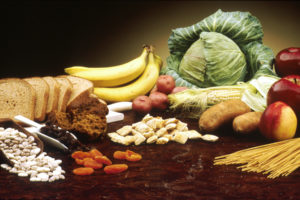
They found that a diverse diet rich in minimally processed plant-based foods (e.g. fruits, vegetables, seeds, nuts, whole grains, dietary fiber) and fish supports and feeds "good" gut microbes associated with health, with favorable blood sugar levels (glucose control), lower levels of inflammation, improved metabolism, and thus lower risk of heart disease and other chronic conditions (e.g. type 2 diabetes).

On the other hand, persons that ate more highly processed foods, added sugars (desserts!), low fiber foods, artificial sweeteners, foods with additives were more likely to have "bad" microbes linked to poor health, inflammation, unfavorable blood sugar levels, and obesity.

They were able to see that specific foods clearly had an effect on specific bacteria, for example eating tomatoes with an increase in beneficial species of Roseburia. Eating a variety of plant based foods was also associated with an increase in diversity of bacteria (this is considered good), and also with the presence of beneficial keystone bacteria such as  Faecalibacterium prausnitzii.

VERY IMPORTANT: The beneficial bacteria the researchers list are NOT in probiotic supplements. Instead, you must eat a variety of foods that feed beneficial bacteria (e.g. eating a Mediterranean style diet). In fact, some of the microbes the researchers found have not yet been named. Foods also contain bacteria, and these are ingested. For example, an apple contains about 100 million bacteria!

From Science Daily: Link between gut microbes, diet and illnesses revealed

Diets rich in healthy and plant-based foods encourages the presence of gut microbes that are linked to a lower risk of common illnesses including heart disease, research has found.  ...continue reading "Your Diet, Your Gut Microbes, And Your Health"

1

Well... once again a study found that frequently eating fried food is not good for health - that it is linked to a higher risk of major heart disease and major cardiovascular events (e.g. heart attack, stroke).

Apparently there has been some debate over this issue, so researchers at  Shenzhen University in China reviewed 19 studies on fried food consumption. They found that there is a linear increase - the more fried food is eaten each week, the higher the risks of heart disease, major cardiovascular events, and heart failure.

The risk for a major cardiovascular event or heart disease increases by 2 to 3% with each additional serving (one serving = 114 g or 4 oz) of fried food per week. Which bring us to the bottom line: Eat fried food sparingly!

From Science Daily: Fried food intake linked to heightened serious heart disease and stroke risk

Fried-food intake is linked to a heightened risk of major heart disease and stroke, finds a pooled analysis of the available research data, published online in the journal Heart. And the risk rises with each additional 114 g (4 oz) weekly serving, the analysis indicates.  ...continue reading "Fried Foods and Risk of Heart Disease"

Breastfeeding
Wikimedia Commons/ Anton Nosik

There are a lot of health reasons why breast milk is better for a baby then formula, and now another reason can be added to the list. A recent study found that specific immune cells (regulatory T cells) expand more in the first three weeks of life in breastfed human babies - nearly twice as abundant as in formula fed babies.

These cells control the baby's immune response against maternal cells transferred with breast milk and help reduce inflammation. In other words, breast milk is good for the baby's immune system development.

The University of Birmingham researchers also found that specific beneficial bacteria, called Veillonella and Gemella, which support the function of regulatory T cells, are more abundant in the gut of breastfed babies.

Breast milk is considered the best food for infants. It contains a range of complex nutrients, antimicrobial proteins, bacteria, human milk oligosaccharides, and hormones from the mother. Thus it isn't surprising that whether the baby receives breast milk or formula influences the gut microbiome (community of microbes in the gut).

From Science Daily: New insight into why breastfed babies have improved immune systems

Research led by the University of Birmingham and Birmingham Women's and Children's NHS Foundation Trust has revealed new insight into the biological mechanisms of the long-term positive health effects of breastfeeding in preventing disorders of the immune system in later life.  ...continue reading "Beneficial Effect of Breast Milk On the Baby’s Immune System"

Great news for men who eat a Mediterranean style diet! A study found that after a diagnosis of prostate cancer, those men who ate a Mediterranean style diet had less progression of the cancer over the next three years.

These were men who were diagnosed when the cancer was still localized and who were doing "active surveillance", that is, just actively watching the cancer  and not having cancer treatments.

A Mediterranean style diet is rich in fruits, vegetables, whole grains, seeds, legumes, nuts, fish, and extra virgin olive oil. It is a diet high in fiber, and low in processed meats, fats, sugar, and highly processed foods.

The Mediterranean diet is associated with health in a number of ways, such as lowered risk of death and a number of diseases (e.g. heart disease), and also lowered levels of chronic inflammation. It also has a beneficial effect on gut microbes, resulting in an increase in beneficial microbes that are associated with health and lower levels of chronic inflammation. Chronic inflammation is linked to cancers and a number of diseases - thus the goal is to keep inflammation levels down.

The Univ. of Texas MD Anderson Cancer Center researchers said that the findings support the idea that a Mediterranean diet can affect prostate cancer progression through lowering of systemic inflammation. The researchers write: "The Mediterranean diet may be beneficial for men with localized prostate cancer on active surveillance  because of its anti‐inflammatory, antilipidemic, and chemopreventive properties." [chemopreventive means it "prevents or slows the development of cancer"; antilipidemic is something that "reduces lipid levels in the blood"]

From Science Daily: Mediterranean diet may decrease risk of prostate cancer progression

In a study to examine a Mediterranean diet in relation to prostate cancer progression in men on active surveillance, researchers from The University of Texas MD Anderson Cancer Center found that men with localized prostate cancer who reported a baseline dietary pattern that more closely follows the key principles of a Mediterranean-style diet fared better over the course of their disease.   ...continue reading "Mediterranean Diet May Lower the Risk of Prostate Cancer Progression"

Vegan diets may be popular, but there is concern whether someone following a vegan diet can get all necessary nutrients from the diet and whether this impacts health in a negative way. This is because a person following a vegan diet avoids all animal foods - which means no dairy, no meat, no eggs, no honey, no fish, no shellfish, and no insects. This can mean difficulties in getting enough protein and some nutrients, for example choline (necessary for the brain), vitamin B-12, and calcium.

A recent study by University of Oxford researchers examined this issue by following about 55,000 people for 18 years: meat eaters, vegans, vegetarians (avoid meat, but eat dairy and /or eggs), and pescatarians (a vegetarian diet, but also eats fish). They found that when compared to meat eaters, vegans had a higher risk of fractures in their bodies (number of total fractures), and especially hip, leg, and vertebral fractures. Vegetarians and pescatarians also had a higher risk of hip fractures when compared to meat eaters, but a lower risk than vegans.

Other studies have shown that vegetarians have lower bone mineral density (BMD) than non-vegetarians, and that both calcium and protein intakes are linked to bone health. In this study and other studies, vegans had substantially lower intakes of calcium than the other dietary groups (since they do not consume dairy), and both vegetarians and vegans had lower protein intakes than meat and fish-eating groups.

Bottom line: Research finds diets rich in whole grains, legumes, fruits, vegetables, seeds, nuts, some fish, meat, eggs, and dairy (similar to the Mediterranean diet) as healthy and providing all nutrients. Pregnancy and childhood are times when one should be especially careful about getting all needed nutrients.

From Science Daily - Vegans, vegetarians and pescetarians may be at higher risk of bone fractures

Compared with people who ate meat, vegans with lower calcium and protein intakes on average, had a 43% higher risk of fractures anywhere in the body (total fractures), as well as higher risks of site-specific fractures of the hips, legs and vertebrae, according to a study published in the open access journal BMC Medicine.  ...continue reading "Vegan Diets and Increased Risk of Bone Fractures"

Every study I've seen in the past decade finds that eating berries has health benefits. A recent study from Finland adds to this by finding that eating some blackcurrants after a meal has beneficial effects on blood glucose levels. This beneficial effect occurred even though the blackcurrants were eaten as a puree with a little sugar (because they are sour berries).
The study found that one didn't have to eat a lot of the blackcurrants - 75 grams or 2/3 cup, which was eaten as a puree. Since this study was done with 26 young healthy volunteers, they did not find an effect on inflammatory markers - which were good to start with.

Other studies have found similar beneficial blood sugar level effects from eating other kinds of berries. Berries are rich in polyphenolic compounds, and dark colored berries are especially rich in anthocyanins. The blackcurrants (Ribes nigrum) were chosen for this study because blackcurrants are native to Finland, and both grow in the wild and are cultivated there. Cassis liquor is made from blackcurrants.

From Science Daily: Blackcurrants are favorable for glucose metabolism

Blackcurrants have a beneficial effect on post-meal glucose response, and the required portion size is much smaller than previously thought, a new study from the University of Eastern Finland shows.  ...continue reading "Benefits Of Eating Blackcurrants For Dessert"

Many people wonder whether eating organic foods has health benefits. Yes - studies have found some benefits, such as lower pesticide residue levels in the body in children and adults, and that eating organic foods is linked to a lower risk of cancer. A recent study conducted in France found that one benefit of eating organic foods may be a lower incidence of type 2 diabetes.

University of Paris researchers found that the more a person ate organic foods, especially plant-based organic foods, the lower the risk of developing type 2 diabetes. For each 5% increase in the proportion of organic foods in the diet, the risk of type 2 diabetes decreased by 3%. Those eating the highest amount of organic foods had a 35% lower risk of developing type 2 diabetes, when compared to those eating the least.

They point out that their findings are similar to a recent US study which found that persons reporting purchasing organic foods had a 20% lower prevalence of diabetes (when compared to people not purchasing organic foods). Animal studies find that exposure to several types of pesticides can increase the risk of diabetes. Some types of pesticides, such as pyrethroids, organophosphates, and organochlorides are endocrine disruptors and can result in metabolic disorders such as diabetes.

A nice discussion of the study, from Beyond Pesticides: Food For Thought: Eating Organic Reduces Risk of Type 2 Diabetes

The study. From the International Journal of Behavioral Nutrition and Physical Activity (IJBNPA): Prospective association between organic food consumption and the risk of type 2 diabetes: findings from the NutriNet-Santé cohort study

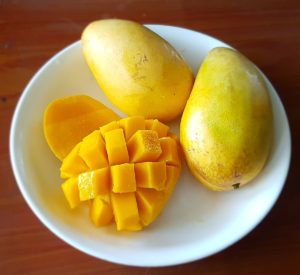
As women age, they may try all sorts of things to reduce or prevent facial wrinkles. A recent study from the University of California researchers suggests that eating 1/2 cup (85 g) mangoes four times a week may reduce facial wrinkles in older fair-skinned women. Unexpectedly however, 1.5 cups (250 g) four times a week for 16 weeks had the opposite effect - it increased facial wrinkles!

Why would it have that effect? The researchers thought that probably the carotenoids, flavonoids, and antioxidants in the Ataulfo mangoes had the beneficial skin effect in the 1/2 cup group. [Note: Other fruits also contain these.] But that perhaps the high levels of sugar in the 1.5 cup mango group had a negative effect on the skin ("increased sugar intake may have led to glycation of collagen fibers, thereby disrupting the collagen structure" of the skin).

However, cardiovascular measures were better in the higher mango intake group, such as lower cholesterol and lower blood pressure. Keep in mind though, that only 36 postmenopausal women (between the ages of 50 and 70) participated - so all the results can only be considered "preliminary".

Bottom line: Eat a variety of fruits - they are healthy for you! Research suggests that fruit, in general, is good for the skin. But perhaps eat mangoes in moderation.

From Futurity: Can eating mangoes reduce women's facial wrinkles?

Mangoes, like other orange fruits and vegetables, are rich in beta-carotene and provide antioxidants that may delay cell damage. A new study from researchers at the University of California, Davis, finds eating Ataulfo mangoes, also known as honey or Champagne mangoes, may have another benefit—reducing facial wrinkles in older women with fairer skin. The study was published in the journal Nutrients.

Postmenopausal women who ate a half cup of Ataulfo mangoes four times a week saw a 23 percent decrease in deep wrinkles after two months and a 20 percent decrease after four months.  ...continue reading "Eating Some Mangoes May Help With Facial Wrinkles"

Being overweight increases the risk of developing diabetes. So a British study finding that modest lifestyle changes could lower the incidence (by over 40%) of developing type 2 diabetes is very encouraging. These were persons who had been diagnosed with prediabetes, thus they were at high risk of developing type 2 diabetes.

What are the beneficial lifestyle changes? Losing a modest amount of weight (4 1/2 to 7 pounds) and increasing the amount of exercise to 150 minutes per week of moderate intensity exercise.

Excerpts from Science Daily: A few kilograms weight loss nearly halves the risk of diabetes

Losing a few kilograms in weight almost halves people's risk of developing Type 2 diabetes -- according to a large scale research study led by the Norfolk and Norwich University Hospital and the University of East Anglia. ...continue reading "Modest Lifestyle Changes Can Lower the Risk of Developing Diabetes"