Skip to content

Well, the following findings make total sense. A recent study found that organic meat (beef, pork, chicken, turkey) is less likely to be contaminated by harmful bacteria, including multidrug resistant bacteria. These findings hold even if it is processed in a place that also processes non-organic (conventional) meat. But the best results are if organic meat is processed at a processing facility that only handles organic meat.

One interesting finding was that the type of meat processing facility also mattered. Conventional meat that is processed by a "split-processing" facility (processes both organic and conventional meat) had lower rates of multidrug resistant bacteria contamination than processing facilities that only handle conventional meat. This could be because disinfection has to take place in-between processing of organic and conventional meat batches.

This antibiotic use and resistant bacteria association has been known for years for both humans and animals. If antibiotics and other antimicrobials are avoided whenever possible, then bacteria are less likely to mutate, and there is a lower incidence of multidrug resistant microbes.

Bottom line: try to eat organically grown meat whenever possible. It's better environmentally and better for health.

From Science Daily: Organic meat less likely to be contaminated with multidrug-resistant bacteria

Meat that is certified organic by the U.S. Department of Agriculture is less likely to be contaminated with bacteria that can sicken people, including dangerous, multidrug-resistant organisms, compared to conventionally produced meat, according to a study from researchers at the Johns Hopkins Bloomberg School of Public Health.  ...continue reading "Organic Meat Less Likely To Be Contaminated By Harmful Bacteria"
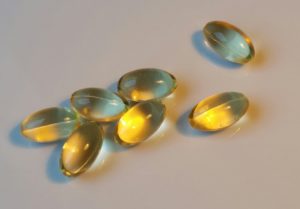
Once again a study finds that taking supplements can be problematic. This time it's fish oil supplements for heart health. Researchers found that taking routine daily fish oil supplements was linked to an increased risk of atrial fibrillation, a heart rhythm disorder. Atrial fibrillation is linked to higher risk of stroke and death.

The international research team analyzed five studies in which people with high blood lipids (elevated plasma triglycerides) took fish oil supplements hoping that it would improve their heart health. The studies were well done, with people randomly assigned to different groups But the results turned out that instead of helping, fish oil supplements appeared to cause a problem - increased risk of atrial fibrillation.

What to do for heart health? Focus on eating a healthy diet with lots of "real" foods, similar to a Mediterranean diet. That is, a diet rich in whole grains, vegetables, fruits, legumes (beans), seeds, nuts, and fish. Avoid fast foods and highly processed foods. Get exercise (at least 2 1/2 hours per week - brisk walks count), and try to lose weight if overweight.

From Science Daily: Fish oil supplements and heart rhythm disorder: New analysis

Omega-3 supplements are associated with an increased likelihood of developing atrial fibrillation in people with high blood lipids. That's the finding of a study published today in European Heart Journal -- Cardiovascular Pharmacotherapy, a journal of the European Society of Cardiology (ESC).  ...continue reading "Fish oil Supplements and Increased Risk of Atrial Fibrillation"

Eating mushrooms has always been considered part of a healthy diet. A group of researchers, after reviewing many studies, concluded that eating mushrooms frequently is associated with a lower risk of cancer, especially breast cancer. Thus consuming mushrooms may be protective against cancer.

The Penn State College of Medicine researchers reviewed 17 studies (from 1966 to Oct 2020), all of them observational, so it doesn't prove that mushrooms are protective, but it looks promising... They think the beneficial effect is from the ergothioneine in mushrooms, an antioxidant and cellular protector, and found in a variety of mushrooms.

In 2020 the same group also published similar/almost the same review of 17 studies from 1966 to 2019. At the time they stated that the mushroom-cancer association was only observed in studies from non-western regions. Perhaps mushrooms were a bigger part of the diet in those cultures? They also said when looking at the dose and response, can see that  a "10/gram per day increase in mushroom intake was associated with a 17% lower risk of cancer", especially breast cancer.

From Medical Xpress: Higher mushroom consumption is associated with a lower risk of cancer

Next time you make a salad, you might want to consider adding mushrooms to it. That's because higher mushroom consumption is associated with a lower risk of cancer, according to a new Penn State study, published on March 16 in Advances in Nutrition.  ...continue reading "Eating Mushrooms Associated With A Lower Risk of Cancer"

Another study has confirmed that if a person wants to have beneficial gut microbes that are associated with lower rates of chronic inflammation and many health conditions and diseases, then you need to eat a diet that nourishes the beneficial gut microbes. And once again, research finds that it is a plant based diet that does this.

A plant based diet is one rich in fruits, vegetables, whole grains, legumes (beans), nuts, and seeds, thus containing lots of fiber - and these nourish beneficial gut microbes. In this group is also oily fish. This is an anti-inflammatory diet. It feeds short-chain fatty acid (SCFA)-producing microbes (this is good). A great example of plant foods also containing bacteria, as well as nutrients and fiber: one raw apple has about 10 million bacteria!

On the other hand, a diet rich in processed foods and lots of meat (an animal derived diet), is associated with microbes linked to intestinal inflammation - thus an inflammatory diet . Also includes foods with high amounts of sugar and alcohol. This type of diet is low fiber and considered a Western diet.

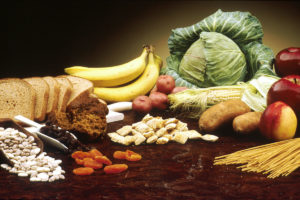
To arrive at these conclusions, researchers in the Netherlands looked at the gut microbiome of 1425 persons in 4 groups - those with Crohn's disease, ulcerative colitis, irritable bowel syndrome, and the general healthy population. They found 38 associations between dietary patterns and microbial clusters, as well as 61 individual foods and nutrients with 61 bacterial species. They found that specific foods and nutrients were associated with species known to give mucosal protection and have anti-inflammatory effects.

These beneficial bacterial species are NOT found in probiotics or supplements. You must eat the foods on a daily basis. [Another study with similar findings.] Studies show changes will occur very quickly - within two weeks, both in microbes and effects on the intestines.  Think of the saying: You are what you eat. Yes!

From Medical Xpress: Diet rich in animal foods, alcohol and sugar linked to 'inflammatory' gut microbiome

A high dietary intake of animal products, processed foods, alcohol and sugar is linked to a gut microbiome that encourages inflammation, finds research published online in the journal Gut.  ...continue reading "What You Eat Determines The Type Of Bacteria Living In Your Gut"

Many people complain of frequent colds and upper respiratory infections. Perhaps even every month. This is an especially big problem for those suffering from chronic sinusitis, because every cold and sore throat also leads to a sinus infection. So a goal is to try to reduce the number of infections, and daily vitamin D supplements may be the answer.

Many studies have looked at vitamin D supplementation, at all sorts of doses, for all sorts of health conditions, including cancer. Unfortunately, when properly done studies with people randomly assigned to different groups are done, then all sorts of correlations don't hold up, or mixed results. Right now it appears that the main positive benefit of vitamin D supplements is lowering the incidence of upper respiratory illnesses that a person gets. Another study just confirmed this finding.

An international team of researchers reviewed data from 43 studies (48,488 participants), and found a small but significant protective effect of vitamin D supplementation in lowering the risk of getting a respiratory infection (when compared with a placebo). The studies revealed that the protective benefits of vitamin D supplements were strongest in 1 to 16 year olds who took between 400 to 1000 IU daily for up to 12 months.

Interestingly, and this may really bother high dose vitamin D advocates, the researchers found that lower doses (400 to 1000 IU daily) had a positive health effect, but NOT larger daily doses. They found that data from 4 recent good studies (with persons randomly assigned to different groups) in which vitamin D was given at daily dose equivalents of 2000 IU/day or more for 2 to 5 years had NO EFFECT. In other words: null data.

These differing findings suggest that frequency (daily is better then weekly or monthly), dose, and duration (no more than 12 months) of vitamin D supplementation are key to its protective effects against respiratory illnesses. It is unclear why higher doses are NOT protective, while smaller doses are protective. It's like the saying: Less is more.

Excerpts from Medical Xpress, which actually is misleading in how the conclusions of the study are described: New research on vitamin D and respiratory infections important for risk groups

Studies have shown that supplementary vitamin D seems to provide a certain degree of protection against respiratory infections. A new study involving researchers from Karolinska Institute has now made the most comprehensive synthesis to date of this connection. The study, which is published in The Lancet Diabetes & Endocrinology, confirms that vitamin D protects against respiratory infections, a result that can have significance for the healthcare services. [NOTE: Protective effect was seen in the 1 to 16 year old age groups, and not other age groups.] ...continue reading "Fewer Respiratory Infections With Vitamin D Supplements"

Breastfeeding
Credit: Wikimedia Commons/ Anton Nosik

For years it has been known that breast milk transfers hundreds of microbial species to the baby -  which is very important and beneficial for the baby's microbiome (community of fungi, viruses, bacteria, and other microbes) and health. A recent study found that the bacteria in breast milk varies over time, which is a good reason to breastfeed for at least 6 months - the baby ingests all these beneficial species in the breast milk.

Breast milk samples were collected from 76 breastfeeding (lactating) mothers living in 8 villages in the remote Western Highlands of Guatemala during "early lactation" (6–46 days postpartum) or after months of breastfeeding or "late lactation" (109 to184 days postpartum). Modern technologies (genetic sequencing) were used to analyze the breast milk.

The researchers found a bacterial or microbiome shift from Staphylococcus and several Streptococcus species in early lactation to Sphingobium and Pseudomonas species in late lactation, along with other bacterial shifts. The changing bacterial species have different roles in the body. There were even species never before reported in breast milk, such as: Janthinobacterium agaricidamnosum, Novosphingobium clariflavumm, Ottowia beijingensis, and Flavobacterium cucumis.

Of course much is still unknown about the breastmilk microbiome, and even what is a "core" breast milk microbiome - that is, what species are the core species in all breast milk. But it's clear what the baby gets from the breast milk changes over time.  It's still early days in this research!

Note that all these hundreds of species are not those found in probiotic supplements or formula - a baby must breastfeed to get them. Unfortunately, it is estimated that only 26% of North American mothers breastfeed their babies for at least 6 months (Unicef data).

From Futurity: Breast Milk Offers Different Bacteria Over Time

This bacterial cocktail could act like a daily booster shot for infant immunity and metabolism. ...continue reading "The Bacteria In Breast Milk Change Over Time"

Once again a study found health benefits from eating a diet rich in plant-based foods, such as vegetables, fruits, whole grains, legumes, beans, nuts, and seeds This time the health benefit was a lower incidence of stroke.
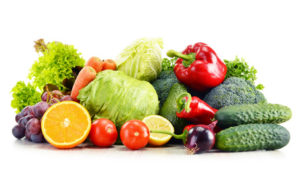
Researchers from the Harvard T. H. Chan School of Public Health looked at the data from two large studies and found that a diet high in quality plant-based foods may reduce the risk of having a stroke by about 10%. The lower risk was for ischemic stroke, in which a blood clot blocks artery to brain. There was no difference in risk for hemorrhagic stroke.

Interestingly, researchers found no association between a vegetarian diet and risk of stroke, but the number of cases was small.

From Medical Xpress: Diet high in healthful plant-based food may reduce risk of stroke by 10%

Eating a healthy, plant-based diet that includes foods like vegetables, whole grains and beans, and decreasing intakes of less healthy foods like refined grains or added sugars may reduce your risk of having a stroke by up to 10%, according to a study published in the March 10, 2021, online issue of Neurology, the medical journal of the American Academy of Neurology. The study found a diet high in quality plant-based foods may reduce your risk of having an ischemic stroke.  ...continue reading "Diet Rich In Plant-based Foods Associated With a Lower Risk of Stroke"

Another study has been published finding that higher consumption of fruits and vegetables (5 servings a day) is associated with a longer life.

Researchers from the Harvard T. H. Chan School of Public Health looked at the data from several large studies. They found that about 5 servings per day of fruit and vegetables was associated with the lowest mortality (death from any cause), and from deaths that can be attributed to cancer, heart disease, and respiratory disease. Specifically 3 servings of vegetables and 2 servings of fruits.

Eating fruits and vegetables above that level (5 servings per day) didn't seem to make a difference. Another finding: eating starchy vegetables (corn, peas, potatoes) and fruit juices were not associated with a lower risk of mortality.

However, keep in mind that the results were based on answers to Food Frequency Questionnaires (FFQ), where people answered questions about foods that they ate in the past year. Can you remember how frequently (daily, weekly, or monthly) you ate specific foods? Would you admit, in writing, that you eat lots of junk food or foods that you know are not so good for you?

As you can imagine, there is debate over how valid and reliable these questionnaires are. For example: Is It Time to Abandon the Food Frequency Questionnaire? in 2005, in 2015, and in 2018. FFQs are used because they are the cheapest option.

Some criticisms of FFQs: People don't accurately remember, and they may lie (they want to look better) by underreporting or overreporting foods. Also, the lists are premade - so if the foods you eat aren't on the lists, then it's not counted. Frequent omissions: onions, cucumbers, celery, quinoa, garlic, herbs.

Food dishes that contain many ingredients (such as many Asian dishes) can not be dealt with in FFQs that look at individual foods only. Canned foods are considered equivalent to fresh vegetables and fruits - yet they are not in many ways. No mention of organic vs non-organic foods (studies find nutritional differences, and a cancer link). Eh...

While filling out a sample online FFQ (from the National Cancer Institute) I realized that if I were part of a study - I would definitely answer so that my eating habits look better (!!), plus after answering for a while there was an urge to just get it over with (it took too long). Mutter to myself: "that sounds good, eh, who can remember..". Also, there was no way I would have admitted to any junk food binges.

From Science Daily:The right '5-a-day' mix is 2 fruit and 3 vegetable servings for longer life

Studies representing nearly 2 million adults worldwide show that eating about five daily servings of fruits and vegetables, in which 2 are fruits and 3 are vegetables, is likely the optimal amount for a longer life, according to new research published today in the American Heart Association's flagship journal Circulation.  ...continue reading "Eat At Least 5 Servings A Day of Fruits and Vegetables"

Good news for coffee lovers! Drinking 1 or more cups of coffee a day was associated with a reduced risk of heart failure in three large heart disease studies. However, drinking decaffeinated coffee was not.
Researchers analyzed results of the 3 studies, in which more than 21,000 adults were followed at least 10 years. The studies did not differentiate between type of coffee consumed and how it was prepared (drip, espresso, percolated, French press). The researchers point out that other studies have similar findings - that increased consumption of coffee is associated with decreased heart disease deaths or deaths from any cause.

Many studies also find other benefits from daily coffee consumption, such as lowered risk of diabetes, some cancers, and some neurological conditions. However, avoid caffeine when trying to conceive and during pregnancy - then it is associated with harm to the pregnancy and fetus (e.g. with miscarriage, stillbirth, low birth weight and/or small for gestational age).

Excerpts from Science Daily: Coffee lovers, rejoice! Drinking more coffee associated with decreased heart failure risk

Dietary information from three large, well-known heart disease studies suggests drinking one or more cups of caffeinated coffee may reduce heart failure risk, according to research published today in Circulation: Heart Failure, an American Heart Association journal.  ...continue reading "Drinking Coffee Associated With Lower Heart Failure Risk"

Bleeding gums are usually considered a sign of gingivitis, and the typical advice is to brush and floss more. However, new research suggests that bleeding gums can also be due to low vitamin C levels, and that extra vitamin C in the diet or supplements could help reverse the bleeding in these cases.

After reviewing fifteen studies, the authors found that bleeding in the eye (retinal hemorrhaging) and cerebral strokes are associated with an increased tendency for gum (gingival) bleeding, and that vitamin C supplementation (e.g. ascorbic acid) reverses the retinal bleeding associated with low vitamin C  levels in the blood.

These bleeding tendencies may reflect trouble in the person's microvascular system (microvascular fragility), which can be reversed with increased vitamin C (ascorbic acid) intake. [microvascular means the tiny vessels (e.g.venules and capillaries) of the circulatory system.] The researchers point out that current recommended vitamin C (ascorbic acid) doses are enough to prevent scurvy, but may be too low to prevent microvascular fragility.

Getting more vitamin C in the diet is easy to do by eating more fruits and vegetables. Especially high levels of vitamin C are in orange juice, oranges, citrus fruits, kiwis, red peppers, broccoli, strawberries, brussels sprouts, and grapefruit.

From Medical Xpress: Bleeding gums may be a sign you need more vitamin C in your diet

Current advice from the America Dental Association tells you that if your gums bleed, make sure you are brushing and flossing twice a day because it could be a sign of gingivitis, an early stage of periodontal disease. And that might be true. So if you are concerned, see your dentist. However, a new University of Washington study suggests you should also check your intake of vitamin C.  ...continue reading "Bleeding Gums Can Be Sign Of Low Vitamin C Levels"