
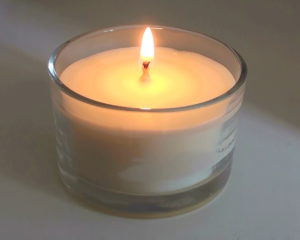
 Several people have recently asked me whether scented candles have any health effects. The answer is a big YES - they have many negative health effects, and so do other scented products such as air fresheners and dryer sheets (e,g, Bounce). All of them contain fragrances and other chemicals - all from petrochemicals (which means they are chemical products derived from petroleum). And yes - all 3 products are totally unnecessary, so ditch them for better health. View all of them as sources of indoor air pollution.
Most of the candles on the market are made with paraffin wax, derived from petroleum, and scented with synthetic fragrances, also derived from petroleum. Synthetic fragrances typically also contain phthalates that can interfere with your hormone system (endocrine disruptors).
In one study scientists at the South Carolina State University lit several brands of candles made of paraffin – the most common and inexpensive candle wax – as well as soy candles (thus vegetable based) and burned them for 5 to 6 hours in a chamber. All of the candles were unscented and undyed. They found that the paraffin candle smoke emits varying levels of pollutants, including benzene, toluene and ketones, as well as hydrocarbon chemicals called alkanes and alkenes, which are components of gasoline. They have been linked to cancer, asthma and birth defects. None of the vegetable-based soy candles produced toxic chemicals. From SC State University: Frequent use of certain candles produces unwanted chemicals
Researchers point out that the emissions from burning an occasional paraffin candle will not likely cause health problems - it's the frequent lighting of scented paraffin candles in indoor rooms, and inhaling the pollutants in the air that may cause health problems, or as Dr. Massoudi of S. Carolina State University stated: "could contribute to the development of health risks like cancer, common allergies and even asthma."
Scented candles are known to release various volatile organic compounds (VOCs) including both pleasant aromas and toxic components both before lighting (unlit) and when lit. When lit, the "highest emission concentration" was of formaldehyde. By simply touching the candles, one absorbs chemicals through the skin.
Safe candle alternatives are beeswax candles and unscented soy candles. These do not emit toxic chemicals when burned. However, all burning candles emit soot, which is ultrafine, lung-damaging particulate matter that's capable of penetrating deep into the lungs.
From Huffington Post: The Big Problem With Scented Candles
Scented candles are one of the easiest and most effective ways to mask unpleasant odors in your home....But one of the main problems with scented candles is the scent itself. According to Anne Steinemann, an environmental pollutants expert who is a professor of civil engineering and the chair of sustainable cities at the University of Melbourne, certain candles may emit numerous types of potentially hazardous chemicals, such as benzene and toluene. They can cause damage to the brain, lung and central nervous system, as well as cause developmental difficulties.
"I have heard from numerous people who have asthma that they can’t even go into a store if the store sells scented candles, even if they aren’t being burned," Steinemann added. "They emit so much fragrance that they can trigger asthma attacks and even migraines."
Researchers at South Carolina State University tested both petroleum-based paraffin wax candles and vegetable-based candles that were non-scented, non-pigmented and free of dyes. Their 2009 report concluded that while the vegetable-based candles didn't produce any potentially harmful pollutants, the paraffin candles "released unwanted chemicals into the air," said chemistry professor Ruhullah Massoudi in a statement.
It may be shocking to think that your favorite candles could potentially be bad for you, and made worse by added fragrances. Steinemann said for some people, the effects are "immediate, acute and severe," while others may not realize they are being effected until they gradually develop health issues.
Though the risk to you may be small, there are alternatives. Steinemann suggests going the unscented route, avoiding "even those with essential oils, as they can potentially have hazardous chemicals," she said. "It's almost like air fresheners with the fragrance just sitting there ... permeating surfaces in the room."
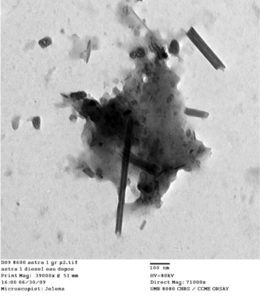 Carbon nanotubes (the long rods) and nanoparticles (the black clumps) appear in vehicle exhaust from tailpipes of cars in Paris.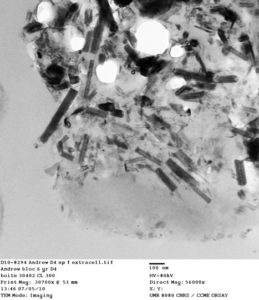
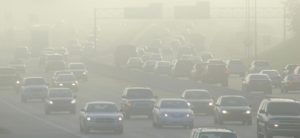 A recent post (
 Several recent studies found that air pollution has a negative effect on the brain. This study of elderly women in North Carolina found that long-term exposure to higher levels of air pollution (specifically fine particulate matter smaller than 2.5 micrometers (called PM2.5) resulted in
 Another good reason to breastfeed. Exposure to pollutants like nitrogen dioxide and airborne particles can cause negative effects on motor and mental development in infants, but a new study says those effects are countered in babies who are breast-fed for at least 4 months by their mothers. Researchers in Spain began monitoring rural, pregnant women in 2006 and analyzed samples from 638 women and their infants at 15 months. They reported that babies who are breast-fed did not suffer from the potentially harmful developmental impact of PM2.5 (pollution particle matter) and NO2 (nitrogen dioxide). From Science Daily:
 Another study finding negative effects of air pollution - this time high levels of traffic-related air pollution is linked to slower cognitive development among 7 to 10 year old children in Barcelona, Spain. From Science Daily: