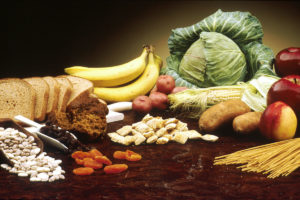
The evidence keeps growing that cutting back on how frequently a person eats meat may have health benefits such as lowering cancer risk A recent study found that eating a low-meat diet (5 or less times a week), or just eating fish and not meat, or a no meat diet (vegetarian or vegan) all are associated with a lower risk of cancer - when compared to those who eat meat more than 5 times per week.
Just keep in mind that they only asked people about their diets one time (at the study start) in an eleven year time period - thus it doesn't account for dietary changes over time. Also, other studies also find that there are health benefits (including lower risks of cancer) to eating less meat and more fruits, vegetables, whole grains, legumes, seeds, nuts - think along the lines of a Mediterranean diet.
Yesterday's post was about how several well-done large studies did not find the health benefits from vitamin D supplements that the researchers had hoped for. In one of the studies (the VITAL trial) discussed yesterday, Vitamin D supplements did not prevent cancer or cardiovascular events (e.g., stroke, heart attack), which was the focus of the study.
But... one positive finding (in a separate analysis of the study results) did come out of the study: vitamin D supplements reduced the incidence of autoimmune disease by 22% over the 5+ years of the VITAL trial. This included rheumatoid arthritis, polymyalgia rheumatica, autoimmune thyroid disease, and psoriasis.
The more than 25,000 participants (all older than 50 years) took vitamin D 2000 IUs daily or 1 g marine omega-3 fatty acids (fish oil) daily, or both, or none for more than 5 years. Only the vitamin D supplementation (whether taken alone or with fish oil) had a statistically significant health effect.
Autoimmune diseases (AD) such as rheumatoid arthritis, polymyalgia rheumatica, autoimmune thyroid disease and psoriasis, are a leading cause of morbidity and mortality as people age. Few effective treatments are available for AD, but some preclinical studies have hinted that supplements, including vitamin D and omega-3 (or n-3) fatty acids, may have beneficial effects. In a new study published in BMJ, investigators from Brigham and Women's Hospital evaluated whether taking vitamin D and/or omega fatty acid supplements could affect rates of AD. ...continue reading "Vitamin D Supplements and Autoimmune Disease"
Several recent articles on Medscape (a site for medical professionals) highlight the debate over vitamin D. The question: Does daily vitamin D supplementation have positive health benefits or not? Everyone agrees that if there is an actual deficiency, then it has positive health effects. But how about the average person with levels above the deficiency level?
Numerous observational studies find that low levels of vitamin D are associated with all sorts of health problems (e.g., cancer, heart disease), but randomly controlled trials (RCT) where people are randomly assigned to different groups with no one knowing what they are getting - just aren't finding health benefits. The strongest evidence so far has been for vitamin D supplementation resulting in lower incidence of upper respiratory illnesses.
What is going on? Some suggest that low vitamin D levels are a marker for ill health (the illness reduces the vitamin D levels), and that vitamin D levels go down when there is chronic inflammation. It could also be a proxy for sun exposure (the more sunlight, the higher the vitamin D levels). Note that sunlight may have additional benefits compared to just vitamin D supplementation (e.g, blue light is immune boosting).
John M. Mandrola, MD writes for Medscape, and his articles tend to be thought-provoking. Some excerpts of a Commentary by Dr. John Mandrola from Medscape: Why Is Vitamin D Hype So Impervious to Evidence?
The vitamin D story exudes teaching points: it offers a master class in critical appraisal, connecting the concepts of biologic plausibility, flawed surrogate markers, confounded observational studies, and slews of randomized controlled trials (RCTs) showing no benefits on health outcomes.
Yet despite the utter lack of benefit seen in trials, the hype continues....
My questions are simple: Why doesn't the evidence persuade people? How many nonsignificant trials do we need before researchers stop studying vitamin D, doctors stop (routinely) measuring levels, and patients stop wasting money on the unhelpful supplement? What are the implications for this lack of persuasion? ...continue reading "Some Large Studies Find No Benefit From Vitamin D Supplements"
The results of a recently published large study are depressing, but not surprising. The pesticide 2,4-D, which was originally used in Agent Orange, is still around decades later and found everywhere you look - including in us.
In the past decade there has been a tremendous increase in the amount of both agricultural and residential use of 2,4-D in the US. The herbicide (a type of pesticide) is used to kill unwanted vegetation, including weeds. In 2020 alone, 33.3 million pounds of 2,4-D were used for agricultural purposes in the US! This number is projected to rise more each year, especially because it's used on genetically modified crops.
The study (with 14,395 participants) found that in 2011-2012, 40% of persons had 2,4-D in their urine. This was a massive increase from the start of the study in 2001 (17.1%). It is expected to have increased since then. Other studies find that current levels of pesticide residues (including additional pesticides) are in over 90% of all Americans, including pregnant women.
Children (aged 6 to 11 years) had the highest 2,4-D concentrations, and below that women of childbearing age. Interestingly, one difference they found was that non-Hispanic white persons had higher levels of 2,4-D in the blood than black persons.
The researchers thought that this might be because so much is used on lawns and green spaces in white suburban areas (think of those "perfect manicured lawns"). High-income persons had higher levels (manicured lawns!) than lower income persons. Agricultural workers also had higher levels of 2,4-D.
Health effects from 2,4-D: They include an increase in the risk of non-Hodgkin lymphoma, pediatric leukemia, birth defects (e.g., hypospadias in boys), allergic wheeze, hypothyroidism, chloracne, abnormal sperm, reduced fertility, soft tissue sarcoma, and olfactory deficits. It is an endocrine disruptor.
How do we get exposed to 2,4-D? Food and water frequently have 2,4-D residues. It can be in dust, in the air (from drift when applied nearby), rain, and even on our pets (when they go on treated lawns). We can inhale it, ingest it (from food and water), and absorb it through our skin and eyes. It is in most household carpet dust samples (it gets tracked inside).
What to do? Some simple steps:
Avoid using any pesticides, including weed and feed products on lawns! Lawns do NOT need pesticides to be healthy!
Stay off pesticide treated lawns, especially in the first 3 days and before a rainfall.
Take shoes off at the door to avoid tracking in 2,4-D (and other pesticides, heavy metals).
Eat organic food, as much as possible. [2,4-D is not allowed to be used in organic farms.]
2,4-D product near refrigerated foods
2,4-D (2,4-Dichlorophenoxyacetic acid) is commonly added to weed and feed products, and used by both ordinary consumers and lawn care services. Incredibly, big box stores such as Costco sell big bags of these 2,4-D products - even next to food! This makes consumers think it's safe. But it's not.
One out of three people in a large survey showed signs of exposure to a pesticide called 2,4-D, according to a study published today by researchers at the George Washington University. This novel research found that human exposure to this chemical has been rising as agricultural use of the chemical has increased, a finding that raises worries about possible health implications. ...continue reading "Commonly Used Pesticide Is Found In Many People"
It is now 9 full years since I first started successfully treating both chronic sinusitis and regular sinus infections using only the probiotic Lactobacillus sakei. This means no antibiotics or any other antibacterial has been used in more than 9 years! This is amazing – ten years ago I didn't believe this to be possible.
Research shows that the beneficial bacteria Lactobacillus sakei occurs naturally (in tiny amounts) in healthy sinuses, but is depleted or missing in those with sinusitis. (You know we all have a sinus microbiome - bacteria, fungi, and viruses living in the sinuses, yes?) I started by using kimchi after reading research in late 2012, but the last few years I've used the refrigerated product Lanto Sinus, which contains a kimchi-derived strain of Lactobacillus sakei.
I have heard from hundreds of people since the blog started, and the majority agree - Lactobacillus sakei works great as a sinusitis treatment! (Other probiotic species just don't work.) [See Best Probiotics For Sinusitis for details on results and products used.]
Lessons Learned During Past 9 Years:
Lactobacillus sakei alone is enough to treat sinusitis or sinus infections. Don't need fancy concoctions or fancy protocols when using it. Using it (whether in kimchi or Lanto Sinus) should take under 1 minute a day!
Only use Lactobacillus sakei when needed - when there are some sinus symptoms (e.g., lots of mucus, post nasal drip) or you're sliding towards sinusitis. No need to wait till the sinus infection is full-blown.
Stop using it when feeling better. Just like with antibiotics, don't take it daily and routinely, but only when needed.
Use for a few days and evaluate whether you can stop or whether you need to keep using it longer. Frequently the sinuses keep improving even after stopping Lactobacillus sakei. One can always use more if needed.
Lactobacillus sakei normally lives in healthy sinuses, which is why it is such an effective sinus infection treatment for so many people.
Over time (whether weeks or months) a person typically needs less Lactobacillus sakei to treat sinus symptoms. The L. sakei colonizes in the sinuses - whether short-term or long-term.
Swishing a product like Lanto Sinus in the mouth alone is a gentle and cautious way to use the product. Using it in the nostrils is a stronger way to use the product.
Don't overdo it. Using a little bit in the nostrils (as described in Sinusitis Treatment Summary) is sufficient. Let the little buggers travel on their own throughout the sinuses!
If Lactobacillus sakei works for a person, it can feel miraculous as sinusitis symptoms disappear, frequently within a few days. Others have slower improvement. Unfortunately, it doesn't work for everyone and only self-experimentation determines whether it does - after all, everyone's sinus microbiome is different.
Hopefully this offers hope to sinus infection sufferers. Good health!
An easy-peasy way to lower your risk for type 2 diabetes may be to not eat late dinners. Research conducted in Spain found that eating a meal an hour before bedtime decreases insulin secretion, impairs and decreases glucose tolerance, and so increases type 2 diabetes risk.
Lead author Marta Garaulet, PhD said: "We found that late eating disturbed blood sugar control in the whole group." The study had 845 participants, none with diabetes, all living in Spain. Melatonin levels (which rise naturally in the 2 hours before bedtime) were involved - so researchers say don't eat a meal then. Those with a certain gene variant had more disturbed blood sugar control than those without the gene.
Bottom line: Don't eat a meal in the 2 hours before bedtime.
A study has given further support to the view that eating prunes (dried plums) has health benefits. Penn State University researchers reviewed studies and found that eating prunes may help protect against bone loss in postmenopausal women, as well as having anti-inflammatory and antioxidative effects. All good!
A good amount to eat (according to the studies reviewed) is about 100 grams or 10 prunes (dried plums) each day.
But... don't just focus on eating prunes (dried plums) as a healthy food. Eating several servings of a variety of fruits every day (whether fresh, frozen, or dried) has numerous health benefits and should be part of your regular diet. Fruit is anti-inflammatory, great for the gut microbes, high in fiber, and contains minerals and nutrients. Enjoy!
The CDC (Centers for Disease ) recently released another bit of gloomy news about Americans - that 25% of adults report being physically inactive. Being physically inactive means that they don't do any physical activities outside of work. This means no walking for exercise, no gardening, no bicycling, nothing.
There were differences according to where a person lives - from a low of physical inactivity of 17.7% of people in Colorado to a high of 49.4% in Puerto Rico. There were regional variations with the South reporting 27.5% of adults being physically inactive and with the West the least (21.0%).
There were also differences in physical inactivity levels by race and ethnicity. Overall, Hispanic adults (32.1%) reported the most physical inactivity outside of work, and non-Hispanic Asian adults the least (20.1%). The results were from large-scale health-related telephone surveys (called Behavioral Risk Factor Surveillance System or BRFSS), with more than 400,000 adults interviewed each year.
Why the concern with physical activity? Numerous studies find that physical activity results in better health, for example in lower risk of diabetes, better brain health, and lower risk of heart disease. Some researchers call exercise or physical activity a "magical bullet" in warding off heart disease.
Dr. Ruth Peterson, Director of CDC's Division of Nutrition, stated that:
“Getting enough physical activity could prevent 1 in 10 premature deaths. Too many people are missing out on the health benefits of physical activity such as improved sleep, reduced blood pressure and anxiety, lowered risk for heart disease, several cancers, and dementia (including Alzheimer’s disease)."
How much physical activity is best? CDC guidelines state that adults should have at least 150 minutes (2 hours and 30 minutes) to 300 minutes of moderate intensity workouts each week. This includes brisk walking! All physical activity counts, for example, bicycling, gardening, fast dancing, exercise classes.
Recently the CDC (Centers for Disease Control and Prevention) released the depressing news that very few Americans are eating recommended amounts of fruits and vegetables. Many studies show that eating several servings each day of fruits and vegetables has all sorts of health benefits (e.g., live longer, lower inflammation, lower risk of diabetes and some cancers).
The CDC reported in the Jan. 7, 2022 CDC weekly report that surveys of 294,566 adults in 2019 found that only 12.3% of American adults met fruit intake recommendations, and 10.0% of adults met vegetable intake recommendations.
What are the daily recommendations for fruits and vegetables? According to the CDC, current Dietary Guidelines for Americans advise eating more fruits and vegetables as part of a healthy dietary pattern. This means adults should consume 1.5 to 2 cups of fruit and 2 to 3 cups vegetables daily. (Note: A serving is usually about 1/2 cup of fruits or vegetables.)
Why should you follow these guidelines? The CDC states: "A healthy diet supports healthy immune function and helps to prevent obesity, type 2 diabetes, cardiovascular diseases, and some cancers." Also, having "some of these conditions can predispose persons to more severe illness and death from COVID-19."
Another reason, and one that they don't mention is research finding that eating more fruits and vegetables daily (as part of a healthy diet such as the Mediterranean diet) also improves the gut microbiome. What you eat feeds gut microbes - so you want to feed beneficial microbes associated with health, and not those microbes associated with chronic inflammation and some chronic diseases (e.g. heart disease, diabetes, some cancers).
Emulsifiers are in many of the processed foods we buy. They are added to the foods to enhance texture and extend shelf life. Animal and human studies find that some emulsifiers (e.g., soy lecithin, carrageenan, polysorbate-80) can promote gut inflammation and alter the gut microbiome in a negative or harmful way. Recent research adds to this list the common emulsifier carboxymethylcellulose (CMC), also known as cellulose gum.
A small study randomly assigned 16 healthy adults to either an emulsifier-free diet or an identical diet with added 15 g per day of CMC for 11 days. No one knew what diet they were eating, and for those 11 days the participants were inpatient - thus no chance for cheating or altering the diet. Extensive testing (even biopsies on day 1 and 11!) was done before, during, and after the study. The Univ. of Pennsylvania researchers found that CMC resulted in several harmful changes, including a negative effect on the gut microbiome (microbial community of bacteria, viruses, fungi).
Results: The researchers found that CMC increased abdominal discomfort after meals, disturbed the gut microbial community and reduced its diversity (not good!). It resulted in reductions of short-chain fatty acids and free amino acids (thus impacted how nutrients are absorbed). One of the beneficial microbes associated with good health, and that was reduced in number was Faecalibacterium prausnitzii.
Two of the subjects who had CMC in their foods had increased microbial "encroachment into the normally sterile inner mucus layer" of the gut, which is a central feature of chronic inflammation diseases (e.g., IBD, type 2 diabetes). They also had large "alterations in microbiota composition". This means that there is variation in how people respond to the emulsifier CMC, with some people more sensitive than others.
The scary part is that the intestinal changes happened after just 11 days with a daily intake of 15 g of CMC - a dose that is approximately the total emulsifier consumption for a person whose diet is largely highly processed food. Yes, that is many of us eating a Western style diet (e.g., highly processed foods, and low in fiber, fresh fruits, vegetables, and whole grains). The scientists believe that long-term consumption of emulsifiers, because they result in gut microbial disruption and inflammation, are contributing to chronic diseases.
Bottom line: Read the ingredients list on food labels. Try to avoid foods that have ingredients listed that you wouldn't normally have in your kitchen. That means soy lecithin, CMC, cellulose gum, carrageenan, artificial colors. Even "natural flavors" (which are laboratory concoctions) should be avoided as much as possible.
New clinical research indicates that a widely used food additive, carboxymethylcellulose, alters the intestinal environment of healthy persons, perturbing levels of beneficial bacteria and nutrients. These findings, published in Gastroenterology, demonstrate the need for further study of the long-term impacts of this food additive on health. ...continue reading "Some Emulsifiers Harm the Gut Microbiome"