
 Just a few years ago the type of pesticide (organophosphate, for example chlorpyrifos) looked at in this study was commonly used everywhere - in schools, homes, agriculture. It was easy to buy in stores (e.g., Raid spray), and was considered "safer" than older pesticides. Over time problem after problem has been found with them - with the latest being decreased lung function in children exposed to organophosphates early in life.
Keep in mind that with all current pesticides we know very little about long-term effects, especially on developing fetuses and children, and so we should be very, very careful about using them and avoid unnecessary use. Yes, that means using them for harmless lawn weeds is an unnecessary use. Common lawn weeds can not give a person cancer, birth defects, health problems, or illnesses, but pesticides can. From Medical Xpress:
Weaker breaths in kids linked to early pesticide exposure
Taking a deep breath might be a bit harder for children exposed early in life to a widely used class of pesticides in agriculture, according to a new paper by researchers at the University of California, Berkeley. A new study has linked the levels of organophosphate pesticide metabolites in the urine of 279 children living in California's Salinas Valley with decreased lung function. Each tenfold increase in concentrations of organophosphate metabolites was associated with a 159-milliliter decrease in lung function, or about 8 percent less air, on average, when blowing out a candle. The magnitude of this decrease is similar to a child's secondhand smoke exposure from his or her mother.
"Researchers have described breathing problems in agricultural workers who are exposed to these pesticides, but these new findings are about children who live in an agricultural area where the organophosphates are being used," said study senior author Brenda Eskenazi, a professor of epidemiology and of maternal and child health. "This is the first evidence suggesting that children exposed to organophosphates have poorer lung function."
The children were part of the Center for the Health Assessment of Mothers and Children of Salinas (CHAMACOS), a longitudinal study in which the researchers follow children from the time they are in the womb up to adolescence. The researchers collected urine samples five times throughout the children's lives, from age 6 months to 5 years, and measured the levels of organophosphate pesticide metabolites each time. When the children were 7 years old, they were given a spirometry test to measure the amount of air they could exhale.
"The kids in our study with higher pesticide exposure had lower breathing capacity," said study lead author Rachel Raanan, who conducted the research while she was a postdoctoral scholar in Eskenazi's lab. "If the reduced lung function persists into adulthood, it could leave our participants at greater risk of developing respiratory problems like COPD (chronic obstructive pulmonary disease)."
The study did not examine the pathways for the children's exposure to pesticides, but the researchers did recommend that farmworkers remove their work clothes and shoes before entering their homes. They also suggested that when nearby fields are being sprayed with pesticides, children be kept away and, if indoors, windows should be closed. Pesticide exposure can also be reduced by washing fruits and vegetables thoroughly before eating.
The authors noted that although organophosphate pesticides are still widely used, most residential uses of organophosphate pesticides in the United States were phased out in the mid-2000s. In California, use of organophosphates in agriculture has also declined significantly from 6.4 million pounds in 2000, when the study began, to 3.5 million pounds in 2013, the year with the most recent pesticide use data.
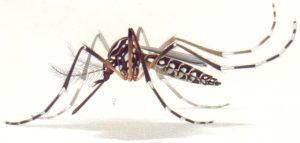 People spend a lot of effort trying to repel mosquitos - because the bites are so annoying and because they spread serious diseases. New research looking at different mosquito repellents - both DEET and non-Deet ("natural") products - had interesting results. What was once thought effective in repelling mosquitoes doesn't work at all (vitamin B patch), and what was thought attractive to mosquitoes may actually repel them (floral scents), and the "natural" alternatives may or may not work. Also - the
 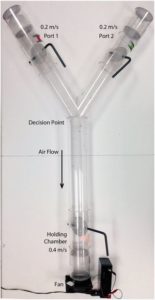 The Y-shaped tube used in the study.
 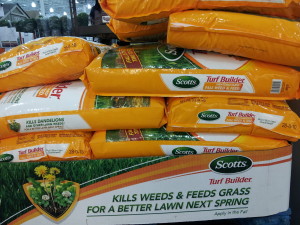 Why are huge (42+ pound) bags of lawn chemicals being sold with foods in stores? Should stacked bags of pesticides ever be placed next to foods in stores? Is this legal? Why is this happening in warehouse stores that call themselves environmentally conscious and brag about carrying organic foods?
 Next to refrigerated foods
 Contains 2,4-D and Mecoprop-p
 Next to bakery goods
 By the meat
 Several studies have found that when children eat organic foods, especially fruits and vegetables, the amount of pesticides in their bodies declines significantly. Most organophosphorus pesticides have been phased out for residential use, but they are still widely used in agriculture, and so these pesticides are detected in both foods and people.
 Children exposed to insecticides (pesticides) at home have an increased risk of developing leukemia or lymphoma, a new review finds.The analysis, of 16 studies done since the 1990s, found that children exposed to indoor insecticides had an elevated risk of developing the blood cancers. There was also a weaker link between exposure to weed killers and the risk of leukemia.
 An interesting small study of one family shows how quickly one can eliminate many pesticides from the body by switching to an all organic diet. One Swedish family of 2 adults (aged 40 and 39) and 3 children (aged 12, 10, and 3) who had been eating mainly conventional food were studied.