
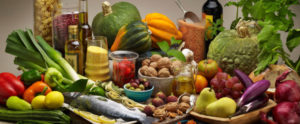
 Once again the Mediterranean diet is linked to health benefits - this time a 40% lower incidence of certain types of breast cancer in postmenopausal women. Following a Mediterranean style diet has been linked in earlier studies to various health benefits, such as lower rates of heart disease, lower rates of early death, and certain cancers.
A strength of this study is that so many (62,573) Dutch postmenopausal women were followed for a long time (about 20 years). Their diet was analyzed, especially how closely it matched the Mediterranean diet or not. Since alcohol is a risk factor for breast cancer, and dose-related - it was not included as part of the Mediterranean diet in this study. The study found that following a Mediterranean diet with higher consumption of nuts, fruits, vegetables, and whole grains, appeared to be protective against certain breast cancers - it was associated with a reduced risk of estrogen receptor–negative (ER-) breast cancers. Unfortunately the researchers did not look at olive oil use in this study, because when it started in 1986, it was not typically used in the Netherlands. However, another good study found extra virgin olive oil to be a protective part (against breast cancer) of the Mediterranean diet. From Medscape:
Mediterranean Diet Cuts Some Breast Cancer Risk by 40%
Closely following a Mediterranean diet in everyday life may significantly reduce the risk for types of breast cancer that are associated with poorer prognoses in postmenopausal women, new research indicates. The traditional Mediterranean diet is characterized by a high intake of plant proteins, whole grains, fish, and monounsaturated fat, as well as moderate alcohol intake and low intake of refined grains, red meat, and sweets, say the study authors, led by Piet A. van den Brandt, PhD, an epidemiologist at the Maastricht University Medical Center in the Netherlands.
The new findings come from 62,573 Dutch women aged 55 to 69 years who provided information on dietary and lifestyle habits in 1986 and have since been followed for more than 20 years....The investigators found that women who most closely adhered to a Mediterranean diet had a 40% reduced risk for estrogen receptor–negative (ER-) breast cancer compared to women who adhered to the diet the least. They found a 39% reduced risk for progesterone receptor–negative (PR-)/ER- disease when comparing these same high- and low-adherence groups. Notably, in these results, the definition of the diet excluded alcohol intake, because the consumption of alcohol is a known risk factor for breast cancer....The authors also report that there were no significant associations with the diet and the risk of ER+ disease or total breast cancer.
Dr van den Brandt also explained that older women, who were the subjects of the new study, are more likely to derive benefit than younger women. "Generally speaking, postmenopausal breast cancer seems somewhat more influenced by environmental factors, such as lifestyle and diet, than premenopausal breast cancer, where genetic factors seem to play a more prominent role," he told Medscape Medical News.
Dr Toledo was the senior author of the only large, randomized trial to date in which postmenopausal women were assigned to a dietary intervention to promote their adherence to the traditional Mediterranean diet (JAMA Intern Med. 2015;175:1752–60). The study found that women with a higher adherence to the diet (supplemented with extra-virgin olive oil) showed a substantial reduction of their risk for breast cancer compared to a control group, as reported by Medscape Medical News.
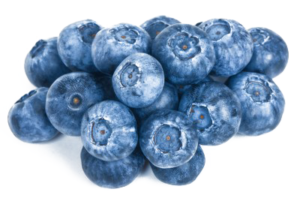 A new study was published that supports eating lots of blueberries (or drinking blueberry juice) for health - this time better brain functioning in people aged 65 to 77 who drank concentrated blueberry juice daily for 12 weeks. The people randomly assigned to the group drinking blueberry juice daily showed improvements in cognitive function, blood flow to the brain, and activation of the brain while carrying out cognitive tests. The people received MRIs (magnetic resonance imaging), as well as various blood tests and cognitive tests.
 This post continues the discussion of antibiotics and their overuse. Antibiotic resistance is increasing due to misuse of antibiotics (or antimicrobials), and this is occurring throughout the world (
 Could this be true? Probiotics for seasonal allergies? A
 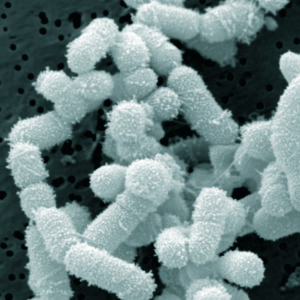 It's now 4 years being free of chronic sinusitis and off all antibiotics! Four amazing years since I (and then the rest of my family) started using easy do-it-yourself sinusitis treatments containing the probiotic (beneficial bacteria) Lactobacillus sakei. My sinuses feel great! And yes, it still feels miraculous.
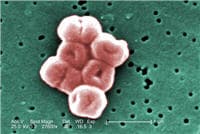 Many posts on this blog are about beneficial microbes, and the many species of microbes (bacteria, fungi, viruses) living within and on us. But there are also bacteria in the world that pose a serious threat to human health, and the list of these are growing due to antibiotic resistance. This week the World Health Organization (WHO) officials came out with a list of a dozen antibiotic-resistant "priority pathogens" that pose the greatest threats to human health. These are bacteria resistant to multiple antibiotics - thus superbugs.
 This past week a study was published linking 8 to 10 portions of fruits and vegetables per day with a lower risk of early death, cancer, heart disease, and stroke. This confirms other research linking many daily servings of fruits and vegetables with various health benefits. For example, the study findings discussed in the
  Do you want to live longer and be healthy at the same time? Some possible ways may be to restrict the calories in the diet (every day) or to practice intermittent calorie restriction (a fasting mimicking diet a few days a month or even each week, such as
  A recent study had great results in preventing glaucoma or stopping the progress of glaucoma by supplementing the diet of mice with vitamin B3 (nicotinamide). But now the research needs to see if this also holds true for humans.