
 New research finding health benefits to humans from a four day low calorie diet - the Fasting Mimic Diet (FMD). Cutting calories to 34 to 54% of normal for a few days is obviously much easier to do than actual fastiing, so these results look very promising. In summary: the researchers found that in a small human trial, three cycles of this diet given to 19 subjects once a month for five days decreased risk factors and biomarkers for aging, diabetes, cardiovascular disease and cancer (and with no major adverse side effects). Three earlier posts on various types of minifasting health benefits: Minifasting May Benefit Health, Health Benefits of Feast and Famine Diet, Fasting and the Immune System. From Science Daily:
Diet that mimics fasting appears to slow aging
Want to lose abdominal fat, get smarter and live longer? New research led by USC's Valter Longo shows that periodically adopting a diet that mimics the effects of fasting may yield a wide range of health benefits. In a new study, Longo and his colleagues show that cycles of a four-day low-calorie diet that mimics fasting (FMD cut visceral belly fat and elevated the number of progenitor and stem cells in several organs of old mice -- including the brain, where it boosted neural regeneration and improved learning and memory.
The mouse tests were part of a three-tiered study on periodic fasting's effects -- testing yeast, mice and humans...Mice, which have relatively short life spans, provided details about fasting's lifelong effects. Yeast, which are simpler organisms, allowed Longo to uncover the biological mechanisms that fasting triggers at a cellular level. And a pilot study in humans found evidence that the mouse and yeast studies were applicable to humans.
In a pilot human trial, three cycles of a similar diet given to 19 subjects once a month for five days decreased risk factors and biomarkers for aging, diabetes, cardiovascular disease and cancer with no major adverse side effects, according to Longo.
The diet slashed the individual's caloric intake down to 34 to 54 percent of normal, with a specific composition of proteins, carbohydrates, fats and micronutrients. It decreased amounts of the hormone IGF-I, which is required during development to grow, but it is a promoter of aging and has been linked to cancer susceptibility. It also increased the amount of the hormone IGFBP-, and reduced biomarkers/risk factors linked to diabetes and cardiovascular disease, including glucose, trunk fat and C-reactive protein without negatively affecting muscle and bone mass.
Longo has previously shown how fasting can help starve out cancer cells while protecting immune and other cells from chemotherapy toxicity. 'It's about reprogramming the body so it enters a slower aging mode, but also rejuvenating it through stem cell-based regeneration,' Longo said. 'It's not a typical diet because it isn't something you need to stay on.'
For 25 days a month, study participants went back to their regular eating habits -- good or bad -- once they finished the treatment. They were not asked to change their diet and still saw positive changes. Longo believes that for most normal people, the FMD can be done every three to six months, depending on the abdominal circumference and health status. For obese subjects or those with elevated disease risk factors, the FMD could be recommended by the physician as often as once every two weeks. His group is testing its effect in a randomized clinical trial, which will be completed soon, with more than 70 subjects.
Despite its positive effects, Longo cautioned against water-only fasting and warned even about attempting the fasting mimicking diet without first consulting a doctor and seeking their supervision throughout the process....Longo also cautioned that diabetic subjects should not undergo either fasting or fasting mimicking diets while receiving insulin, metformin or similar drugs. He also said that subjects with body mass index less than 18 should not undergo the FMD diet.
 Elderly people (average age was 77 years) who have been married a long time (average length of marriage was 44 years, but one couple was married 76 years!) give advice on marriage and love. The gerontologist Karl Pillemer details the finding of the Cornell Marriage Advice Project in his book, "30 Lessons for Loving: Advice from the Wisest Americans on Love, Relationships, and Marriage." From Science Daily:
 This latest study finding health benefits of eating nuts was a review of 36 observational studies, involving a total of 30,000 people. Nut consumption was associated with a lower risk of cancer in general, and a decreased risk of some types of cancer (colorectal, endometrial, pancreatic), but not with type 2 diabetes. So go ahead - eat a small handful of nuts for your health at least several times a week.From Medpage Today:
 There is growing evidence that women around a lot of endocrine disrupting chemicals at home or in jobs such as cleaners, hairdressers and laboratory workers during pregnancy are more likely to have baby boys with a genital defect called
 Could this be true? Eating fermented foods linked to fewer social anxiety symptoms? Fifteen years ago before the world of bacteria could be explored with state of the art genetic tests, this would have sounded too woo-woo. And now we say - could be. Next the researchers will test an experimental version of this study to see if they find causation. Right now all we can say they are linked or that we see an association.
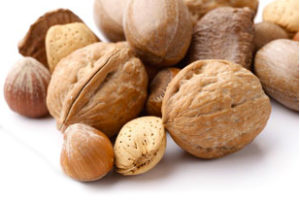 This latest study confirms the benefits of eating peanuts and nuts. The Netherlands Cohort Study has studied 120, 000 Dutch men and women since 1986, and they found that eating approximately 1/2 handful of peanut or nuts per day is linked to a lower risk of mortality. However, this beneficial effect did not apply to peanut butter, and they theorize that it may be due to the added ingredients in it (salt and vegetable oils that are