
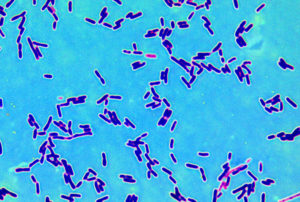
Chronic wounds (wounds that won't heal) are a big health problem for many, many people. This past decade has seen all sorts of advances in chronic wound healing treatments, and now there is a future possibility of also applying probiotics on the wounds.
A recent study showed "proof of concept" that some Lactobacillus species are effective in eliminating biofilms and Pseudomonas aeruginosa on skin, which are big problems in chronic wounds. Proof of concept means that a preliminary study using laboratory tests (using "living skin" in a human skin model) showed that it can work, and should be tested further.
The researchers tested a treatment using several species of Lactobacilli (L. acidophilus, L. casei, L. rhamnosus). They found that probiotics added to a modern wound dressing that contained silver did better at eradicating biofilms than using silver containing dressings alone or probiotics alone. (Note: Lactobacillus species are generally viewed as beneficial bacteria, and many Lactobacillus species live at different sites in the human microbiome, which are communities of fungi, bacteria, and viruses.)
The interesting part is that the species picked for the research were because they were in supplements readily available. The researchers cited research showing other Lactobacillus species also having potential in wound treatment, especially due to effects of their lactic acid.
It's an exciting time! Stay tuned to see if probiotic infused dressings actually work on chronic wounds in live human beings...
From Physics News: A living bandage: Wound dressing uses probiotic bacteria to combat biofilms
Millimeter by millimeter, new tissue makes its way through a wound until it has closed a skin lesion. Soon, in the best case, there is nothing left to see of a knee scrape, a finger cut or a burn blister. Not so with chronic wounds, though: If the injury has not healed after four weeks, there is a wound healing disorder. Sometimes, seemingly harmless tissue damage can develop into a permanent health problem or even blood poisoning.
...continue reading "Could Probiotics Play A Role In Chronic Wound Healing?"

 Erectile dysfunction is a serious problem for many men, especially as they get older. A
 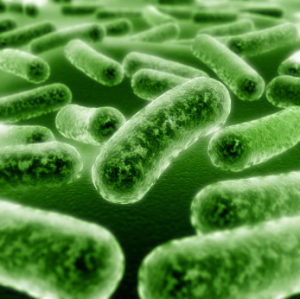 We have microbiomes all over our bodies. Millions of microbes in communities - for example, the ear, the sinuses, the skin, the gut, and on and on. Women also have a vaginal microbiome. When the microbiome of the vagina gets disrupted, health effects such as bacterial vaginosis (BV) can occur.
 Many consumers don't realize it, but some (many?) of the countries that flood the US market with "organic" foods are actually committing fraud. The so-called organic foods are not organic, but are conventionally grown and the documents saying they are organic have been purchased for a price.
 It turns out that the fabric used to make clothing is doused with all sorts of chemicals. Synthetic fabrics, fabrics dyed with azo dyes, and all fabrics treated to be stain repellant, anti-mold, anti-odor, wrinkle free, easy care, water resistant, flame retardant are the worst. Alden Wicker's
  We've known for a while that exercise and physical activity lower the risk of developing heart disease. It turns out that a good exercise that many of us do in the course of ordinary life is walking up and down stairs. Yes, that counts!
 Americans take a lot of prescription drugs, so many that it has reached historic highs. 6.3 billion prescriptions were filled in 2020! According to a recent study, it appears that the number of prescription drugs a person takes over the life span will only increase.
 There is tremendous interest in how to live a long and healthy life. This means trying to avoid getting diseases that so many suffer from as they age, such as diabetes, heart disease, and dementia. What diets are best? What kind of lifestyle?
 There has been tremendous interest in the past decade over the best diet and lifestyle for aging well and living to a ripe old age. Author Dan Buettner has spent much of the past decade visiting communities around the world where there are many residents who live to 100 years or more, and in good health. He calls these communities blue zones.