
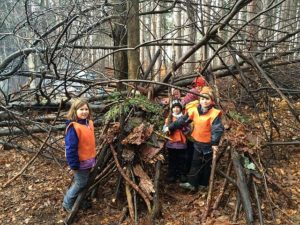
 To boost the immune system of young children, as well as improve their skin and gut microbiomes - send them out daily to play in a natural environment. That means outdoors in a natural park-like setting with grass, plants, soil, and trees. Yes, germs and dirt!
Finnish researchers found that replacing the gravel and pavement in urban daycare playground areas with natural forest-type vegetation (forest plants, shrubs, sod, mosses, and peat blocks for climbing) resulted in beneficial changes to young children's immune systems, and skin and gut microbiomes. This happened in just one month!
The researchers studied 75 children (3 to 5 years old) at 10 daycare centers in 2 Finnish cities (urban areas). Four of the daycare centers had their gravel/paved playgrounds turned into a forest-type natural area (where the children played), 3 daycare centers weren't changed (kept the gravel/pavement), and 3 daycare centers were already nature-oriented with children visiting forests daily. All children spent the same amount of time outside each day.
An important finding was that after 28 days the skin and gut microbiomes (microbial communities) of children playing in the transformed forest-type playgrounds had shifted to become more similar to children attending nature-oriented daycares. This change was also reflected in their immune systems: they developed a higher ratio of anti-inflammatory proteins to pro-inflammatory proteins in their blood (this is good).
The researchers point out that getting exposed to all the microbes in a natural forest-type setting (environmental microbial diversity) is beneficial. On the other hand, playing outside on man-made landscaping materials does not result in beneficial changes. Translation: playing outside in the dirt and plants is good for you.
From Medical Xpress: Replacing asphalt with forest-type plants at daycare centers found to strengthen immune defenses in children
A team of researchers affiliated with multiple institutions in Finland and one in the Czech Republic found that replacing asphalt in play areas at daycare centers with natural vegetation can lead to stronger immune defenses in the children at the centers. In their paper published in the journal Science Advances, the group describes removing asphalt from play areas at several daycare centers and replacing it with forest floor vegetation, and what they found when they tested the children who attended the centers. ...continue reading "Playing Outside In Nature Is Healthy For Young Children"
 The US Food and Drug Administration (FDA) just issued a new warning about taking non-prescription and prescription pain relievers known as nonsteroidal anti-inflammatory agents (NSAIDS) during pregnancy. The FDA warned that using them from week 20 or later during pregnancy can cause rare, but serious, kidney complications in the unborn baby. This can lead to low levels of amniotic fluid (called oligohydramnios) surrounding the baby and possible complications.
 A study looked at how long the new coronavirus (SARS-CoV-2) which causes COVID-19 lives on human skin.
  What a change from a few decades ago when marijuana use was totally illegal, frowned upon, and viewed as a "gateway drug"! A recent
  Intermittent fasting has generated much excitement over its potential as a simple method to lose weight and improve health. It involves eating normally during limited hours each day (e.g. 8 hours), and then abstaining from food the other hours (e.g. 16 hours). However, a
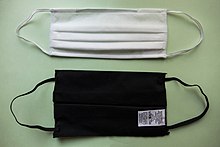 Today while waiting in a line at the store, everyone wearing the required masks, the woman in front of me told me that the masks are useless and that there isn't good evidence that the coronavirus is spread through the air. Huh? Where did she get that idea? Of course there is airborne transmission of the virus!
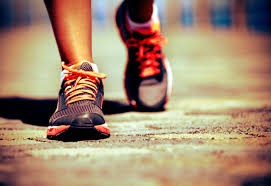 Exercise is good for memory and the brain. University of Geneva researchers found that even one short bout of moderate or intense exercise improves memory and acquisition of new motor skills.
 Another health benefit of coffee! A study found that daily consumption of a few cups of coffee was associated with longer survival and a lower risk of cancer worsening in persons with metastatic colon cancer. These benefits held for both caffeinated and decaffeinated coffee. This is a big deal because metastatic colon (colorectal) cancer only has a 5 year survival rate of 14%.
 Several studies are now suggesting that