
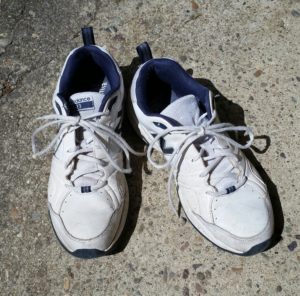
 Exercise appears to protect against some cancers. Yes, something so simple as merely getting the recommended amount of 2 1/2 hours per week of exercise (e.g. brisk walks) really lowers the risk of 7 cancers: colon, breast, endometrial, kidney, myeloma, liver, and non-Hodgkin lymphoma.
The researchers analyzed 9 studies for a total of 755,459 individuals (median age 62 years, 53% females) who were followed for 10.1 years, and found that 50,620 cancers developed. They specifically looked at 15 cancers and found that exercise lowered the risk of 7 cancers. Some, but not all, were lowered in a dose response manner, that is, the more exercise, the bigger the protective effect (e.g. breast, colon, endometrial cancer). How much the cancer risk was lowered with exercise varied by types of cancer: colon (8%-14% lower risk in men), breast (6%-10% lower risk), endometrial (10%-18% lower risk), kidney (11%-17% lower risk), myeloma (14%-19% lower risk), liver (18%-27% lower risk), and non-Hodgkin lymphoma (11%-18% lower risk in women).
How much exercise was needed for a cancer protective effect? About 2 1/2 to 5 hours per week of moderate-intensity physical activity, such as brisk walking. The study looked at "leisure-time" exercise, which can include exercise, sports or any recreational activity which is typically "moderate to vigorous intensity".
The Physical Activity Guidelines from the US Department of Health and Human Services recommends that adults do at least 150 to 300 minutes of moderate-intensity physical activity a week, or 75 to 150 minutes of vigorous-intensity activity, or an equivalent combination of moderate- and vigorous-intensity activity. Brisk walking is moderate intensity physical activity. Bottom line: get out and move, move, move!
From Medical Xpress: Report links recommended physical activity levels to lower risk of seven cancers ...continue reading "Exercise May Lower The Risk Of Some Cancers"
 What is the best way for cleaning hands to prevent the spread of flu viruses? Advertisers would have you believe that only their
  Another great option for losing weight and better health may be to only eat within a 10 hour window, and then not eat for 14 hours (thus a nightly 14 hour fast). Many may find this easier than traditional dieting (counting calories and restricting eating). Just eat breakfast later, supper earlier, and no snacks in the evening. (But water is OK.)
 Uh-oh, these research findings are not a surprise. A
 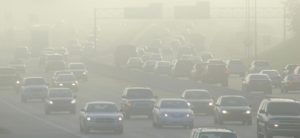 A new study has nicely illustrated how extreme air pollution gets quickly into a person and has negative health effects, but improvement occurs when the exposure to the air pollution ends.
 Americans are eating so much ultra-processed food that it's now more than 50% of their daily calories. And why shouldn't they eat these foods? They're easy to get (fast foods, prepackaged foods, take out foods), they taste good, and they're great for people pressed for time. That's why they're called "convenience foods" and include fast foods, prepackaged foods, many frozen meals, take out foods, soda, packaged snacks, and many cakes, candies, and cookies.
 Generations of people were raised thinking that when a person sleeps, that the brain is also resting. Well.... that was then, but the new view is that when we are sleeping, a number of important things are occurring. A main activity during sleep is that the brain is flushing out the garbage, that is, waste products or toxins. [Some other stuff going on includes cell repair, building of bone and muscle, memory consolidation, and strengthening of the immune system.]
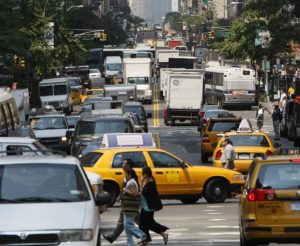 The results of a