Skip to content

Share your microbiota with a kiss! From Science Daily:

Up to 80 million bacteria sealed with a kiss

As many as 80 million bacteria are transferred during a 10 second kiss, according to research published in the open access journal Microbiome. The study also found that partners who kiss each other at least nine times a day share similar communities of oral bacteria.

The ecosystem of more than 100 trillion microorganisms that live in our bodies -- the microbiome -- is essential for the digestion of food, synthesizing nutrients, and preventing disease. It is shaped by genetics, diet, and age, but also the individuals with whom we interact. With the mouth playing host to more than 700 varieties of bacteria, the oral microbiota also appear to be influenced by those closest to us.

Researchers from Micropia and TNO in the Netherlands studied 21 couples, asking them to fill out questionnaires on their kissing behaviour including their average intimate kiss frequency. They then took swab samples to investigate the composition of their oral microbiota on the tongue and in their saliva.

The results showed that when couples intimately kiss at relatively high frequencies their salivary microbiota become similar. On average it was found that at least nine intimate kisses per day led to couples having significantly shared salivary microbiota.

In a controlled kissing experiment to quantify the transfer of bacteria, a member of each of the couples had a probiotic drink containing specific varieties of bacteria including Lactobacillus and Bifidobacteria. After an intimate kiss, the researchers found that the quantity of probiotic bacteria in the receiver's saliva rose threefold, and calculated that in total 80 million bacteria would have been transferred during a 10 second kiss.

The researchers found that while tongue microbiota were more similar among partners than unrelated individuals, their similarity did not change with more frequent kissing, in contrast to the findings on the saliva microbiota.

Commenting on the kissing questionnaire results, the researchers say that an interesting but separate finding was that 74% of the men reported higher intimate kiss frequencies than the women of the same couple. This resulted in a reported average of ten kisses per day from the males, twice that of the female reported average of five per day.

A more humorous write-up of same study and a museum of microbes. From Time:

Here’s How Many Bacteria Spread Through One Kiss

Another research result from the American Gut Project, an amazing crowdsourced project. While differences were found in the fecal microbiome (microbial community) of adults born by cesarean section vs vaginal delivery, it is unknown whether this has any possible effects on diseases or risks of diseases during adulthood. This study is online as of 8 November 2014, but still In Press. From EBioMedicine:

Diversity and Composition of the Adult Fecal Microbiome Associated with History of Cesarean Birth or Appendectomy: Analysis of the American Gut Project

Adults born by cesarean section appear to have a distinctly different composition of their fecal microbial population. Whether this distinction was acquired during birth, and whether it affects risk of disease during adulthood, are unknown.

Prenatal and early postnatal exposures and events can affect the entire life course. As one example, cesarean birth has been associated with an increased likelihood of asthma and cardiovascular disease in children (Renz-Polster et al., 2005, Thavagnanam et al., 2008 and Friedemann et al., 2012), hypertension in young adults (Horta et al., 2013), and obesity in both children and adults (Pei et al., 2014, Darmasseelane et al., 2014,Blustein et al., 2013 and Mueller et al., 2014). ... As well summarized by Arrieta and colleagues, several studies have noted differences in the neonatal fecal microbiota by route of delivery (Arrieta et al., 2014). ... More recently, with comprehensive analysis based on next generation sequencing of 16S rRNA genes, Dominguez-Bello and colleagues reported that route of delivery was associated with differences in the composition of the microbial populations that initially colonized the offspring. Notably, neonates who were born vaginally were colonized by vagina-associated bacteria, whereas those born by cesarean section were initially colonized by skin-associated bacteria ( Dominguez-Bello et al., 2010).

Early life alteration of the gut microbiota may have a lasting effect. Trasande et al. observed that exposure to antibiotics up to age 6 months was associated with elevated body mass index (BMI) up to age 7 years (Trasande et al., 2013).

The 16S rRNA V4 region was sequenced by the American Gut Project....Of the 1097 participants, cesarean birth was reported as “yes” by 92, “no” by 948, and missing or uncertain by 57. Likewise, appendectomy was reported as “yes” by 155, “no” by 961, and missing or uncertain by 21.

This analysis was primarily motivated by the observation that the composition of the microbiome of neonates differed significantly between those born vaginally and those born by cesarean section (Arrieta et al., 2014 and Dominguez-Bello et al., 2010). With vaginal delivery, the neonatal microbiome resembled the vaginal microbiome, with high relative abundance of Prevotella and especially Lactobacillus taxa. In contrast, cesarean-delivered neonates had a diverse array of taxa resembling the skin microbial community, including Staphylococcus, Streptococcus, Propionibacterineae, Haemophilus, and Acinetobacter ( Dominguez-Bello et al., 2010). Cesarean-delivered neonates and infants typically have a paucity of Bifidobacterium and Bacteroides species ( Arrieta et al., 2014).

In the current analysis, we observed that the fecal microbiome composition differed in adults who reported that they had been delivered by cesarean section. This suggests that a difference by route of delivery may persist into adulthood. Of the taxa noted to be increased in cesarean-delivered neonates and infants ( Arrieta et al., 2014, Penders et al., 2006 and Dominguez-Bello et al., 2010), only Haemophilus and certain Clostridia genera had elevated abundance in the fecal microbiome of cesarean-delivered adults ( Table 3).

This was written in 2009, but it discusses the amazing possibility of infections with high fever treating and curing cancer. This method, originally discovered by William Coley in the 1890s, used a bacterial extract (named Coley's toxins or Coley toxins) to cause an infection in the person with cancer. Try to read the whole fascinating article.From American Scientist:

Healing Heat: Harnessing Infection to Fight Cancer

Conventional wisdom long held that the human immune system was no match for cancer. Born of native cells, the logic went, cancer fooled the immune system into concluding it was harmless. Thus protected from attack, cancer easily thrived until its host died.

A deeper understanding of our biological defenses has changed that. The human immune system does battle cancer. But we could better optimize our defenses to fend off malignant disease. That’s clear from cancer treatments attempted in New York City and Germany as early as the 19th century. Those experiments and other undervalued evidence from the medical literature suggest that acute infection—in contrast to chronic infection, which sometimes causes cancer—can help a body fight tumors.

It’s not the pathogens that do the good work. But the way our bodies respond to the pathogens is key. Infection events, especially those that produce fever, appear to shift the innate human immune system into higher gear. That ultimately improves the performance of crucial biological machinery in the adaptive immune system. This lesson comes, partly, from doctors who risked making patients sicker to try to make them better.

Medicine back then offered little more than amputation and morphine to cancer patients... Shocked by his ineffectiveness, Coley dove into hospital records and the medical literature for clues to how to help more. He found about 90 sarcoma case reports. About half contained follow-up histories....In his literature search,William Coley found more than 40 cases of disappearance of malignancies during an erysipelas attack. 

In April 1891 an Italian immigrant, Mr. Zola, presented at New York Hospital with a large sarcoma tumor in his neck and an egg-sized metastasis in his right tonsil. He had been operated on twice before but was in hopeless condition. He could hardly speak or swallow and was unable to eat solid food. His life expectancy was, at the very most, a few months. He had nothing to lose by undergoing an experimental treatment.
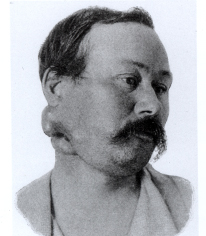
Mr. Zola with large sarcoma in the neck. Credit: Discover magazine.

Since erysipelas was so hazardous, the hospital was reluctant to host Coley’s experiment, so it was performed in a private apartment. Colleagues at the College of Physicians and Surgeons, now part of Columbia University, prepared the bacteria. Three applications were delivered over three weeks, with minor success...Via a friend, Coley obtained fresh and potent bacteria culture from the leading German bacteriologist, Robert Koch. That fall, he again treated Zola, whose temperature that time rose above 104 degrees, with nausea, vomiting and severe pain. The infection almost killed him, but within two weeks, the neck tumor was not observable. The tonsil tumor stopped growing. Zola was in excellent health when Coley saw him four years later.

During the following two years Coley attempted to infect 12 patients who had inoperable cancer. He failed to induce a full-blown infection in four and succeeded in eight. All eight responded. Six had partial tumor remissions. Two showed full remission. But two patients died from infection. So Coley abandoned living cultures and turned toward what today we would call a bacterial extract.

In January 1893 Coley administered for the first time one variant of what today are still called “Coley’s toxins.It was a heat-sterilized, combined culture of S. pyogenes and S. marcescens bacteria administered by injection. The patient was a 16-year-old boy with a large inoperable abdominal tumor, a malignant sarcoma. After receiving increasing doses over 10 weeks, the boy developed symptoms mimicking those of a heavy erysipelas infection: chills, headache, fever, local redness and swelling at injection sites. The tumor shrank by 80 percent. Coley kept in touch with his patient, who remained cancer-free for more than 20 years.

At the beginning of the 20th century radiation treatment came on the cancer therapy scene. This new procedure captured nearly the full attention of the oncology community due to its immediately visible effects. One could now, it seemed, x ray away tumors. Within the medical mainstream, interest in Coley’s methods faded. Still, some physicians did try to test Coley’s treatment.

Coley, throughout his 40-plus-year career, treated hundreds with multiple versions of his toxin. He never achieved a clear-cut, uniform result. Some patients responded...A five-year survival rate of zero after radiation and 38 percent after Coley’s treatments merited deeper scrutiny.

Helen Coley Nauts, Coley’s daughter, meticulously reexamined her father’s clinical cases after his death. This was not easy. Undoubtedly a man of determination, Coley was not a methodical scientist. His patient records were a mess, he treated different patients for different time periods and his bacterial extracts, over time, were inconsistently made. Coley Nauts counted 15 different preparations. Eleven of them, she concluded, were not potent enough to have a strong effect.

Coley Nauts determined that her father had treated several hundred patients by the time he died in 1936, many of whom had received radiation and sometimes surgery as well. To estimate the overall success of extracts, the analysis should be restricted to patients with inoperable cancer and treated by toxin alone. In another review from 1994, immunologist and oncology researcher Charles Starnes identified 170 such patients with adequate medical records (121 with some form of sarcoma, 43 with carcinoma and myeloma, and 6 with melanoma). The remission rate among them was 64 percent; the five-year survival rate was more than 44 percent.

According to the analyses of Coley Nauts and Starnes, treatment success correlated with length of therapy and the fevers induced by the toxins. Higher was better. This correlation was reported among several other observations but without emphasis or any explanation by the authors.

Only a few uncoordinated attempts to apply Coley’s ideas were pursued from mid-century on....Well-controlled studies of bacterial-extract cancer treatment that incorporate all the lessons from the retrospective analysis of Coley’s and other treatments have not been pursued since. But medical case studies, cancer epidemiology and our more precise understanding of immunology make a strong case that they should.

Spontaneous regression or remission is the partial or complete disappearance of an untreated malignant tumor or a tumor treated with a therapy considered inadequate to exert significant influence. It sounds like fantasy, but about 1,000 case studies in the medical literature during the past century detail spontaneous regression from cancer. Surely more have occurred. And there’s a pattern to some of the cases. A prior fever was recorded in 25 to 80 percent of documented cases of spontaneous regression of cancer.

It is not true, as Coley believed of S. pyogenes, that all these pathogens produce some cagey anti-cancerous substance...Much more likely is that the sequence of immune reactions triggered by the infections was the same...Cancer cells can carry hundreds of mutations that distinguish them from healthy cells. But the immune system often remains in an “observer” state in their presence rather than engaging in battle as it does against bacterial or viral infections. The reason for this incomplete immune response is a long-standing puzzle in cancer immunology. William Coley’s experiments may help today’s scientists solve it.

There may be prophylactic potential here as well. Epidemiological studies suggest that a personal history that includes several infections with fever sometimes significantly reduces the likelihood a person will develop cancer later (see What the Literature Says). One potential explanation is that feverish infections reduce would-be malignant cells. If that’s true, the implications are profound.

Take note: research has linked a lack of microbial diversity in human guts to various diseases. A solution: Eat more plants! From Science Daily:

Compared with apes, people's gut bacteria lack diversity, study finds

The microbes living in people's guts are much less diverse than those in humans' closest relatives, the African apes, an apparently long evolutionary trend that appears to be speeding up in more modern societies, with possible implications for human health, according to a new study.

Based on an analysis of how humans and three lineages of ape diverged from common ancestors, researchers determined that within the lineage that gave rise to modern humans, microbial diversity changed slowly and steadily for millions of years, but that rate of change has accelerated lately in humans from some parts of the world.

People in nonindustrialized societies have gut microbiomes that are 60 percent different from those of chimpanzees. Meanwhile, those living in the U.S. have gut microbiomes that are 70 percent different from those of chimps.

 "On the other hand, in apparently only hundreds of years -- and possibly a lot fewer -- people in the United States lost a great deal of diversity in the bacteria living in their gut."

That rapid change might translate into negative health effects for Americans. Previous research has shown that compared with several populations, people living in the U.S. have the lowest diversity of gut microbes. Still other research has linked a lack of microbial diversity in human guts to various diseases such as asthma, colon cancer and autoimmune diseases.

One possible explanation for humans evolving to have less diversity in their gut microbiomes is that they shifted to a diet with more meat and fewer plants. Plants require complex communities of microbes to break them down, which is not as true for meat.

As for why Americans have experienced much more rapid changes in microbial diversity compared with people in less industrialized societies, some experts have suggested more time spent indoors, increased use of antibacterial soaps and cleaners, widespread use of antibiotics and high numbers of births by Cesarean section all may play a role. Antibiotics and antimicrobial cleaners can kill good bacteria along with the bad, and C-section deliveries prevent babies from receiving certain bacteria from the mother typically conferred during vaginal births.

Red meat,bacteria, and atherosclerosis.From Medical Xpress:

Why does red meat increase the risk for cardiovascular disease? Blame our gut bacteria

New research provides details on how gut bacteria turn a nutrient found in red meat into metabolites that increase the risk of developing heart disease. Publishing in the November 4th issue of the journal Cell Metabolism, the findings may lead to new strategies for safeguarding individuals' cardiovascular health.

Previous research led by Dr. Stanley Hazen, of Lerner Research Institute and the Miller Family Heart and Vascular Institute at Cleveland Clinic, revealed a pathway by which red meat can promote atherosclerosis, or hardening of the arteries. Essentially, bacteria in the gut convert L-carnitine, a nutrient abundant in red meat, into a compound called trimethylamine, which in turn changes to a metabolite named trimethylamine-N-oxide (TMAO), which promotes atherosclerosis. Now Dr. Hazen and his team extend their earlier research and identify another metabolite, called gamma-butyrobetaine, that is generated to an even greater extent by gut bacteria after L-carnitine is ingested, and it too contributes to atherosclerosis.

The discovery that metabolism of L-carnitine involves two different gut microbial pathways, as well as different types of bacteria, suggests new targets for preventing atherosclerosis—for example, by inhibiting various bacterial enzymes or shifting gut bacterial composition with probiotics and other treatments.

An amazing and unforgettable story of a man researching the gut microbes that are increasingly lost in developed Westernized populations. And do go read the original story (see link).From Popular Science:

Scientist Gives Himself Fecal Transplant To Try A Hunter-Gatherer's Microbiome

Why a field researcher from America has exposed his colon to the gut microbiome of a tribesman from Tanzania.

It's not often we encounter a story that begins with a line like this: “AS THE SUN set over Lake Eyasi in Tanzania, nearly thirty minutes had passed since I had inserted a turkey baster into my bum and injected the feces of a Hadza man – a member of one of the last remaining hunter-gatherer tribes in the world – into the nether regions of my distal colon.”

The guy behind this essay, Jeff Leach, is part of a multi-national scientific research team that by his account has been living with the Hadza, hunter-gatherers in Tanzania, for over a year. They have collected hundreds of samples from humans, animals, and the environment in order to observe how the microbial communities in and around the Hadza change with the dramatic seasonal weather shifts in East Africa: six months of near-steady rain followed by six dry months.

The question driving the research is “what a normal or healthy microbiome might have looked like before the niceties and medications of late whacked the crap out of our gut bugs in the so-called modern world,” Leach writes.

The Hadza are contemporary people, Leach writes, not an undiscovered stone-age civilization. But they're excellent subjects for this research because they still live on plant and animal foods that humans have hunted and gathered for millennia, and their use of western medications is extremely limited.

The health impacts of what lives (or doesn't) in our guts are getting increased attention in Western dietary and medical circles -- and eating foods containing "probiotics" just scratches the surface. Recent research suggests that use of antibiotics may be fundamentally altering our gut biomes for the worse, increasing rates of allergies, asthma and weight gain.

As for fecal transplants, they're no longer career killers in polite medical conversation. Swapping poop from healthy to sick persons is now an up-and-up treatment for curing chronic gastrointestinal disease. The launch of the OpenBiome fecal transplant bank in the U.S. earlier this year seems to signal that the technique is going mainstream.

As for Jeff Leach, he describes his primary scientific motivation for self-administering a fecal transplant as testing the hypothesis "of microbial extinction, something I believe we all suffer from in the western world and may be at the root of what’s making us sick." The biggest change Leach and his girlfriend have noticed since the transplant is that he's passing a lot less gas. 

Read the rest of his very readable, informative and down-to-earth essay: (Re)Becoming Human: what happened the day I replaced 99% of the genes in my body with that [sic] of a hunter-gatherer.

It is estimated that between 14,000 to 30,000 Americans die each year from Clostridium difficile infections. So finding a bacteria that could protect people from C. difficile is a big deal. However, it is only one bacteria, and sick people typically are depleted of a microbial community, not just one bacteria. From Science News:

Harmless bacterium edges out intestinal germ

Gut infections from the bacterium Clostridium difficile can be fought with a closely related but harmless microbe known as C. scindens. The friendly bacterium combats infection in mice by converting molecules produced in the liver into forms that inhibit C. difficile growth,researchers report October 22 in Nature.

C. scindens also appears to protect people from infection, the researchers found in a preliminary study in humans. The new findings could begin a path to the next generation of therapies using gut bacteria, says Alexander Khoruts, a gastroenterologist at the University of Minnesota in Minneapolis.

People who become infected with C. difficile typically have taken antibiotics, which wipe out the beneficial microbes in the gut, giving C. difficile a chance to take root. The infection can lead to cramps, diarrhea and even death. An estimated 500,000 to 1 million people get C. difficile infections each year in the United States. People with C. difficile receive more antibiotics to treat the infection or a fecal transplant to restore healthy microbes to the gut.

Several research groups have been trying to identify gut bacteria that are resilient in the face of C. difficile so that physicians can give patients those bacteria as a treatment, says Eric Pamer, an immunologist at Memorial Sloan Kettering Cancer Center. Single strains of bacteria such as C. scindens would offer significant advantages over fecal transplants: With a transplant, doctors screen the donated feces for pathogens that might sicken the recipient. But, Pamer says, “there are many things, viruses that have yet to be identified, that could be in a crude fecal product that might cause trouble.”  

Pamer and his team gave mice antibiotics to deplete beneficial microbes but not wipe them out completely. The researchers then fed the mice C. difficile spores and identified microbes that appeared in mice with lower amounts of C. difficile in their guts. C. scindens was the clear victor. It is harmless and present in most people, but in very low numbers.

The researchers also examined the microbial populations of 24 patients undergoing stem cell transplants. Those patients had lowered microbial diversity after receiving combinations of antibiotics, radiation and chemotherapy. The patients who didn’t develop C. difficile after the transplant were more likely to have C. scindens in their guts.

The researchers also investigated how C. scindens combats C. difficileC. difficile begins growing after it is exposed to certain molecules secreted in bile after a meal. However, another form of the molecule inhibits C. difficile growth. C. scindens transforms the molecule from one form to the other, boosting resistance to C. difficile.  

The possibilities are exciting. See my earlier posts on psychobiotics for more information. From Medical Xpress:

How gut bacteria ensures a healthy brain – and could play a role in treating depression

But medicine in the 21st century is rethinking its relationship with bacteria and concluding that, far from being uniformly bad for us, many of these organisms are actually essential for our health. Nowhere is this more apparent than in the human gut, where the microbiome  – the collection of bacteria living in the gastrointestinal tract - plays a complex and critical role in the health of its host.

The microbiome interacts with and influences organ systems throughout the body, including, as research is revealing, the brain. This discovery has led to a surge of interest in potential gut-based treatments for neuropsychiatric disorders and a new class of studies investigating how the gut and its microbiome affect both healthy and diseased brains.

The lives of the bacteria in our gut are intimately entwined with our immune, endocrine and nervous systems. The relationship goes both ways: the microbiome influences the function of these systems, which in turn alter the activity and composition of the bacterial community. We are starting to unravel this complexity and gain insight into how gut bacteria interface with the rest of the body and, in particular, how they affect the brain.

The microbiome-immune system link is established early on. Over the first year of life, bacteria populate the gut, which is largely sterile at birth, and the developing immune system learns which bacteria to consider normal residents of the body and which to attack as invaders. This early learning sets the stage for later immune responses to fluctuations in the microbiome's composition.

When a normally scarce strain becomes too abundant or a pathogenic species joins the community of gut bacteria, the resulting response by the immune system can have wide-reaching effects. Depression has been linked with elevated levels of such molecules in some individuals, suggesting that treatments that alter the composition of the microbiome could alleviate symptoms of this disorder.

Such an intervention could potentially be achieved using either prebiotics – substances that promote the growth of beneficial bacteria – or probiotics – live cultures of these bacteria. It is even possible that the microbiome could be manipulated by dietary changes.

In one experiment, researchers transplanted the human microbiome into germ-free mice (animals that have no gut bacteria) in order to study it in a controlled setting. They found that, simply by changing the carbohydrate and fat content of the mice's food, they could alter basic cellular functions and gene expression in the microbiome.

Depression is not the only psychiatric disorder in which the microbiome may play a role.Research in rodents, as well as a few preliminary studies in humans, indicate that the state of our resident microbes is tied to our anxiety levels.

This research also reveals the complexity of the relationship between the microbiome and psychological state. ...Researchers have shown that the presence or absence of microbes in young mice affects the sensitivity of the hypothalamic-pituitary-adrenal (HPA) axis – a key pathway in the body's stress response system. The activity of the microbiome during development thus sways how we respond to future stressors and how much anxiety they cause us.

How do the bacteria in our gut wield such influence over our brains and bodies? The mechanisms of microbiome-host interactions appear to be as numerous and varied as the interactions themselves.

Another interesting factoid about the human gut microbiome - it has circadian rhythms. This also has implications for timing of medical treatments and medicines. From Science Daily:

Jet lag can cause obesity by disrupting the daily rhythms of gut microbes

Organisms ranging from bacteria to humans have circadian clocks to help them synchronize their biological activities to the time of day. A study now reveals that gut microbes in mice and humans have circadian rhythms that are controlled by the biological clock of the host in which they reside. Disruption of the circadian clock in the host alters the rhythms and composition of the microbial community, leading to obesity and metabolic problems.

Disruption of the circadian clock in humans is a hallmark of relatively recent lifestyle changes involving chronic shift work or frequent flights across time zones. These widespread behavioral patterns have been linked to a wide range of diseases, including obesity, diabetes, cancer, and cardiovascular disease. But, until now, it has not been clear how changes in circadian rhythms increase the risk for these diseases.

In the new study, Elinav and his team set out to determine whether gut microbes could be the missing link. When they analyzed microbes found in fecal samples collected from mice and humans at different times of day, they discovered rhythmic fluctuations in the abundance of microbes and their biological activities. The host's circadian clock and normal feeding habits were required for the generation of these rhythmic fluctuations in the gut microbes.

When mice were exposed to changing light-dark schedules and abnormal 24 hr feeding habits, the microbial community lost its rhythmic fluctuations and changed in composition. Moreover, a high-fat diet caused these jet-lagged mice to gain weight and develop metabolic problems associated with diabetes. Similarly, jet lag in two humans who had traveled from the United States to Israel changed the composition of gut microbes, favoring the growth of bacteria that have been linked to obesity and metabolic disease.

Maybe bacteria are involved in Multiple sclerosis (MS). From Scientific American:

Could Multiple Sclerosis Begin in the Gut?

MS researchers are focusing on the content of the gut’s microbiome as a possible contributor to the body’s autoimmune attack on its nervous system.

Multiple sclerosis (MS) is an electrical disorder, or rather one of impaired myelin, a fatty, insulating substance that better allows electric current to bolt down our neurons and release the neurotransmitters that help run our bodies and brains. Researchers have speculated for some time that the myelin degradation seen in MS is due, at least in part, to autoimmune activity against the nervous system. Recent work presented at the MS Boston 2014 Meeting suggests that this aberrant immune response begins in the gut.

Eighty percent of the human immune system resides in the gastrointestinal tract. Alongside it are the trillions of symbiotic bacteria, fungi and other single-celled organisms that make up our guts’ microbiomes. Normally everyone wins: The microorganisms benefit from a home and a steady food supply; we enjoy the essential assistance they provide in various metabolic and digestive functions. Our microbiomes also help calibrate our immune systems, so our bodies recognize which co-inhabitants should be there and which should not. Yet mounting evidence suggests that when our resident biota are out of balance, they contribute to numerous diseases, including diabetes, rheumatoid arthritis, autism and, it appears, MS by inciting rogue immune activity that can spread throughout the body and brain.

One study presented at the conference, out of Brigham and Women’s Hospital (BWH), reported a single-celled organism called methanobrevibacteriaceae that activates the immune system is enriched in the gastrointestinal tracts of MS patients whereas bacteria that suppress immune activity are depleted. Other work, which resulted from a collaboration among 10 academic researcher centers across the U.S. and Canada, reported significantly altered gut flora in pediatric MS patients while a group of Japanese researchers found that yeast consumption reduced the chances of mice developing an MS-like disease by altering gut flora.

Sushrut Jangi, a staff physician at Beth Israel Deaconess Medical Center in Boston who co-authored the BWH study, thinks that regional dietary influences might even be at play. “The biomes of people living in different areas and who consume Western versus non-Western diets are demonstratively different,” he says. “People who emigrate from non-Western countries, including India, where MS rates are low, consequently develop a high risk of disease in the U.S. One idea to explain this is that the biome may shift from an Indian biome to an American biome,” although there is not yet data to support this theory.

The microbiome theory is gaining so much steam in academia that a coalition of four U.S. research centers called the MS Microbiome Consortium recently formed to investigate the role of gut microorganisms in the disease. The group presented data in Boston showing significantly different gastrointestinal bacterial populations in patients treated with the MS drug glatiramer acetate compared with untreated subjects. How exactly the drug suppresses MS activity is unknown but the findings suggest that perhaps it works in part by altering gut flora and, as a result, suppressing abnormal immune activity. “But important questions remain, such as how MS medications affect the microbiome, how an individual’s microbiome may affect treatment responses, whether particular bacterial species are associated with more severe disease and ultimately whether we can manipulate the microbiome to benefit our patients.”

Katz Sand says that dietary and probiotic approaches to treating MS are worth pursuing, as is a less palatable approach: fecal transplantation.Yet answers in science and medicine are rarely simple, she added, pointing out that in all likelihood MS arises from a complicated confluence of genetic and environmental influences that might ultimately trigger autoimmune activity. Beyond just our gut flora well over 100 genetic variants —many related to immune function—are now known to contribute to the disease as are external factors including vitamin D deficiency  (MS is more common at higher latitudes), smoking and increased salt intake.