
Skip to content

Nice write-up of how what happens from the type of birth (vaginal vs cesarean) affects the baby's microbiome (community of microbes). Remember, it is very complicated and much is still unknown. (UPDATE: see January 16, 2015 post discussing research by Dr. Dominguez-Bello who is conducting a study in which babies born via C-section are immediately swabbed with their mother's vaginal secretions; these babies will then be followed for years). From Gastroenterology and Endoscopy News:

Delivery Mode Alters Newborn’s First Bacterial Exposure

 A baby’s first exposure to bacteria varies by the method of delivery, researchers have found. These differences could have health implications later in life, according to an emerging body of evidence that suggests gut bacteria may be important to the development of a healthy immune system (Arrieta MC et al.Front Immunol 2014;5:427). For example, evidence shows that alterations in gut bacteria early in life may increase the incidence of allergies later on (Bendiks M, Kopp MV. Curr Allergy Asthma Rep 2013;13:487-494).

In the new study, presented at the 2014 annual meeting of the North American Society for Pediatric Gastroenterology, Hepatology and Nutrition, a group at the University of Colorado School of Medicine, in Aurora, compared oropharyngeal aspirates taken from 12 infants born by cesarean delivery and 11 born vaginally, and their bacterial content by sequencing the bacterial genes in the samples (abstract 7). Samples taken from the mothers’ vaginal and rectal areas, and samples of the infants’ stool, were also analyzed for bacterial genes.

Bacteria in aspirates from newborns delivered vaginally were more similar to the bacteria found in samples from their mothers than the aspirates from infants born by cesarean delivery, the investigators found. Infants born vaginally had higher numbers of firmicutes (62.6% vs. 30.1%; P=0.0013), particularly lactobacilli typically found in the vagina.

Aspirates from infants born by cesarean delivery, in contrast, had higher levels of Actinobacteria (20.1% vs. 3.8%; P=0.045), which are found on the skin. Stool samples from vaginally delivered newborns also had greater numbers of Bacteroidetes than stool samples from infants born by cesarean delivery. This difference persisted through six weeks of life, the researchers said.

David Brumbaugh, MD, assistant professor of pediatrics at the University of Colorado School of Medicine, in Aurora, said the finding of fewer Bacteroidetes in cesarean newborns is potentially alarming. Studies of mice raised in sterile conditions have shown that exposure to a specific type of Bacteroidetes, Bacteroides fragilis, suppresses the animals’ inflammatory response (Mazmanian SK et al. Nature 2008;453:620-625), he said. 

“The fact that this bacteria never gets established early in life [in babies born by cesarean delivery] is concerning,” he said. Some studies have suggested that infants born by cesarean delivery may be at greater risk for developing conditions such as asthma, type 1 diabetes and celiac disease (Cho CE, Norman M. Am J Obstet Gynecol 2013;208:249-254). But not all studies have supported such risks; other studies suggest that genetic factors or the reason for the cesarean delivery itself may contribute to disease later in the child’s life (Almqvist C et al.Clin Exp Allergy 2012;42:1369-1376).

Jean-Eric Ghia, PhD, assistant professor of immunology and internal medicine at the University of Manitoba, in Winnipeg, Canada, said the findings add to a body of evidence suggesting that gut bacterial colonization is affected by mode of delivery, and these altered gut bacteria might contribute to immune system–related disease later in life (Neu J, Rushing J.Clin Perinatol 2011;38:321-331). “The first colonization of the gut happens when the baby comes out,” he said. But he noted that long-term studies are needed to assess the effect of these gut differences on health in the long term. He noted that a multitude of exposures before and after birth can also influence gut biota (Munyaka PM et al. Front Pediatr. doi:10.3389/fped.2014.00109 [published online October 9, 2014]). “It’s really, really complicated,” he said.
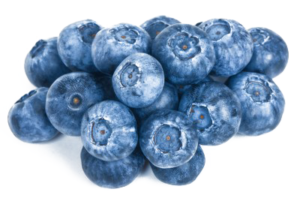
I bet eating fresh blueberries daily instead of blueberry powder would not only be more delicious, but also have even more health benefits. From Science Daily:

Blueberries may help reduce blood pressure and arterial stiffness

Just one cup of blueberries per day could be the key to reducing blood pressure and arterial stiffness, both of which are associated with cardiovascular disease. .... Johnson said she is interested in looking at how functional foods -- foods that have a positive impact on health beyond basic nutrition -- can prevent and reverse negative health outcomes, particularly for postmenopausal women.

Over an eight-week period, 48 postmenopausal women with pre- and stage-1 hypertension were randomly assigned to receive either 22 grams of freeze-dried blueberry powder -- the equivalent to one cup of fresh blueberries -- or 22 grams of a placebo powder. Participants, meanwhile, continued their normal diet and exercise routines.

At the end of the eight weeks, participants receiving the blueberry powder on average had a 7 mmHg (5.1 percent) decrease in systolic blood pressure, which is the top number in the blood pressure reading that measures the pressure in the arteries when the heart beats. They also saw a 5 mmHg (6.3 percent) reduction in diastolic blood pressure, or the bottom number measuring the pressure in the arteries between heartbeats.

Additionally, participants in the blueberry-treated group had an average reduction of 97 cm/second (6.5 percent) in arterial stiffness.They also found that nitric oxide, a blood biomarker known to be involved in the widening of blood vessels, increased by 68.5 percent. That is important, Johnson said, because arterial stiffness and the narrowing of blood vessels are both a part of hypertension. This rise in nitric oxide helps explain the reductions in blood pressure.

So perhaps mother knew best - that you'd catch a cold easily if you didn't bundle up when going outside in the winter. Study was done on mice cells, so now need to study this in humans. From Science Daily:

Cold virus replicates better at cooler temperatures

The common cold virus can reproduce itself more efficiently in the cooler temperatures found inside the nose than at core body temperature, according to a new Yale-led study. This finding may confirm the popular yet contested notion that people are more likely to catch a cold in cool-weather conditions.

Researchers have long known that the most frequent cause of the common cold, the rhinovirus, replicates more readily in the slightly cooler environment of the nasal cavity than in the warmer lungs. 

To investigate the relationship between temperature and immune response, Iwasaki and an interdisciplinary team of Yale researchers spearheaded by Ellen Foxman, a postdoctoral fellow in Iwasaki's lab, examined the cells taken from the airways of mice. They compared the immune response to rhinovirus when cells were incubated at 37 degrees Celsius, or core body temperature, and at the cooler 33 degrees Celsius. "We found that the innate immune response to the rhinovirus is impaired at the lower body temperature compared to the core body temperature," Iwasaki said.

The study also strongly suggested that the varying temperatures influenced the immune response rather than the virus itself. Researchers observed viral replication in airway cells from mice with genetic deficiencies in the immune system sensors that detect virus and in the antiviral response. They found that with these immune deficiencies, the virus was able to replicate at the higher temperature. 

Although the research was conducted on mouse cells, it offers clues that may benefit people, including the roughly 20% of us who harbor rhinovirus in our noses at any given time. "In general, the lower the temperature, it seems the lower the innate immune response to viruses," noted Iwasaki. 

And the scary part is that they only tested for 32 chemicals, but there are thousands of others they didn't test for that could be lurking in the water, including pesticides used on the lawns and grounds around outdoor swimming pools. From Science Daily:

Pharmaceuticals, personal care products could taint swimming pools

A new study suggests pharmaceuticals and chemicals from personal care products end up in swimming pools, possibly interacting with chlorine to produce disinfection byproducts with unknown properties and health effects.

Chlorination is used primarily to prevent pathogenic microorganisms from growing. Previous research has shown that many constituents of urine including urea, uric acid, and amino acids, interact with chlorine to produce potentially hazardous disinfection byproducts in swimming pools. However, chemicals from pharmaceuticals and personal care products, or PPCPs, also could be interacting with chlorine, producing potentially harmful byproducts. There are literally thousands of chemicals from pharmaceuticals and personal care products that could be getting into swimming pool water.

A research group led by Ching-Hua Huang, a professor in the School of Civil and Environmental Engineering at the Georgia Institute of Technology, has developed an analytical technique that identifies and quantifies 32 pharmaceuticals and personal care products in water... Water samples were taken from indoor swimming pools in Indiana and Georgia.

Of the 32 chemicals investigated, the researchers detected three: N,N-diethyl-m-toluamide, known as DEET, the active ingredient in insect repellants; caffeine; and tri(2-chloroethyl)-phosphate (TCEP), a flame retardant.

"The other 29 could have been present at concentrations below the detection level," Blatchley said. "And because there are literally thousands of pharmaceuticals, this is just a small subset of compounds that could be present in swimming pools. The main issue is that the release of chemicals into a place like a swimming pool is completely uncontrolled and unknown. I don't want to be an alarmist. We haven't discovered anything that would be cause for alarm right now, but the bottom line is we just don't know."

Some chemicals are volatile, which means they can escape into the air to be inhaled. Others can be ingested or absorbed through the skin."Swimmers are exposed to chemicals through three different routes: You can inhale, you can ingest and it can go through your skin. So the exposure you receive in a swimming pool setting is potentially much more extensive than the exposure you would receive by just one route alone," Blatchley said.

His previous research has shown that certain airborne contaminants are created when chlorine reacts with sweat and urine in indoor swimming pools. Pharmaceuticals may get into swimming pool water from personal care products applied to the skin such as insect repellant, makeup and sunscreen. Many pharmaceuticals that are ingested are not fully metabolized by the body and are excreted in sweat and urine.

"Urine, I think, is really the primary mode of introduction," Blatchley said. "When it comes to pharmaceuticals, these are chemicals designed to be biologically active at pretty low concentrations. Birth control pills, for example, contain hormones. If those chemicals and others are present, especially in a mixture in a water sample that humans are going to be exposed to, then what are the consequences of that? That is a largely unanswered question."...The previous research suggested that about 93 percent of uric acid introduced to pools comes from human urine.

Exercise is the Fountain of Youth? Note that they could not come up with a biomarker of aging in these active people. From Medical Xpress;

Exercise allows you to age optimally

Staying active allows you to age optimally, according to a study by King's College London and the University of Birmingham. The study of amateur older cyclists found that many had levels of physiological function that would place them at a much younger age compared to the general population; debunking the common assumption that ageing automatically makes you more frail.

The study, published in The Journal of Physiology, recruited 84 male and 41 female cycling enthusiasts aged 55 to 79 to explore how the ageing process affects the human body, and whether specific physiological markers can be used to determine your age.

Cyclists were recruited to exclude the effects of a sedentary lifestyle, which can aggravate health problems and cause changes in the body, which might appear to be due to the ageing process. Men and women had to be able to cycle 100 km in under 6.5 hours and 60 km in 5.5 hours, respectively, to be included in the study...Participants underwent two days of laboratory testing at King's. For each participant, a physiological profile was established which included measures of cardiovascular, respiratory, neuromuscular, metabolic, endocrine and cognitive functions, bone strength, and health and well-being. Volunteers' reflexes, muscle strength, oxygen uptake during exercise and peak explosive cycling power were determined.

The results of the study showed that in these individuals, the effects of ageing were far from obvious. Indeed, people of different ages could have similar levels of function such as muscle strength, lung power and exercise capacity. The maximum rate of oxygen consumption showed the closest association with age, but even this marker could not identify with any degree of accuracy the age of any given individual, which would be the requirement for any useful biomarker of ageing.

In a basic, but important test of function in older people, the time taken to stand from a chair, walk three metres, turn, walk back and sit down was also measured. Taking more than 15 seconds to complete the task generally indicates a high risk of falling. Even the oldest participants in the present study fell well below these levels, fitting well within the norm for healthy young adults.

Overall, the study concluded that ageing is likely to be a highly individualist phenomenon...The main problem facing health research is that in modern societies the majority of the population is inactive. A sedentary lifestyle causes physiological problems at any age. Hence the confusion as to how much the decline in bodily functions is due to the natural ageing process and how much is due to the combined effects of ageing and inactivity."

"In many models of ageing lifespan is the primary measure, but in human beings this is arguably less important than the consequences of deterioration in health. Healthy life expectancy - our healthspan - is not keeping pace with the average lifespan, and the years we spend with poor health and disabilities in old age are growing."

Emeritus Professor Norman Lazarus, a member of the King's team and also a cyclist, said: "Inevitably, our bodies will experience some decline with age, but staying physically active can buy you extra years of function compared to sedentary people. Cycling not only keeps you mentally alert, but requires the vigorous use of many of the body's key systems, such as your muscles, heart and lungs which you need for maintaining health and for reducing the risks associated with numerous diseases."

From Science Daily:

More whole grains associated with lower mortality, especially cardiovascular

Eating more whole grains appears to be associated with reduced mortality, especially deaths due to cardiovascular disease (CVD), but not cancer deaths, according to a report.

Whole grains are widely recommended in many dietary guidelines as healthful food. However, data regarding how much whole grains people eat and mortality were not entirely consistent.

Hongyu Wu, Ph.D., of the Harvard School of Public Health, Boston, and coauthors examined the association between eating whole grains and the risk of death using data from two large studies: 74,341 women from the Nurses' Health Study (1984-2010) and 43,744 men from the Health Professionals Follow-Up Study (1986-2010). All the participants were free of cancer and CVD when the studies began.

The authors documented 26,920 deaths. After the data were adjusted for potential confounding factors including age, smoking and body mass index, the study found that eating more whole grains was associated with lower total mortality and lower CVD mortality but not cancer deaths. The authors further estimated that every serving (28 grams/per day) of whole grains was associated with 5 percent lower total mortality or 9 percent lower CVD mortality.

Again, the same message of what are healthy habits to prevent heart attacks and heart disease: not smoking, a normal body mass index, physical activity of at least 2.5 hours per week, watching seven or fewer hours of television a week, consumption of a maximum of one alcoholic drink per day on average, and a diet in the top 40 percent of a measure of diet quality.From Medical Xpress:

A healthy lifestyle may prevent heart disease in nearly three out of four women

A new study that followed nearly 70,000 women for two decades concluded that three-quarters of heart attacks in young women could be prevented if women closely followed six healthy lifestyle practices.

The study, published today in the Journal of the American College of Cardiology, followed participants in a study of nurses established in 1989, which surveyed more than 116,000 participants about their diets and other health habits every two years. Researchers from Indiana University, the Harvard School of Public Health, and Brigham and Women's Hospital analyzed data on 69,247 of the participants who met the requirements for their study. "Although mortality rates from heart disease in the U.S. have been in steady decline for the last four decades, women aged 35-44 have not experienced the same reduction," said Andrea K. Chomistek, ScD, a researcher from the Indiana University School of Public Health-Bloomington and lead author of the paper.

Healthy habits were defined as not smoking, a normal body mass index, physical activity of at least 2.5 hours per week, watching seven or fewer hours of television a week, consumption of a maximum of one alcoholic drink per day on average, and a diet in the top 40 percent of a measure of diet quality based on the Harvard School of Public Health healthy eating plate.

During 20 years of follow-up, 456 women had heart attacks and 31,691 women were diagnosed with one or more cardiovascular disease risk factors, including type 2 diabetes, high blood pressure or high levels of blood cholesterol. The average age of women in the study was 37.1 years at the outset; the average age of a heart disease diagnosis was 50.3, and the average age for diagnosis with a risk factor for heart disease was 46.8.

Researchers found that women who adhered to all six healthy lifestyle practices had a 92 percent lower risk of heart attack and a 66 percent lower risk of developing a risk factor for heart disease. This lower risk would mean three quarters of heart attacks and nearly half of all risk factors in younger women may have been prevented if all of the women had adhered to all six healthy lifestyle factors, the authors said.

Independently, not smoking, adequate physical activity, better diet, and lower BMI were each associated with a lower risk for heart disease. Women who consumed moderate amounts of alcohol—approximately one drink per day on average—saw the lowest risk compared to those who did not drink at all and those who drank more.

Another excellent reason to start walking more and increasing daily physical activity. So get out there and walk, walk, walk...

From Science Daily: Significant link between daily physical activity, vascular health

As millions of Americans resolve to live healthier lives in 2015, research from the University of Missouri School of Medicine shows just how important diligent, daily physical activity is. The researchers found that reducing daily physical activity for even a few days leads to decreases in the function of the inner lining of blood vessels in the legs of young, healthy subjects causing vascular dysfunction that can have prolonged effects.

Paul Fadel, associate professor of medical pharmacology and physiology, and John Thyfault, associate professor of nutrition and exercise physiology, also found that the vascular dysfunction induced by five days of inactivity requires more than one day of returning to physical activity and taking at least 10,000 steps a day to improve.

"We know the negative consequences from not engaging in physical activity can be reversed," said Fadel. "There is much data to indicate that at any stage of a disease, and at any time in your life, you can get active and prolong your life. However, we found that skipping just five days of physical activity causes damage to blood vessels in the legs that can take a prolonged period of time to repair."

"Inactivity is typically going to lead to people being overweight and obese," said Fadel. "The next step after that is insulin resistance which leads to Type 2 diabetes and cardiovascular disease."

The researchers studied the early effects on the body's blood vessels when someone transitions from high daily physical activity -- 10,000 or more steps per day -- to low daily physical activity, less than 5,000 steps per day. Five thousand steps is the national average, but only half of the daily recommendation from the U.S. Surgeon General. The researchers found going from high to low levels of daily physical activity for just five days decreases the function of the inner lining of the blood vessels in the legs.

Counting steps and daily physical activity is different than defined exercise, such as working out at the gym. While there are significant benefits to defined exercise, Thyfault and Fadel's research is based on what amounts to 30 minutes of moderate activity per day.

Take note: the focus should be on getting magnesium from foods, not supplements. As the researchers warn: "your body absorbs magnesium from food differently than it does from supplements". From CNN:

Magnesium, an invisible deficiency that could be harming your health

Feeling exhausted? Or noticing weird muscle cramps that are throwing off your workouts? You might be suffering from a magnesium deficiency. Dubbed the "invisible deficiency" by some experts because it's so hard to spot and diagnose, magnesium deficiencies are more dangerous than you might think. "Magnesium is involved in over 300 biochemical reactions in your body. It affects everything from your heartbeat to your muscles to your hormones," says Dr. Danine Fruge, Associate Medical Director at the Pritikin Longevity Center in Miami, Florida.

 "Studies have shown that only about 25% of U.S. adults are at or above the recommended daily amount of 310 to 320 milligrams for women and 400 to 420 for men," says Fruge. In fact, the 2005-2006 National Health and Nutrition Examination Survey (NHANES) revealed that at least half of the U.S. population had inadequate intakes of magnesium.

Loss of appetite, nausea, fatigue -- the initial symptoms of magnesium deficiency are also common side effects of other health conditions, making it difficult to diagnose. This sneaky disorder manifests in three different stages, depending on how lacking you are in the nutrient. While initially symptoms can be minor, a magnesium deficiency may eventually cause noticeable problems with your muscle and nerve function such as tingling, cramping, numbness and contractions (like that annoying eye twitch you just can't shake). In its worst stages, magnesium deficiency could even cause seizures, personality changes, or abnormal heart rhythms.

To make matters scarier, this condition can be difficult to detect with medical tests. Since only 1% of magnesium is found in your blood (most is in your bones or organs), a simple needle prick often won't help determine your levels. Instead, Fruge says diagnoses are usually made through process of elimination and by examining a patient's lifestyle.

It may be what you're eating — rather than what you're not eating — that's putting you at risk for magnesium deficiency. "It's very easy to get enough magnesium. I think the reason so many people are deficient is because a lot of food and drink can make magnesium unavailable to their bodies," says Fruge. The main culprits: soda, caffeinated beverages and alcohol, according to Fruge... Consuming too much alcohol can interfere with your body's absorption of vitamin D, which aids magnesium absorption. As for food, refined sugar causes the body to excrete magnesium through the kidneys, resulting in a net loss, according to Fruge.

Plus, your body absorbs magnesium from food differently than it does from supplements. You should only use magnesium supplements under the direction of a doctor — and be sure not to exceed 350 non-food milligrams of magnesium per day (unless a medical professional instructs you differently). "Your body has built-in mechanisms that don't allow it to overdose from food, but that doesn't exist for supplements. Too much magnesium via supplement can put your heart into an arrhythmia and that can even be fatal, particularly for people with issues like diabetes," says Fruge.

Food sources are your safest bet so focus on amping up your consumption of leafy greens — one cup of cooked spinach provides 157 milligrams of magnesium. Legumes are a solid choice too, with a cup of cooked white beans coming in at 113 milligrams of the nutrient. And if you're a fan of squash and pumpkin seeds, one cup packs in a whopping 649 milligrams. Other great options are nuts, including almonds and cashews, most types of fish, and whole grains.

Excerpts from an interesting article about microbes and some findings from 2014. From Wired:

9 Amazing and Gross Things Scientists Discovered About Microbes This Year

We can’t see them, but they are all around us. On us. In us. Our personal microbes—not to mention those in the environment around us—have us outnumbered by orders of magnitude, but scientists are only beginning to understand how they influence our health and other aspects of our lives. It’s an increasingly hot area of science, though, and this past year saw lots of interesting developments. Here are some of the highlights.

When you move, your microbes move with you

In a study published in Science in August, scientists cataloged the microbes of seven families, swabbing the hands, feet, and noses of each family member—including pets—for six weeks. They also collected samples from doorknobs, light switches, and other household surfaces. Each home had a distinct microbial community that came mostly from its human inhabitants, and the scientists could tell which home a person lived in just by matching microbial profiles. Three of the families moved during the study period, and it only took about a day for their microbes to settle in to the new place. As the journal’s editors put it: “When families moved, their microbiological ‘aura’ followed.”

Microbes could help solve crimes

Scientists made several findings this year that could potentially show up in court one day. One study found that the microbiome of human cadavers evolves in a predictable way, hinting at a new way to determine time of death. And earlier this month, researchers suggested that bacteria on pubic hair could be used to identify the perpetrators of sex crimes—especially useful when a rapist uses a condom to avoid leaving behind DNA evidence.

Your gut bacteria may be inherited

Exactly which bacteria choose to take up residence in your gut is determined, in part, by your genes, scientists reported this year after examining more than 1,000 fecal samples from 416 pairs of twins... One of the most heritable types was a family of bacteria called Christensenellaceae, which are more abundant in lean people than in obese people. 

Forget fecal transplants, poo pills may be just as effective

Clostridium difficile (pictured) is a nasty bacteria that wreaks havoc on the guts and kills 14,000 people a year in the US alone. Normally, other intestinal bacteria keep C. diff in check, but in the worst infections it starts to dominate. One effective but off putting treatment is a fecal transplant: taking a stool sample from a healthy person and transplanting it into the patient (in through the out door, so to speak). This year researchers developed a less cringe-inducing alternative. They created odorless frozen capsules that contained bacteria isolated from healthy stool samples. The poo pills successfully treated 18 of 20 patients with antibiotic-resistant C. diff infections, the team reported in JAMA in October.

Yeast evolved to lure fruit flies (not to make delicious beer)

There is crazy microbial diversity in cheese rinds

A tiny crumb of cheese rind contains about 10 billion microbial cells: bacteria and fungi that turn boring milk into something funky and delicious. Although cheesemakers have been manipulating them for centuries, not much is known about these microbes. This year scientists conducted the largest study yet on the microbial diversity of cheese, examining 137 cheeses from 10 countries.They found that microbial communities vary according to the style of cheese, but not so much according to where the cheese is made.

The microbiome could be a source of novel drugs

The bacteria that live on and in our bodies make countless molecules. Some of those molecules might make good drugs. 

We may need new branches on the tree of life for all the microbes

Life on Earth has traditionally been divided into three domains: Eukaryotes (plants, animals, and all other organisms that stash their DNA in a special compartment—the nucleus—inside their cells), Bacteria (our familiar one-celled friends and foes), and Archaea (single-celled organisms that are biochemically and genetically distinct from the other two groups). But do we really know that’s all there isWe do not, two scientists argued last month in Science. There may be entire domains of life that have eluded our methods of detection.

Without microbes, life as we know it would end

In December, two scientists posed a thought question in the journal PLOS Biology: What would happen in a world without microbes? ...Without nitrogen-fixing soil bacteria, crops would begin to fail. Decomposition would stop, waste would pile up, and the nutrient recycling that supports life as we know it would grind to a halt. “We predict complete societal collapse only within a year or so, linked to catastrophic failure of the food supply chain,” the researchers write. “Annihilation of most humans and nonmicroscopic life on the planet would follow a prolonged period of starvation, disease, unrest, civil war, anarchy, and global biogeochemical asphyxiation.”

 Clostridium difficile. Credit: CDC