Skip to content

Another community of microbes found in humans in areas once thought to be sterile (without bacteria) - the ovaries and fallopian tubes in the female upper reproductive tract. And the interesting thing is that once again we see differences in the bacterial communities of areas with and without cancer (here the ovaries). From Science Daily:

Bacteria found in female upper reproductive tract, once thought sterile

They're inside our gut, on the skin, and in the mouth. Thousands of different types of micro-organisms live in and on the body, playing helpful roles in digestion or in aiding the body's natural defense system. Now, scientists at the University of North Carolina Lineberger Comprehensive Cancer Center have found tiny organisms living in the upper female reproductive tract, an environment they said was once thought to be sterile.

In a preliminary finding (abstract 5568) presented Monday, June 6, at the 2016 American Society of Clinical Oncology Annual Meeting in Chicago, researchers revealed they have found bacteria in the ovaries and in the fallopian tubes. And with an additional finding that women with ovarian cancer have a different bacterial makeup, researchers are asking whether these tiny organisms could play a role in cancer development or progression.

To test whether there were bacteria in the upper female reproductive tract, researchers gathered samples from 25 women with and without cancer who were undergoing surgery to either have their uterus, fallopian tubes, or ovaries removed. The researchers then used genetic sequencing to determine what types of bacteria were present....Genetics-based approaches to identifying bacteria have made studies like theirs possible, Keku said, as some bacteria cannot be grown outside of the body in the laboratory.

From their analysis, the researchers found different types of bacteria in the fallopian tube and ovary. They also found differences in the types of bacteria in the upper reproductive tracts of women with and without epithelial ovarian cancer. Keku said the bacterial strains in the women with ovarian cancer were more pathogenic. The findings were borderline statistically significant, which the researchers said suggested a trend.

While they said it's too early to tell if the bacterial differences play a role in cancer development, researchers said their proof-of-concept study is a step needed to answer that question. Further studies are needed to determine if changes in the type of bacteria and other organisms in those regions come before the development of cancer.

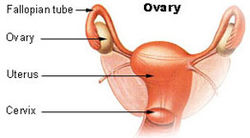
Human female ovary and Fallopian tube. Credit: Wikipedia
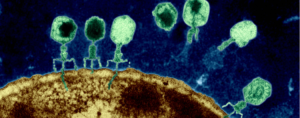
Some researchers are now testing to see if phage therapy  could be a possible treatment for some conditions, such as chronic sinusitis and wound infections. Phage therapy, which uses bacteriophages, was neglected for decades (except for Russia and the Republic of Georgia), but their use is again being studied as an alternative to antibiotics. A bacteriophage is a virus that lives within a bacterium, replicating itself, and eventually destroys the bacteria. The term is from "bacteria" and the Greek "phagein" which means to devour, so think of them as "bacteria eaters". Phages only attack specific types of bacteria (they are "bacterium specific"), so they’re unlikely to harm the normal microbiome (community of microbes) or any human cells.
I've been posting about the beneficial bacteria Lactobacillus sakei that treats chronic sinusitis, as well as some other probiotic (beneficial) bacteria that people have reported success with (see The One Probiotic That Treats Sinusitis). Most people contacting me or commenting have reported success with L. sakei products, but there is a group for whom L. sakei and other probiotics haven't helped. Why? And what can be done? Perhaps their sinuses are missing still unknown "keystone" species (very important microbial species for health). Or perhaps they have bacterial biofilms that even Lactobacillus species that are viewed as anti-biofilm cannot overcome. Perhaps phage therapy might help these people? 

Phage therapy is currently being tested by researchers in the treatment of chronic sinusitis in Australia. The video Antibiotic Resistance discusses phage therapy for sinusitis starting at 23:30. Looks promising.

And a write-up about the sinusitis phage therapy research from the Australian newspaper The Sydney Morning Herald: Medicine turns to bacteriophage therapy to beat superbugs

An arcane therapy for bacterial infections that dwelled behind the Iron Curtain for decades is making a comeback in Western medicine as a potential white knight against superbugs. Phage therapy involves infecting patients with viruses known as bacteriophages, which are the natural predators of bacteria, to kill the germs that antibiotics cannot.  ...continue reading "Phage Therapy May Help Sinusitis Sufferers"

Try to avoid triclosan. Read labels (especially soaps, personal care, and household cleaning products) and avoid anything that says it contains triclosan, or is anti-bacterial, anti-fungal, anti-microbial, or anti-odor. We easily absorb triclosan into our bodies, and it has been detected in our urine, blood, and breast milk. Among its many negative effects (e.g., here and here) is that it is now linked to disruption of gut bacteria.

The gut microbiome performs vital functions in our bodies. Deviation from the normal microbiome (our microbial communities being out of whack) is known as dysbiosis. Dysbiosis has been associated with human diseases, including diabetes, heart disease, arthritis, and malnutrition. The researchers used zebrafish because they are commonly used to study impacts of various chemicals on gut microbial communities. So yes, the findings are valid and match what other studies have found. So please try to avoid triclosan. From Science Daily:

Common antimicrobial agent rapidly disrupts gut bacteria

A new study suggests that triclosan, an antimicrobial and antifungal agent found in many consumer products ranging from hand soaps to toys and even toothpaste, can rapidly disrupt bacterial communities found in the gut.The research was published in PLOS ONE by scientists from Oregon State University. It was based on findings made with zebrafish, which researchers believe are an important animal model to help determine possible human biological and health impacts of this antimicrobial compound.

Triclosan was first used as a hospital scrub in the 1970s and now is one of the most common antimicrobial agents in the world, found in shampoos, deodorants, toothpastes, mouth washes, kitchen utensils, cutting boards, toys, bedding, socks and trash bags. It continues to be used in medical settings, and can be easily absorbed through the skin.

"However, there's now a growing awareness of the importance of the bacteria in our gut microbiome for human health, and the overuse of antibiotics that can lead to the rise of 'superbugs.' There are consequences to constantly trying to kill the bacteria in the world around us, aspects we're just beginning to understand."

In the new study, researchers found that triclosan exposure caused rapid changes in both the diversity and composition of the microbiome in the laboratory animals. It's not clear what the implication may be for animal or human health, but scientists believe that compromising of the bacteria in the intestinal tract may contribute to the development or severity of disease. Some bacteria were more susceptible to the impact of triclosan than others, such as the family Enterobacteriaceae; and others were more resilient, such as the genus Pseudomonas.

The gut-associated microbiome performs vital functions for human health, prevents colonization with pathogens, stimulates the development of the immune system, and produces micronutrients needed by the host. Dysfunction of this microbiome has been associated with human disease, including diabetes, heart disease, arthritis and malnutrition, the scientists pointed out in their study.

Triclosan has been a concern in part because it is so widely used, and it's also readily absorbed through the skin and gastrointestinal tracts, showing up in urine, feces and breast milk. It also has been associated with endocrine disruption in fish and rats, may act as a liver tumor promoter, and can alter inflammatory responses.

4

Dandruff is a very common scalp disorder that has occurred for centuries. A new study found that the most abundant bacteria on the scalp are Propionibacterium and Staphylococcus, and that they have a reciprocal relationship with each other - when one is high, the other is low. When compared with a normal scalp, dandruff regions had decreased Propionibacterium and increased Staphylococcus. The researchers suggested that these findings suggest a new way to treat dandruff - to increase the Propionibacterium and decrease the Staphylococcus on the scalp. Stay tuned for possible future treatments using these findings. From Science Daily:
Bacteria the yin and yang of dandruff, says study

Dandruff is not caused by a fungus, as many believe, but by an imbalance between two competing bacteria that naturally colonise the human scalp, according to a study released Thursday. Think of Propionibacterium and Staphylococcus as the yin and yang of healthy hair: when they hold each other in check, so too is dandruff held at bay. But when one dominates the other, the tell-tale white flecks that settle on shoulders like snowdust begin to proliferate, a team of Chinese and Japanese researchers reported.

Dandruff is the most common scalp disorder on the planet, a tonsorial bane for about half the world's population. But experts have differed sharply over the years on its causes and possible cures....A team anchored by Zhang Menghui of Shanghai Jiao Tong University isolated a large number of variables in the ecosystem of the human scalp to see how they interact. In 59 Chinese volunteers aged from 18 to 60 years old, they measured levels of water, several dozen bacteria, sebum—an oily secretion that proliferates in adolescence and early adulthood....Participants washed their hair 48 hours in advance of the tests, and dandruff samples were taken from eight different sections of the scalp.

"Overall, fungi did not exhibit an important role in the severity of dandruff," they concluded.
"The relationship between the bacteria and the dandruff was significantly stronger."
But the scientists also noticed that prevalence of the pesky white particles was higher when the ratio of two dominant bacteria—which normally cancel each other out—was altered. "This study suggests that adjusting the balance of the bacteria on the scalp... might be a potential solution to lessen dandruff," they concluded.

Many probiotic manufacturers say that their product has all sorts of wonderful health benefits in people eating that particular probiotic, but is the evidence there? Finally, now there is a review of the best existing studies looking at whether probiotics have any effect on the gut bacteria of healthy, normal individuals. In other words, are the probiotics even staying there (to have some beneficial effect) or do they just "pass through" without leaving anything behind?

The main finding: only one study out of 7 found any lasting effect on gut microbes (in healthy individuals) from the probiotics which had been ingested daily over varying times, but typically for one month. Note: RCTs are randomly controlled trials, which are the best way to test whether something has an effect - because people are randomly assigned to a group. In these studies no one knew who was getting a placebo (e.g., received capsule without the probiotic) or the probiotic (e.g., in the capsule) - this eliminates self-selection and bias. But perhaps the bacteria strains tested were the wrong ones? Or the time period wasn't long enough or the bacteria weren't given in sufficient amounts? Also, studies didn't test multi-strain probiotics (which people commonly take), but only 1 or 2 species of bacteria.

However, other research has shown benefits from probiotics in individuals with "dysbiosis" (microbial communities out of whack) or certain illnesses. It'll be interesting to see what further research finds. These are still early days in this research. From MedicalXpress:

Do probiotics have an effect on healthy adults? It's too early to tell

There is little evidence to support any consistent effect of probiotics on the gut microbiota of healthy individuals, according to a systematic review published in the open access journal Genome Medicine. The World Health Organization defines probiotics as live microorganisms which confer a health benefit to the host if administered in adequate amounts and probiotics products are often marketed toward the general population. However, evidence for their effects on bacteria living in the guts of healthy adults remains elusive.

The study by researchers at the Novo Nordisk Foundation Center for Basic Metabolic Research at the University of Copenhagen is a systematic review of seven randomized controlled trials (RCTs) investigating the effect of probiotic products on the fecal microbiota of healthy adults.

Nadja Buus Kristensen, PhD student and junior author, said: "According to our systematic review, no convincing evidence exists for consistent effects of examined probiotics on fecal microbiota composition in healthy adults, despite probiotic products being consumed to a large extent by the general population."...The authors found that of the seven original RCTs included in the study, only one observed significantly greater changes in the bacterial species composition of the fecal microbiota in individuals who consumed probiotics compared to those who did not.

Also, an international consensus on what defines a normal or healthy fecal microbial community is lacking....Study participants across the seven original RCTs included in this review were healthy adults between 19 and 88 years of age. Numbers of individuals ranged from 21 to 81 and the proportion of women was between 50 and 100%. Probiotic products were administered as biscuits, milk-based drinks, sachets, or capsules for periods of 21 to 42 days.

Oluf Pedersen, professor at the University of Copenhagen and senior author of the paper said: "While there is some evidence from previous reviews that probiotic interventions may benefit those with disease-associated imbalances of the gut microbiota, there is little evidence of an effect in healthy individuals

Beautiful photos of the microbes within and on us by the British scientific photographer Steve Gschmeisser. Check out his site (http://www.theworldcloseup.com/) to see photos of microbes and other images made with the very expensive SEM - a scanning electron microscope. All the photos are by Steve Gschmeisser.

E. coli bacteria in urine sample

breast cancer cells

prostate cancer cell

large intestine

In 1837, Charles Darwin sketched a simple tree of life (shown left) to illustrate the idea that all living things share a common ancestor. Ever since then, scientists have been adding names to the tree of life, including a massive effort of 2.3 million named species of animals, plants, fungi and microbes in 2015. A tree of life is a visual hypothesis of how scientists think species are related to one another, so it has been evolving over the years as more information is learned and species discovered.

Now a group of 17 researchers have sketched out a radically different tree of life. It has two main trunks—one full of bacteria and another comprised of archaea, a group of single-celled microbes that run on very different biochemistry. The eukaryotes—the domain that includes all animals, fungi, and plants—are crowded on a thin branch coming off the archaeal trunk. About half of these bacterial branches belong to a supergroup, which was discovered very recently and is currently known as the candidate phyla radiation. Within these branches are numerous species that we’re almost completely ignorant about, and they’ve never been isolated or grown in a lab (with one exception called TM7). In fact, this supergroup of bacteria and “other lineages that lack isolated representatives clearly comprise the majority of life’s current diversity,” write researchers Hug and Banfield. Wow. From Science Daily:

Wealth of unsuspected new microbes expands tree of life

Scientists have dramatically expanded the tree of life, which depicts the variety and evolution of life on Earth, to account for over a thousand new microscopic life forms discovered over the past 15 years. The expanded view finally gives bacteria and Archaea their due, showing that about two-thirds of all diversity on Earth is bacterial -- half bacteria that cannot be isolated and grown in the lab -- while nearly one-third is Archaeal.

Much of this microbial diversity remained hidden until the genome revolution allowed researchers like Banfield to search directly for their genomes in the environment, rather than trying to culture them in a lab dish. Many of the microbes cannot be isolated and cultured because they cannot live on their own: they must beg, borrow or steal stuff from other animals or microbes, either as parasites, symbiotic organisms or scavengers.

The new tree, to be published online April 11 in the new journal Nature Microbiology, reinforces once again that the life we see around us -- plants, animals, humans and other so-called eukaryotes -- represent a tiny percentage of the world's biodiversity.

"Bacteria and Archaea from major lineages completely lacking isolated representatives comprise the majority of life's diversity," said Banfield.....According to first author Laura Hug,... the more than 1,000 newly reported organisms appearing on the revised tree are from a range of environments, including a hot spring in Yellowstone National Park, a salt flat in Chile's Atacama desert, terrestrial and wetland sediments, a sparkling water geyser, meadow soil and the inside of a dolphin's mouth. All of these newly recognized organisms are known only from their genomes.

One striking aspect of the new tree of life is that a group of bacteria described as the "candidate phyla radiation" forms a very major branch. Only recognized recently, and seemingly comprised only of bacteria with symbiotic lifestyles, the candidate phyla radiation now appears to contain around half of all bacterial evolutionary diversity.

Charles Darwin first sketched a tree of life in 1837 as he sought ways of showing how plants, animals and bacteria are related to one another. The idea took root in the 19th century, with the tips of the twigs representing life on Earth today, while the branches connecting them to the trunk implied evolutionary relationships among these creatures.....Archaea were first added in 1977 after work showing that they are distinctly different from bacteria, though they are single-celled like bacteria. A tree published in 1990 by microbiologist Carl Woese was "a transformative visualization of the tree," Banfield said. With its three domains, it remains the most recognizable today.

With the increasing ease of DNA sequencing in the 2000s, Banfield and others began sequencing whole communities of organisms at once and picking out the individual groups based on their genes alone. This metagenomic sequencing revealed whole new groups of bacteria and Archaea, many of them from extreme environments, such as the toxic puddles in abandoned mines, the dirt under toxic waste sites and the human gut. Some of these had been detected before, but nothing was known about them because they wouldn't survive when isolated in a lab dish.

For the new paper, Banfield and Hug teamed up with more than a dozen other researchers who have sequenced new microbial species, gathering 1,011 previously unpublished genomes to add to already known genome sequences of organisms representing the major families of life on Earth.....The analysis, representing the total diversity among all sequenced genomes, produced a tree with branches dominated by bacteria, especially by uncultivated bacteria. A second view of the tree grouped organisms by their evolutionary distance from one another rather than current taxonomic definitions, making clear that about one-third of all biodiversity comes from bacteria, one-third from uncultivable bacteria and a bit less than one-third from Archaea and eukaryotes. (Original article and diagrams.)

This is a new and expanded view of the tree of life, with clusters of bacteria (left), uncultivable bacteria called 'candidate phyla radiation' (center, purple) and, at lower right, the Archaea and eukaryotes (green), including humans.
Credit: Graphic by Zosia Rostomian, Lawrence Berkeley National Laboratory

Another article commenting that increasing the amount of dietary fiber eaten by people eating a typical Western diet (which is low in fiber) will improve their gut microbiome (community of microbes). Research is finding that the added dietary fiber is food (nutrition) for microbes in the gut, and eating additional fiber daily will help restore or increase bacterial diversity, which then should lead to health benefits. Note: Easy ways to increase dietary fiber are increasing intake of whole grains, legumes, nuts, seeds, fruits, and vegetables. Think of food writer Michael Pollan's advice: "Eat food. Not too much. Mostly plants."

Researchers feel that fiber intake needs to be increased to more than current dietary guidelines, and that beneficial effects to the microbiome starts to occur rapidly (within 2 weeks) of changing to a higher fiber diet. This post from January 21, 2016 discussed the Sonnenburg research on gut microbe depletion (from a low fiber diet), and this April 28, 2015 post discussed the O'Keefe research (changing the diet has big effect on colon cancer risk) - both studies are mentioned below. See the page Feeding Your Gut Microbes for more information. From Science Daily:

Can more fiber restore microbiome diversity?

Scientists are pushing to restore human health in Western countries by changing our diet to restore the microbial species lost over the evolution of Western diet. Researchers advocate for strategically increasing dietary fiber intake as one path forward in regaining microbial biodiversity.

Insufficient nutrients for our gut microbes have been linked to a loss of certain beneficial bacterial species in industrialized societies and are likely impacting our immunological and metabolic health, although more data is needed. For example, most Westerners consume half of the amount of dietary fiber recommended by dietary guidelines, which nutritionists refer to as the "fiber gap," which is a problem because dietary fiber is the primary source of nutrition (e.g., carbohydrates) accessible to gut bacteria in humans.

"The idea to boost fiber levels is not new," says Jens Walter of the University of Alberta, Canada. "However, depletion of the microbiome adds a new perspective to this low-fiber Western diet that we are currently eating." Earlier this year, Stanford University's Justin Sonnenburg found that mice fed a typical Western diet (high in fat and carbohydrates and low in fiber) transferred a lower diversity of beneficial microbial species to future generations. The re-introduction of the microbes' preferred fiber at that stage did not result in a return of some (good) species, indicating that extinctions had occurred in only a few generations.

Walter and co-author Edward Deehan, his PhD student, are concerned that a dramatic shift away from a diet similar to the one under which the human-microbiome symbiosis evolved is a key factor in the rise of non-communicable disorders like obesity. "There is a lot of epidemiological evidence that fiber is beneficial, and food products containing dietary fiber have FDA-approved health claims for both colon cancer and coronary heart disease. There is also quite a bit of clinical evidence (although it is less consistent)," Walter says. "The most pressing issue at the moment that neither consumption of fiber in society nor the doses used in clinical research are high enough."

People living in non-industrialized societies have an average intake of fiber that is much higher than the low norms of Western societies. The authors note the recent work from the Stephen J.D. O'Keefe lab in Nature Communications in which modern African-Americans were given a traditional South-African diet that contained 55 grams of daily dietary fiber and had improved markers for colon cancer within two weeks.

The eye has a normal community of microbes or eye microbiome, just like other body sites (i.e., the gut, the sinuses, the mouth). This community of bacteria is thought to offer resistance from invaders (such as pathogenic bacteria).
The researchers of a recent study found differences in the eye microbiome of contact lens wearers as compared to non-lens wearers. The results indicate that wearing contact lenses "alters the microbial structure of the ocular conjunctiva, making it more similar to that of the skin microbiota" (the community of microbes living on the skin).

Further research is needed to determine whether these differences in the eye microbiome in contact lens wearers is the reason why contact lens wearers develop more eye conditions and infections (such as giant papillary conjunctivitis and keratitis). Over 30 million Americans wear contact lenses so these are important issues.

From Science Daily: Contact lenses alter eye bacteria, making it more skin-like

Contact lenses may alter the natural microbial community of the eyes, according to a study published this week in mBio®, an online open-access journal of the American Society for Microbiology. In a study of 58 adults seeking outpatient eye care, researchers at New York University School of Medicine found that contact lenses make the eye microbiome more skin-like, with higher proportions of the skin bacteria Pseudomonas, Acinetobacter, Methylobacterium, and Lactobacillus and lower proportions of Haemophilus, Streptococcus, Staphylococcus, and Corynebacterium.

It's unclear how these changes occur, said senior study author Maria Dominguez-Bello, PhD, an associate professor of medicine at the university, "if these bacteria are transferred from the fingers to the lens and to the eye surface, or if the lenses exert selective pressures on the eye bacterial community in favor of skin bacteria." Wearing contact lenses has been identified as a risk factor for the development of eye infections such as giant papillary conjunctivitis and keratitis, "so these questions are important," she said.

Researchers used a laboratory technique called 16s rRNA sequencing to compare the bacterial communities of the conjunctiva (the eye surface) and the skin under the eye from 58 adults. They also analyzed samples from 20 of the study participants (9 lens wearers and 11 non-lens wearers) at three time points over the course of six weeks....researchers found a higher diversity of bacteria on the ocular surface than on the skin under the eye or on the contact lenses, which was a surprising result, Dominguez-Bello said.

The ocular surface microbiota of those who wore contact lenses was more skin-like compared to those who did not wear lenses. It was enriched in the bacteria Pseudomonas, Acinetobacter, Methylobacterium, and Lactobacillus. In non-lens wearers, these bacteria were detected at a higher relative abundance in skin samples compared to the eye (except for Lactobacillus), suggesting that these bacteria could be classified as skin bacteria. The bacteria Haemophilus, Streptococcus, Staphylococcus, and Corynebacterium were depleted in the ocular microbiota of lens wearers compared to non-lens wearers.

The possibility of giving microbes in the future (whether bacteria, viruses, or fungi) to treat cancer is amazing. Of course big pharma is pursuing this line of research, which is called immunotherapy (stimulating the body's ability to fight tumors). The Bloomberg Business article discusses a number of big pharma companies entering the field and their main focus. The study in the journal Science finding that giving common beneficial bacteria (Bifidobacterium breve and Bifidobacterium longum) to mice to slow down melanoma tumor growth is a first step. The researchers themselves said that the 2 common beneficial bacteria species exhibited anti-tumor activity in the mice and was as effective as an immunotherapy in controlling the growth of skin cancer. But note that the bacteria needed to be live. Stay tuned....

From Bloomberg News: How Gut Bacteria Are Shaking Up Cancer Research

Top scientists at Roche Holding AG and AstraZeneca Plc are sizing up potential allies in the fight against cancer: the trillions of bacteria that live in the human body. "Five years ago, if you had asked me about bacteria in your gut playing an important role in your systemic immune response, I probably would have laughed it off," Daniel Chen, head of cancer immunotherapy research at Roche’s Genentech division, said in a phone interview. "Most of us immunologists now believe that there really is an important interaction there."

Two recent studies published in the journal Science have intrigued Chen and others who are developing medicines called immunotherapies that stimulate the body’s ability to fight tumors.In November, University of Chicago researchers wrote that giving mice Bifidobacterium, which normally resides in the gastrointestinal tract, was as effective as an immunotherapy in controlling the growth of skin cancer. Combining the two practically eliminated tumor growth. In the second study, scientists in France found that some bacterial species activated a response to immunotherapy, which didn’t occur without the microbes.  ...continue reading "Research Using Bacteria to Treat Cancer"