The more physically active a person is before getting COVID-19, the lower the rates of hospitalization, deterioration events, and death from COVID-19 infection. In other words, physical activity is protective.
The results of a Kaiser Permanente member analysis of 194,191 adults with COVID-19 infection found a strong dose-response relationship - with higher physical activity levels before COVID-19 associated with less severe outcomes.
What levels of exercise were reported by patients? In the 2 years before a COVID-19 infection, physical activity/exercise levels reported by patients were categorized as: always inactive (10 minutes per week or less), mostly inactive (0 to 60 minutes per week), some activity (60 to 150 minutes per week), consistently active (greater than 150 minutes per week), and always active (always greater than 150 minutes per week).
No matter the sex, race, ethnicity, age, BMI categories, whether one had cardiovascular disease or hypertension - the results were generally consistent for everyone. Bottom line:Aim for 150 minutes of physical activity or more every week. [similar results earlier study]
Every December the British Medical Journal publishes some lighthearted studies. Included this year is a fabulously wacky study finding that doing a "funny walking style", called the "Teabag style" from the 1971 Monty Python Ministry of Silly Walks sketch, is a great exercise for health.
Specifically, the researchers estimated that adults could achieve 75 minutes of vigorous intensity physical activity per week by walking in Teabag style (instead of normal walking) for about 11 minutes per day. They called this high energy walking style "inefficient walking". Hah! But lots of fun.
See a short video (scroll down) comparing how the participants walked Teabag style with the original Monty Python sketch. Try it and enjoy yourself!
Walking may be the best way to deal with arthritis pain in the knees (knee osteoarthritis) and to slow its progression. Yes, rather than resting arthritic knees, the best treatment appears to be walking.
A study of individuals over the age of 50 found that walking for exercise prevented flare ups of arthritis knee pain from becoming persistent pain. This might be because consistent movement can help create muscle mass, strengthening ligaments around the joints that have osteoarthritis.
The study also found that walking for exercise is an effective way to slow the damage that occurs within the knee joint. Who would have guessed?
A new study published in Arthritis & Rheumatology led by researchers at Baylor College of Medicine reveals that walking for exercise can reduce new frequent knee pain among people age 50 and older diagnosed with knee osteoarthritis, the most common form of arthritis. Additionally, findings from the study indicate that walking for exercise may be an effective treatment to slow the damage that occurs within the joint....continue reading "Walking Is A Good Treatment For Knee Arthritis"
The pesticide industry is lobbying tooth and nail to take away the right of towns and states to pass pesticide laws that protect people. And to do away with laws already passed in about 200 communities in the U.S. The pesticide industry doesn't like that these laws are stricter than federal laws (which are pretty lax).
It has been documented over and over that the chemical industry has basically corrupted the EPA with chemical industry money, with the end result that many dangerous chemicals (including pesticides) are allowed to be used freely in this country. This includes pesticides that are banned in other countries (because they are so harmful).
The House of Representatives will try to adopt a bill in 2023 that will prohibit local governments from adopting pesticide laws that are more protective than federal rules. This is H.R. 7266, which was introduced in the House of Representatives in March 29, 2022. In summary:
This bill amends the Federal Insecticide, Fungicide, and Rodenticide Act (FIFRA) to prohibit local regulations relating to the sale, distribution, labeling, application, or use of any pesticide or device subject to regulation by a state or the Environmental Protection Agency under FIFRA.
Why is this is a big deal? This is an attack on local governments and on the nearly 200 communities across the United States that have passed their own policies to restrict the use of toxic pesticides. Communities need to keep the right to restrict pesticides linked to cancer and other health problems, that contaminate water, that result in the decline of pollinators, and to protect the health of residents and local ecosystems.
A good example is a town deciding that it would encourage pollinators (bees!) by banning neonicotinoid pesticides within the town. (Yes, there are alternate pesticides one can use.) However, such a move would not be allowed under the new bill because they are not banned at the federal level. It doesn't matter that the community totally supports such a ban (perhaps bee-keeping and honey are a main industry in the town).
Note that many pesticides targeted by local city residents, including neonicotinoids, glyphosate, and atrazine, have been banned or restricted in other countries due to health or environmental concerns.
As the new 118th Congress convenes on January 3, 2023, one of the key issues on the agenda led by Republicans in the U.S. House of Representatives is preemption of local authority to restrict pesticide use—undercutting the local democratic process to protect public health and safety. In the 117th Congress, H.R. 7266 was introduced to prohibit local governments from adopting pesticide laws that are more protective than federal rules....continue reading "The Pesticide Industry Is Fighting All Local Government Attempts To Restrict Pesticide Use"
The EPA has many serious problems, from protecting corporations and not consumers, to ignoring studies that find health problems with products or chemicals. Dr. Jennifer Liss Ohayon, a research scientist at Silent Spring Institute and Northeastern University, pointed out in a recent article that the EPA keeps approving pesticides linked to breast cancer.
These pesticides act as endocrine disruptors on the breast, with effects occurring at low doses. Many are commonly used (e.g., malathion, atrazine), which means women are exposed to in food, water, the workplace, and at home (yes - home, garden, and lawn chemicals!).
Why be concerned? Young women are experiencing earlier breast development, difficulty in breastfeeding, and increasing rates of breast cancer. Many studies link this in women (and in animals) with chemical exposures, especially endocrine disrupting chemicals (this is because they screw with hormones, and so have an effect on breast development and breast tissue).
But... the EPA is dismissing or ignoring relevant studies and pooh poohing the idea that chemicals can have harmful endocrine disrupting effects. Effects on the breast (mammary gland) are NOT required to be part of the EPA's chemical risk assessment (which determines whether a pesticide will be approved). The studies the EPA relies on are almost all financed by the manufacturers (hmmm...of course they'll say the pesticide is safe).
Note that the European Union bans many of the worrisome pesticides - they are not ignoring the science, and in doing so protect people.
Age at when children first start kindergarten is controversial, with many parents choosing to keep children (especially boys) home an additional year. There is also concern that so many children are diagnosed with ADHD and given prescription medications for it from a young age.
The results of a recent large study suggest that we absolutely should be rethinking when children start school, we should be more flexible about it, and not be so quick to diagnose ADHD in young children. Instead of just looking at a child's age, assess a child's school readiness.
The study found that the youngest children in a class are more likely to be prescribed ADHD medications, which may be unnecessary. It's not ADHD (characterized by concentration difficulties, hyperactivity and impulsivity), it's justimmaturity. The youngest children are immature compared to the older children in a class.
Thus the prescriptions for "behavior problems" may be totally unnecessary. These children are overmedicated! The study also found that if the youngest in the class were born prematurely, then it's like a double whammy against them.
By the way, in the United States, one additional problem is that kindergarten has become more like first grade (lots of worksheets and sitting still for long periods). And many schools have eliminated recess totally - time when children can move, play, and get rid of excess energy.
Oh no... Back in 2017 a large study found that male sperm counts had dropped over 50% since the 1970s in North America, Europe, and Australia. Declining every year, year after year, for over 40 years. This has serious implications for fertility - if sperm counts drop too low, it's very difficult to conceive a baby.
Now those same researchers have published data from 53 countries showing that the sperm count decline is also occurring in Asia, South America, and Africa. And that the decline in male sperm counts is actually accelerating in North America and Europe. Yikes!
Note that this is in men who weren't being screened for fertility problems issues. In other words, random healthy men. Some had already fathered a baby.
Globally, the decline was about 1.16% per year from 1973 to 2018 (resulting in a 52% decline). When the researchers reexamined the data and looked at many more studies, they realized that since 2000 the decline accelerated at 2.64% per year.
Average global sperm concentration was 49 million per milliliter of semen in 2018. The researcher Dr. Swan pointed out that when sperm count drops below roughly 45 million per milliliter, the ability to cause a pregnancy begins to plummet dramatically, and at 40 million and lower the chances of conception are very low without reproductive assistance (e.g., IVF).
Interestingly, sperm counts are not just a male fertility issue, but also an indicator of men's health. Low levels of sperm are associated with increased risk of chronic disease, testicular cancer, and a shorter lifespan. With a decline in sperm numbers there is also a decline in testosterone and male genital anomalies - thus a decline in male reproductive health.
Why is this happening? Several possibilities are probably contributing: mainly lifestyle and also all the chemicals and plastics in our lives (environmental chemical exposure). Endocrine disruptors, phthalates, pesticides! Yes, they are all around us - in the air, the water, consumer products, and our bodies.
Some examples: pesticides, flame retardants, stain and water resistant products. Plastics leach and outgas and we get them into us various ways (skin, inhale them, ingest them in our foods and water). List of ways to reduce exposure to harmful chemicals.
THINGS YOU CAN DO TO IMPROVE SPERM COUNT AND HEALTH:
Lifestyle: Don't smoke. Don't drink or drink very little. Don't do drugs. Don't sit in hot tubs or saunas. Get exercise or physical activity. Eat a diet rich in fruits, vegetables, whole grains, legumes, seeds, nuts. Avoid canned foods, minimize fast food take-out. Eat as much organic as possible. Lose weight, if needed.
Chemical exposure: We can't totally avoid all the chemicals, but we can minimize our exposure. For starters, stop using non-stick cookware, avoid pesticides in the home and yard (look for nontoxic alternatives and view weeds as wildflowers), don't use dryer sheets, buy unscented products (and avoid fragrances). List of ways to reduce exposure to harmful chemicals.
An international team led by Professor Hagai Levine of Hebrew University of Jerusalem's Hadassah Braun School of Public Health, with Prof. Shanna Swan at the Icahn School of Medicine, Mount Sinai, New York, along with researchers in Denmark, Brazil, Spain, Israel and the USA, published the first meta-analysis to demonstrate declining sperm counts among men from South and Central America, Asia and Africa....continue reading "Sperm Counts Are Still Dropping Throughout the World"
Some good news. A study found that frequent consumption of foods and beverages containing flavonoids by elderly women had health benefits. Flavonoids are compounds found naturally in plants, and that have health-promoting effects.
The 881 women (aged 78 to 82 years) in the Australian study were less likely to have abdominal aortic calcification (AAC) if they ingested high levels of flavonoids in their diet. This is significant because AAC is a major predictor of cardiovascular disease events, such as heart attacks, strokes, and death.
Drinking black tea daily was their major source of flavonoids. Drinking 2 to 6 cups a day lowered the risk of having extensive AAC.
Good flavonoid sources are: black tea, green tea, wine, apples, nuts, citrus fruits, berries, grapes, onions, broccoli, kale, parsley, and dark chocolate. There are different types of flavonoids, each with different health-promoting effects. This is why it's good to eat a variety of fruits and vegetables.
Finally, a study with results that are totally obvious to people living in areas with lots of deer. Researchers say that adopting permanent year-round daylight savings time would extend the hours of daylight, and in doing so would reduce the number of deer-vehicle collisions. Of course.
The Univ. of Washington researchers found that deer-vehicle collisions are 14 times more likely shortly after dark than before. Collisions with deer increase by 16% in the week after clocks change in the fall.
They estimate that permanent daylight savings time would probably prevent an estimated 36,550 deer deaths, 33 human deaths, 2054 human injuries, and about $1.2 billion in costs each year. This is because the skies would be brighter later into the evening.
On the other hand, they predict permanent standard time would result in an increase in deer-vehicle collisions, and more deaths, more injuries, and cost more money.
In much of the United States, there is a twice-yearly shift in timekeeping between standard time and daylight saving time, or DST, which delays both sunrise and sunset to make mornings darker and evenings brighter. Recently, scientists, policy experts, lawmakers and citizens have debated abandoning the twice-a-year switch and adopting either year-round standard time or DST....continue reading "Study Says Permanent Daylight Savings Would Reduce Car-Deer Crashes"

 The more physically active a person is before getting COVID-19, the lower the rates of hospitalization, deterioration events, and death from COVID-19 infection. In other words, physical activity is protective.

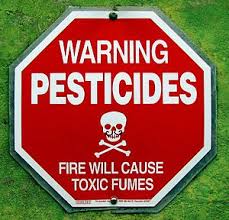 The pesticide industry is lobbying tooth and nail to take away the right of towns and states to pass pesticide laws that protect people. And to do away with laws already passed in about 200 communities in the U.S. The pesticide industry doesn't like that these laws are stricter than federal laws (which are pretty lax).
 A good example is a town deciding that it would encourage pollinators (bees!) by banning neonicotinoid pesticides within the town. (Yes, there are alternate pesticides one can use.) However, such a move would not be allowed under the new bill because they are not banned at the federal level. It doesn't matter that the community totally supports such a ban (perhaps bee-keeping and honey are a main industry in the town).
 Age at when children first start kindergarten is controversial, with many parents choosing to keep children (especially boys) home an additional year. There is also concern that so many children are diagnosed with ADHD and given prescription medications for it from a young age.
 Some good news. A study found that frequent consumption of foods and beverages containing flavonoids by elderly women had health benefits. Flavonoids are compounds found naturally in plants, and that have health-promoting effects.
 Finally, a study with results that are totally obvious to people living in areas with lots of deer.