Skip to content

Worried about the new coronavirus? And trying to find accurate information about its spread? As you probably know, the novel coronavirus is called COVID-19 and is now spreading throughout the world, with numbers increasing daily.

There is one great site with a coronavirus global map that is updated numerous times every day. It has been developed by Johns Hopkins University researchers, and actually posts information down to the county and city level, including number of cases, deaths, and recovered. But please note that it really should be viewed on a computer, and not cell phone. Lots of detailed global information. Coronavirus COVID-19 Global Cases by Johns Hopkins CSSE

Interestingly, one can see how some countries are dealing much better with the coronavirus than others. For example, Singapore (about 5.7 million people, and among the best healthcare systems in the world) has 117 documented cases at this time, with 78 recovered, but ZERO deaths. Which means a 0% death rate there. [Note: Unfortunately, the U.S. health care system is not ranked that well - not even in the top 20 globally]

The NY Times has a much simpler tracking map for the United States, with fewer details, along with an explanatory article.

We now know that most people (at least 80%) with the coronavirus don't have symptoms at all or only minor symptoms (whew!), but this allows the virus to spread "stealthily" through communities. So keep in mind that any map with "reported cases" is only recording those who have sought both medical care and been tested.

The goal is to try to slow down the spread of the virus until effective antivirals are available and good treatment protocols are in place. Studies are now ongoing (with results hopefully in a few weeks), with many thinking that the best antiviral may turn out to be remdesivir. Of course other drugs and vaccines are in development. Even older drugs such as chloroquine (an anti-malarial) are being looked at.

Best protection advice: 1) wash hands thoroughly with soap and water for 20 seconds, 2) keep your fingers away from your face - especially the eyes, nose, and mouth, 3) try to keep a social distance of at least 3 feet (better 6 feet) from other people, and 4) cough and sneeze into your elbow, or into a tissue which you then dispose of into garbage or a plastic bag. Stay home if feeling sick. And stay calm!

And for a little humor regarding the mass stampede for supplies and resulting bare shelves. (Make sure to look at photos): Costco completely out of divination supplies, thanks to artist  And: Coronavirus panic-buying in Australia is weirdly, obsessively focused on toilet paper.

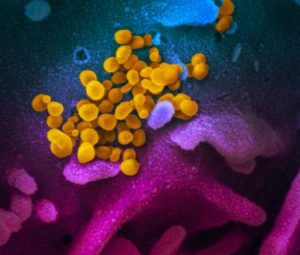
Novel coronavirus COVID-19. Credit: NIAID-RML

Chemicals of all sorts are frequently discussed on this site, especially those causing harmful health effects (e.g.pesticides, flame retardants). Developed countries depend on all sorts of chemicals and "chemical technologies", and they are present in most manufactured products. But how many chemicals manufactured by the chemical industry are actually out there? What do we know about them?

Around the year 2000 it was estimated that there were about 100,000 chemicals, but this was just looking at the United States, Canada, and Europe. Now a new estimate, looking at countries throughout the world, found about 350,000 chemicals and mixtures of chemicals that are registered for production and use.

Very little is known about about health or environmental effects of many (most) of them. Some estimate that about 3% of chemicals might be of "concern" (e.g. serious health effects), but that means about 6000 chemicals! Harm (adverse effects) to humans and ecosystems is called "chemical pollution".

The international team of researchers were concerned with one one of their findings: that the identities of many chemicals remain publicly unknown because they are claimed as confidential (over 50,000 chemicals) or they are "ambiguously described" with missing details (up to 70,000). So only the manufacturers know if or how dangerous the chemicals are. Yikes!

From Futurity: The Worlds 'Chemical Diversity' Tripled in Just Twenty Years  ...continue reading "Little Is Known About Health Effects Of 350,000 Chemicals Now In Use"

Depending on what you normally eat (your dietary pattern), you can either increase your risk for strokes or can decrease your risk. It's up to you.
A large European study involving 9 countries and 418,329 persons found that regularly eating greater amounts of fruits, vegetables, fiber (from foods), milk, cheese, and yogurt were each linked to a lower risk of ischemic stroke. But not hemorrhagic stroke. However, hemorrhagic stroke was associated with a greater consumption of eggs.

The great majority of strokes are ischemic strokes, which occur when an artery in the brain becomes blocked. [Fatty deposits lining the vessel walls, called atherosclerosis, are the main cause.] Hemorrhagic strokes are due to leaking or bursting of a blood vessel in the brain.

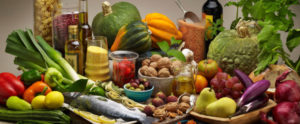
On average, participants who developed an ischemic stroke reported lower intakes of cheese, cereals and cereal products, fruit and vegetables, legumes, nuts and seeds, but higher intakes of red and processed meat. [NOTE: Once again a diet rich in fruits, vegetables, whole grains, seeds, nuts is best. Think Mediterranean style dietary pattern.]

Unfortunately, the participants in the study only answered one lifestyle and food questionnaire (asking about their usual diet) at the start of the study, after which they were followed for 12.7 years. The thinking is that people tend not to change how they eat over time. (But is that true for everyone?)

Looking at the study details, I unfortunately did not see any mention of highly processed foods, or oils (vegetable, canola, corn, palm, olive, etc). There is a lot of excitement right now about extra virgin olive oil being healthy, anti-inflammatory, and "protective" for a number of diseases.

From Medical Xpress: Study of 418,000 Europeans finds different foods linked to different types of stroke  ...continue reading "The Foods You Eat And Stroke Risk"

Once again a study found that a diet rich in fruits, vegetables, whole grains, seeds, legumes, nuts, fish, and extra virgin olive oil is beneficial to the huge numbers of microbes living in our gut (the gut microbiome). This type of fiber-rich dietary pattern is generally called the Mediterranean diet.

The Mediterranean diet is associated with health in a number of ways: lower frailty in elderly persons, lowered risk of death and a number of diseases, as well as lowered levels of inflammation. Chronic inflammation is linked to cancers and a number of diseases - thus the goal is to keep inflammation levels down.

Researchers found that elderly persons eating a Mediterranean style diet for one year had beneficial effects on their gut microbes (after all, they were feeding the good gut microbes), which in turn resulted in less frailty, better cognitive function (including memory), and lower levels of chronic inflammation. There was an increase in beneficial microbes that are associated with health and lower levels of inflammation.

On the other hand, the group of persons eating their usual Western style diet (low in fiber, high in fats , meats, sugar, highly processed foods) did not show beneficial changes in their gut microbiome. They showed negative changes (deterioration) in the type of gut microbes,  and also higher levels of chronic inflammation. After all, they were feeding the microbes associated with poor health and inflammation.

What was interesting was that they looked at the gut microbial communities of 612 persons (aged 65-79 years) who lived in five different countries (Poland, Netherlands, UK, France and Italy) - both at the start (baseline) and after a year. At baseline they could see that country-specific patterns in dietary habits were also reflected in the microbiome profiles.

And after a year there were similar positive changes in the gut microbes in all of those eating a Mediterranean style diet, especially with an increase in "keystone species" - those that are especially important for gut health, but also linked to better health and better cognitive (mental) functioning.

Some of the beneficial bacteria that increased in the Mediterranean diet group: Faecalibacterium prausnitzii, along with Roseburia (R.hominis), Eubacterium (E. rectaleE. eligensE. xylanophilum), Bacteroides thetaiotaomicron ,Anaerostipes hadrus, and Prevotella copri. A majority of these species are associated with health benefits [e.g. production of short chain fatty acids (SCFAs) and lower risk of frailty] and with anti-inflammatory properties. They also are associated with a lower risk for diseases such as type 2 diabetes and colorectal cancer. 

In contrast, the control group that ate a normal Western diet (fats, processed foods, low in fiber, high in meat and sugar) had an increase in  Ruminococcus torquesCollinsella aerofaciensCoprococcus comesDorea formicigeneransClostridium ramosumVeillonella disparFlavonifractor plautii and Actinomyces lingnae. An increase in the abundances of R. torquesC. aerofaciensC. ramosum and V. dispar have been associated with type 2 diabetes and colorectal cancer, atherosclerosis, cirrhosis, and inflammatory bowel disease.

A key finding was that the findings suggest that eating a Mediterranean style diet "modulates the microbiome in a direction positively associated with health". In other words, the benefit of the diet was that it fed beneficial gut microbes that improved health.

Note that these beneficial microbes are NOT found in any supplements or probiotics. You must eat the fiber-rich whole foods!

From Medical Xpress: Mediterranean diet promotes gut bacteria linked to 'healthy ageing' in older people  ...continue reading "Feed Your Gut Microbes With A Mediterranean Diet"

Wonder what the new coronavirus that everyone is worried about looks like? The U.S. National Institute of Allergy and Infectious Diseases (NIAID) has now released a number of images of the novel coronavirus, along with a blog post.

The full name of the coronavirus is SARS-CoV-2, and the illness it causes is COVID-19 disease. The spread of this virus has rapidly grown to be a global public health emergency since it was first detected in Wuhan, China, in December 2019. [CDC novel coronavirus site]

The images are beautiful. Note the spikes on the surface of each virus which give it a crown-like appearance. The word "corona" is Latin for "crown". Most coronaviruses have a crown-like appearance, including MERS (which emerged in 2012) and SARS (in 2002).

NIAID’s Rocky Mountain Laboratories (RML) in Hamilton, Montana, produced the images on their scanning and transmission electron microscopes.

The virus SARS-CoV-2 with its crown-like spikes
Credit: NIAID-RML

The virus SARS-CoV-2 (yellow) emerging from the surface of cells (blue/pink). Cells were from a patient in the US and cultured in the lab.  Credit: NIAID-RML

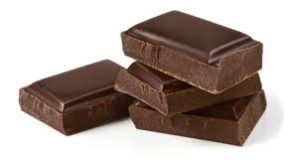
Today a study was published finding health benefits to frequent (daily!) consumption of cocoa - improved walking in older persons with peripheral artery disease (PAD). Another reason to drink cocoa and eat dark chocolate!

The study, conducted in Chicago, Illinois, randomly assigned persons, over the age of 60 years with PAD, to different groups. Those who drank a cocoa beverage for 6 months (3 times a day) were able to walk further in a 6 minute walk at the 6 month follow-up  (when compared to the placebo/no cocoa group).

The researchers also found that the cocoa significantly improved a number of measures of the calf muscle (e.g. capillary density, calf muscle perfusion), which suggested that there is a durable benefit on the calf muscles from the cocoa beverage. In other words - it's not just a quick sugar-cocoa high that boosted their walking.

On the other hand, the placebo (no cocoa) group deteriorated in how far they could walk over the 6 months, which is consistent with peripheral artery disease. Yes, it typically gets worse over time.

PAD (also called peripheral arterial disease) is a common circulatory problem, due to atherosclerosis, in which there is reduced blood flow to the limbs due to narrowed arteries.Typically the legs don't receive enough blood flow and there is pain when walking (which goes away after resting a bit). Treatments include lifestyle changes (e.g. diet, exercise) and medicines.

What is so beneficial about cocoa? Both regular dark chocolate and cocoa contain flavanols, including epicatechin, which have therapeutic properties and may improve walking in people with PAD. Evidence from other studies of people with and without PAD suggests that cocoa may increase "limb perfusion" and "improve skeletal muscle mitochondrial activity and muscle regeneration".

Can you imagine a prescription for dark chocolate and cocoa on a daily basis? Fantastic! From Medical Xpress: Cocoa could bring sweet relief to walking pain for people with peripheral artery disease   ...continue reading "Enjoy Some Cocoa Or Dark Chocolate Daily"

Taller men have a lower rate of dementia? Apparently a number of studies have found a link between height of men and risk of dementia.

The latest is an interesting Danish study that measured the height of more than 666,000 young adult men (at the physical exam for the draft) and then looked at the rates of dementia decades later when they were between 55 to 77 years of age. They found that young men that were above average in height had about a 10% lower rate of dementia more than four decades later.

The researchers thought that the early adulthood height was an indicator of early life environment (such as nutrition and childhood diseases).

What were some of the height differences? "Above average in height" was being at least 1 standard deviation above average height. For example, the researchers found that Danish men born in 1959 who had a mean (average) height of 185.6 cm (73.07") had a 10% lower rate of dementia than men of average height (179.1 cm or 70.5").

From Medical Xpress: Study suggests taller young men may have lower dementia risk

Men who are taller in young adulthood, as an indicator of early-life circumstances, may have a lower risk of dementia in old age, suggests a study published today in eLife.   ...continue reading "Tall Men Have A Lower Rate Of Dementia?"

Did you know that our modern lifestyle is exposing us to thousands of harmful chemicals? All of us are exposed to many harmful chemicals daily - in ordinary household products, at work and school, in our food, and in the air and water around us. These chemicals are found in plastics, in stain resistant finishes, non-stick cookware, flame retardants, fragrances, pesticides, water resistant finishes, and antimicrobial products.

All these chemicals have made our lives easier in many ways, but they have a dark side. The chemicals leach out of the products and get on us and in us, and can be measured in our blood and urine.

They are linked to all sorts of health problems (reproductive effects, infertility, neurological effects, lower IQs, immunological problems, cancers, etc.) and the list is growing annually. Many are hormone (endocrine) disruptors. Developing children and fetuses are especially vulnerable, and the effects can be life-long.

We all have many of these harmful chemicals in our body. No one can totally avoid all these chemicals, but we can lower our exposure to many of them quite a bit. These chemicals get in us various ways: we ingest them (in food and water), we absorb them through the skin, and we breathe them in (e.g. in household dust and in the air).

Many chemical levels can be reduced quickly - within a few days or weeks (for example, by switching to different personal care products, switching to organic foods, and not eating canned foods).

It is especially important to lower exposures to these harmful chemicals if you are considering conceiving a child, are pregnant, or have children. Many of these chemicals are linked to fertility problems for both men and women, and researchers think this is why male fertility is dropping so rapidly over the past few decades.
Yes, it does require a life-style change, and it does require reading labels, but it is worth it. Following these tips should also have the added bonus of improving your gut microbial communities. It's all related.

HOW TO REDUCE EXPOSURE TO HARMFUL CHEMICALS:

IN GENERALTry for a more “natural and non-toxic” lifestyle, and reduce use of plastics (including vinyl) and pesticides.

  • Read labels of personal care products, household products, and clothing. Avoid products with parabens and oxybenzone. Avoid products that are antimicrobial, antibacterial, anti-odor, anti-stain, anti-mildew, and nonstick.
  • Use unscented or fragrance-free products, including personal care products. Avoid fragrances or scented versions of products.
  • Don't use air fresheners, dryer sheets, scented candles, incense, essential oils.

FOOD

  • Buy foods and beverages in glass bottles and jars whenever possible.  Store food in glass, stainless steel, or ceramic containers. Avoid plastic bottles and containers.
  • Avoid canned foods, including aluminum cans - they are all lined with plastics containing BPA or equally bad BPA alternatives. Canned foods are a major source of endocrine disruptors.   ...continue reading "Tips For Reducing Exposures to Harmful Chemicals"

2

Will eating certain vegetables prevent or improve fatty liver disease?  Non-alcoholic fatty liver disease goes hand in hand/is a consequence of being overweight or obese, and is characterized by an accumulation of fat in the liver. As the disease progresses, the liver shows damage from inflammation, and can ultimately even lead to cirrhosis (liver failure).

A recent multi-part study raises the possibility that perhaps eating certain foods can prevent or reverse this condition. Gut bacteria produce many compounds , one of which is indole, which has powerful anti-inflammatory effects. Obese people have less indole in their blood, and lean people more. And people with fatty liver disease have less indole in their blood. In the study, giving mice indole actually improved their fatty liver disease.

How can one naturally increase levels of indole? By eating cruciferous vegetables such as broccoli, cabbage, kale, cauliflower, bok choy, collards, and Brussels sprouts.

From Medical Xpress: Natural compound in vegetables helps fight fatty liver disease   ...continue reading "Eat Certain Vegetables To Improve or Prevent Fatty Liver disease?"

Another study finding that eating an egg each day is totally fine for our health. Of course it is! For years nutritionists were obsessed with the cholesterol in eggs, thinking it must translate into being bad for heart health. Remember the advice to only eat egg whites?

An international team of researchers looked at 3 large studies (50 countries on 6 continents) and found that there were no associations between eating about one egg a day and cholesterol levels, death, or strokes and heart attacks. And that this moderate egg intake "does not increase the risk of cardiovascular disease or mortality even if people have a history of cardiovascular disease or diabetes".

Eggs are a good source of essential nutrients and protein, are inexpensive, easy to cook,  and are also an excellent source of choline - which is needed for brain health (for neurological functioning).

From Medical Xpress: An egg a day not tied to risk of heart disease: new study   ...continue reading "Eating An Egg A Day Is Totally Fine"