Skip to content

One of the fears about aging is the possibility of developing dementia. Even in healthy older adults it is normal for the brain to slowly shrink with increasing age, and thinking processes can deteriorate. A recent study lasting 78 weeks offers hope to persons already diagnosed with mild cognitive impairment (MCI).

In older adults with MCI, there is an increased risk it can progress to dementia, especially Alzheimer's disease. Studies are finding that doing complex mental activities that stimulate the brain may decrease the risk of cognitive decline and dementia.

In this study, researchers found that doing crossword puzzles was better than doing computer games in improving memory loss and thinking processes, and slowing the progression of decline in persons already diagnosed with MCI. The crossword puzzle group also showed less decline in daily activities, and MRIs showed fewer decreases in brain size (hippocampal volume and cortical thickness).

Persons (average age 71.2 years) were randomized to either of the groups, and they did the online games or crossword puzzles (provided by Lumos Labs) at home. Total time spent each day: 30 minutes four times per week.

Are online crossword puzzles better than computer games for persons without any cognitive impairment?  This is where it gets interesting - the answer is no. One study found that computer games were better in a group of 18 to 80 year olds, even though doing either results in improvement.

By the way, numerous "brain training" claims by a computer mind games company such as Lumos Labs were viewed as deceptive by the FTC ($2 million fine back in 2016 for all sorts of unsupported claims).

What to do for brain health? The reality is that activities that stimulate the mind (reading, art, computer games), getting vaccines in adulthood, and exercise/physical activity are all good for the brain. And of course, eating well (especially more fruits, berries, nuts, and eggs) and getting enough sleep. Avoid anticholinergic medicines and smoking.

Mild cognitive impairment (MCI) can even improve on its own without any special treatments - even in adults 65 years or older.

From Medical Xpress: Crossword puzzles beat computer video games in slowing memory loss

A new study by researchers from Columbia University and Duke University published in the journal NEJM Evidence shows that doing crossword puzzles has an advantage over computer video games for memory functioning in older adults with mild cognitive impairment. ...continue reading "Crossword Puzzles Are Good For the Brain"
There is growing evidence that the presence of certain species of bacteria in the gut microbiome are associated with a higher stroke risk, while other bacteria are associated with a lower risk and health. Two recent studies went further and found that the presence (or higher levels) of certain bacteria are associated with severe ischemic strokes and a poorer recovery.

Ischemic strokes are the most common type of stroke. They occur when a clot or other blockage blocks the blood supply to the brain.

Both study researchers presented their findings at the European Stroke Organisation Conference (May 2022). They found that 26 species of bacteria were linked to strokes (in other words, you want less of the bacteria that increase stroke risk in your gut microbiome). Some examples of bacteria associated with strokes or poorer outcome included: bacteria of the genus Ruminococcus, species Prevotella copri, and Paraprevotella xylaniphila.

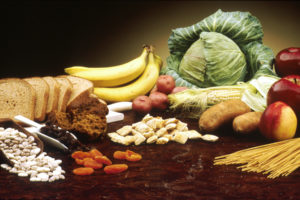
What does this mean for you? The researchers felt that changing your community of gut microbes (the gut microbiota or microbiome) could be a potential way to decrease stroke risk or stroke severity. A main way to accomplish this is by nutritional changes.

One of the researchers (Cyprien Rivier) said about the results:  "This suggests a delicate balance in the gut microbiota which can change the risk of stroke when altered."

To improve your gut microbes and lower stroke risk: most important is to improve your diet (eat a healthy diet rich in fruits, vegetables, whole grains, nuts, seeds, legumes, some fermented foods, and try to avoid highly processed foods). Also, good for gut microbes: increase your physical activity or amounts of exercise, don't smoke, and try to maintain a healthy weight. Another option is getting a fecal microbial transplant.

By the way, the beneficial microbes are NOT in dietary supplements. Must eat real food! Interestingly, an earlier study found that people who have ischemic strokes tend to have lower amounts ("depletion") of Lactobacillus sakei in the gut than healthy people.

Excerpts from Medscape: Gut Bacteria Linked to Stroke Severity, Risk

Two new studies identifying strains of gut microbiota associated with more severe strokes and worse post-stroke recovery point to a possible role for the gut microbiome in preventing stroke and improving outcomes. ...continue reading "Certain Gut Bacteria Are Linked to Strokes"

The United States has a growing problem. The number of cases of the always fatal Chronic Wasting Disease (CWD) is steadily spreading among wild game (elk and deer) and has now been found in 30 states. In October 2020 it had been detected in 26 states, Dec. 2021 in 27 states, and as of April 2022 the US government reported it in 30 states!

Chronic wasting disease (CWD) is a prion disease similar to "mad-cow disease" (bovine spongiform encephalopathy) in cattle and Creutzfeldt-Jakob's disease in humans. There is no cure or treatment, and it is always fatal. While up to now CWD has only been found in deer and elk, the concern is that this disease will jump to humans, especially in people who eat contaminated meat.

Chronic wasting disease (CWD) should be of concern to all hunters or people who eat wild-caught game (deer, elk, moose, reindeer). No human cases have been detected, but health officials and the CDC warn people to avoid eating meat from CWD infected animals.

Symptoms of the disease: In chronic wasting disease there is a long incubation period, followed by the brain become progressively like a sponge - riddled with holes, along with deterioration in brain function, behavioral changes, and eventually death. A horrible slow death. There are no treatments or vaccines.

How is it spread? Scientists believe CWD prions spread between animals through body fluids (e.g., feces, saliva, blood, or urine), either through direct contact or indirectly through environmental contamination of soil, food or water. Once introduced into an area or farm, the CWD prion (protein) is contagious within deer and elk populations and spreads.

Once CWD gets into the soil, it stays there for years, and so animals can contract it even after infected deer and elk have died. Yikes!

How do you get rid of it? Unfortunately, high heat, disinfectants, and radiation don't kill the CWD prions. Dr.Zabel at the Colorado State Univ. Prion Research Center suggested a few years ago that controlled burns (fires) of infected fields or areas could eliminate the prions left behind by infected animals (from animal mucus/saliva, urine, and feces, and decaying carcasses) on plants and soil. ...continue reading "Thirty States Report Chronic Wasting Disease In Deer and Elk"

Fabulous news for those persons wanting to reduce their risk of Alzheimer's disease as they age - get a flu vaccine, especially annually. A recent large study found that with each annual vaccine received in adults 65 years and older, the protective effect increases. That's it! So simple.

The study authors compared 935,887 flu-vaccinated patients and 935,887 non-vaccinated patients. At the start of the study, no one had an Alzheimer's diagnosis. They found a 40% lower risk of an Alzheimer's diagnosis in those receiving flu vaccines compared to individuals not receiving a flu vaccine in the following 4 years.

Other studies have had similar findings, as well as that getting other vaccines in adulthood also reduce the risk of dementia, such as pneumonia, tetanus, polio, and herpes vaccines. Current thinking is that this protective effect from vaccines is due to their immunological effects - that they boost the immune system in a good way.

From Science Daily: Flu vaccination linked to 40% reduced risk of Alzheimer's disease

People who received at least one influenza vaccine were 40% less likely than their non-vaccinated peers to develop Alzheimer's disease over the course of four years, according to a new study from UTHealth Houston. ...continue reading "The Flu Vaccine is Linked to a Lower Risk of Developing Alzheimer’s Disease"

Something surprising - having cancer is linked to a lower risk of Alzheimer's disease and a lower risk of neurodegenerative symptoms (e.g., memory loss) during their lifetimes.

One big analysis and review of 22 studies (representing more then 9.6 million people!) calculated that cancer diagnoses are associated with 11% reduction in Alzheimer's disease occurrence. However, this relationship does not hold true for melanoma. [Also, there is a strong positive correlation between melanoma and Parkinson's disease - which is a neurodegenerative condition.]

There are some theories, but it is still unknown why this lower risk of Alzheimer's disease occurs in persons with cancer.

Excerpts from The Scientist: Cancer Tied to Reduced Risk of Alzheimer’s Disease

In recent years, scientists around the world have been probing an unexpected trend: The risk of developing cancer seems to have an inverse relationship with the risk of developing Alzheimer’s disease.  ...continue reading "Reduced Risk of Alzheimer’s Disease In Those With Cancer"

Eating berries frequently or daily has all sorts of health benefits. Two recent studies have focused on daily consumption of cranberries and found them to be beneficial for memory and neural functioning, and also for heart health.
Both studies had persons ingest whole cranberry powder (equivalent to 100 grams or 1 cup of whole cranberries) daily for 12 weeks (memory study) or 1 month (heart study).

While studies usually focus on just one type of berry to try to figure out how and what health benefits are occurring, there is no one berry a person should eat. Eat them all! Studies show they all offer something a little different, and all also have lots of fiber (very important for health!).

Also, eat real foods, not supplements. Again: studies do not find that there is one food or supplement that will prevent health problems or dementia. Eat more fruits, berries, vegetables, and cut back on ultra-processed foods. [See Medscape article below.]

From Medscape: A Cup of Cranberries a Day Tied to Better Memory

For healthy middle-aged and older adults, adding cranberries to the diet may help improve memory and brain function, in addition to lowering LDL cholesterol, new research suggests. ...continue reading "Good Reasons to Eat Cranberries"

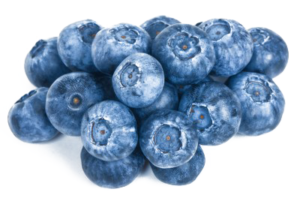
Blueberries. Credit: Wikipedia

We have known for a while that frequently eating berries has health benefits. A recent study found that overweight middle-aged persons eating blueberries daily for 12 weeks resulted in both metabolic and memory improvements.

The researchers stated that the results suggest that frequently eating blueberries could be protective against cognitive decline and lower the risk of dementia later on in life.

The study involved thirty-three overweight prediabetic middle-aged adults who already felt that their memory was not as good as in years past. They were randomly assigned to either the blueberry (whole freeze-dried blueberry powder) group or the placebo group (a similar looking powder that did not contain blueberries). The blueberry powder was equivalent to 1/2 cup whole blueberries and was eaten once a day for 12 weeks. The benefits of blueberries are thought to be from micronutrients and anthocyanins, which are antioxidants.

By the way, all berries (raspberries, blackberries, strawberries, etc.) are slightly different in micronutrients and are viewed as beneficial to health and lowering the risk of chronic diseases, including the risk of dementia. As are colorful fruits and vegetables. Don't focus on just one type of berry - eat them all!

From Medical Xpress: Regular blueberry consumption may reduce risk of dementia, study finds

Researchers led by UC's Robert Krikorian, Ph.D., found that adding blueberries to the daily diets of certain middle-aged populations may lower the chances of developing late-life dementia. ...continue reading "Eating Blueberries Has Health Benefits"

The debate over health effects of light to moderate alcohol consumption continues. Today I read 2 studies with different conclusions about the effects of drinking small to moderate amounts of alcohol.

One study found a lower risk of type 2 diabetes when wine is drunk with meals, and the other study found that light to moderate drinking resulted in reductions in brain volume. One study health benefits, the other negative effects...

From Medical Xpress: Study finds drinking wine with meals was associated with lower risk of type 2 diabetes

An analysis of health data for nearly 312,400 current drinkers suggests consuming alcohol, most notably wine, with meals is associated with a lower risk of developing type 2 diabetes, according to preliminary research to be presented at the American Heart Association's Epidemiology, Prevention, Lifestyle & Cardiometabolic Health Conference 2022.

Consuming alcohol with meals was associated with a 14% lower risk of type 2 diabetes compared to consuming alcohol without eating food.

From Medical Xpress: More alcohol, less brain: Study finds an association that begins with an average of just one drink a day

... But according to a new study, alcohol consumption even at levels most would consider modest—a few beers or glasses of wine a week—may also carry risks to the brain. An analysis of data from more than 36,000 adults, led by a team from the University of Pennsylvania, found that light-to-moderate alcohol consumption was associated with reductions in overall brain volume.

The link grew stronger the greater the level of alcohol consumption, the researchers showed. 

Many people think that only exercises done in a gym, in exercise classes, or with exercise equipment can improve health. But no! Any physical activity is good, which means ordinary walks and household tasks or housework are beneficial. And the more frequently you do them, the more beneficial.

Studies show that physical activity from housework tasks (e.g., vacuuming) are associated with improved cognition, increased brain volume, and executive functioning of the brain in older adults, and with less frailty. Higher levels of physical activity are linked to a reduction in early death and heart diseases. Heavy household tasks (e.g. vacuuming, window cleaning, scrubbing, painting) have more benefits than light household tasks (e.g., dusting, ironing, doing laundry, washing dishes, cooking).

I know, I know - no one wants to get up and do such household tasks as vacuuming, but think of it as exercise class replacement.

A commentary (and video) by Dr. Stephan Martin discussing studies showing housework improving health and fitness. From Medscape: Housework Can Increase Brain Volume and Physical Fitness

Physical activity is a panacea: it protects against cardiovascular events such as myocardial infarction and stroke. Very active people are less likely to have type 2 diabetes, and the prevalence of dementia is apparently lower for them.  ...continue reading "Physical Activity of Housework Has Health Benefits"

An Epstein Barr virus infection is so common that about 95% of us have had it at some point in life, usually childhood. Sometimes it leads to mononucleosis. New research strengthens the case that the Epstein Barr virus (EBV) also plays a part in the development of multiple sclerosis (MS).

The study found that getting an EBV infection (mononucleosis) in early adulthood acts as a trigger for later development of multiple sclerosis - about 10 years later. MS usually develops between the ages of 20 to 40 in adulthood. The results are so compelling because the Harvard Univ. researchers looked at data from 10 million young adults on active duty in the US military. They found that risk of MS increased 32-fold after infection with EBV, but not other viruses.

Multiple sclerosis is a neurological disease in which the immune system attacks the brain and spinal cord, stripping away protective insulation (myelin) around the nerve cells. The Epstein Barr virus is a herpes virus that attacks a type of immune cell called B cells. After the initial EBV infection the virus remains dormant in a person's cells for the rest of the person's life. A number of studies have found EBV-infected B cells in the brains and demyelinated lesions of MS patients.

The hope now is to develop an EBV vaccine or stop the virus with antiviral drugs targeting EBV, and that this could ultimately prevent or cure MS. Keep in mind that EBV is considered a multifactorial disease by many, with several factors increasing the risk - such as having certain genes, not getting enough vitamin D, and also an Epstein Barr virus infection

From Science Daily: Epstein-Barr virus may be leading cause of multiple sclerosis

Multiple sclerosis (MS), a progressive disease that affects 2.8 million people worldwide and for which there is no definitive cure, is likely caused by infection with the Epstein-Barr virus (EBV), according to a study led by Harvard T.H. Chan School of Public Health researchers.  ...continue reading "Epstein Barr Virus May Be A Trigger For Developing Multiple Sclerosis"