A recent large Swedish study found that men who increased their cardiorespiratory fitness had a significantly lower prostate cancer risk (when compared to men whose cardiorespiratory fitness stayed the same or declined) .
Men who increased their fitness by more than 3% over the course of a year had a 35% lower risk of prostate cancer during the 7 year follow-up. Cardiorespiratory fitness was measured two times (baseline and a year later) by peddling on a stationary cycle and measuring absolute and relative VO2 max - the amount (volume) of oxygen the body uses while exercising as hard as possible.
By the way, other studies also find that cardiorespiratory fitness is associated with the risk of some cancers, as well as dying from certain cancer types. This study did not find an increase in cancer deaths, but it also only followed the men 7 years.
Bottom line: Increase your activity levels! Walking, hiking, bicycling gardening, sports, exercises - it all counts. You can do it!
From Medical Xpress: Increase in annual cardiorespiratory fitness by more than 3% linked to 35% lower prostate cancer risk
An increase in annual cardiorespiratory fitness by 3% or more is linked to a 35% lower risk of developing, although not dying from, prostate cancer, suggests research published online in the British Journal of Sports Medicine. ...continue reading "Improve Fitness To Lower Risk of Prostate Cancer"
 People worry about breast cancer and whether exposure to chemicals "in the environment" can lead to breast cancer. According to many studies the answer is: YES, absolutely - and this is why they are called carcinogens (a substance capable of causing cancer). What are the chemicals?
 Also, avoid using pesticides as much as possible, and instead use least toxic Integrated Pest Management (IPM) or organic methods, both inside the home and outside.
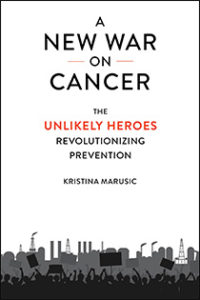 There is another very good book to read about environmental causes of cancer. It's called A New War On Cancer: The Unlikely Heroes Revolutionizing Prevention by Kristina Marusic. Published by Island Press in 2023.
 Do you know what chemicals you're exposed to on a daily basis? A recent study found that women with cancers of the breast, uterus, skin (melanoma), or ovaries had significantly higher levels of certain endocrine disrupting chemicals in their bodies than women without any of those cancers.
 Once again research finds that drinking sugar sweetened soft drinks or fruit drinks (not juices) is unhealthy. This time
 Eating your fruits and vegetables, especially a rainbow assortment of them, is associated with a lower risk of prostate cancer as well speeding up recovery in men who received radiation treatment for prostate cancer.