
Skip to content

Image result for cherries wikipedia Another study reporting health benefits of drinking tart cherry juice, specifically in speeding recovery following prolonged, repeat sprint activity (think soccer and rugby). The researchers found that after a prolonged, intermittent sprint activity, the cherry juice significantly lowered levels of Interleukin-6, a marker for inflammation and that there was a decrease in muscle soreness.  The study participants drank the cherry juice (1 oz cherry juice concentrate mixed with 100 ml water) for several days before and several days after the sprint activity. Montmorency tart cherry juice is a polyphenol rich food that is already used by many professional sports teams to aid recovery. From Medical Xpress:

New study: Montmorency tart cherry juice found to aid recovery of soccer players

Montmorency tart cherry juice may be a promising new recovery aid for soccer players following a game or intense practice. A new study published in Nutrients found Montmorency tart cherry juice concentrate aided recovery among eight semi-professional male soccer players following a test that simulated the physical and metabolic demands of a soccer game .The U.K. research team, led by Glyn Howatson at Northumbria University, conducted this double-blind, placebo-controlled study to identify the effects of Montmorency tart cherry juice on recovery among a new population of athletes following prolonged, intermittent exercise..... many teams in professional and international soccer and rugby already use Montmorency tart cherry juice to aid recovery."

The study involved 16 semi-professional male soccer players aged 21 to 29 who were randomly assigned to either a Montmorency tart cherry concentrate group or a placebo control group. Montmorency group participants consumed about 1 ounce (30 ml) of a commercially available Montmorency tart cherry juice concentrate mixed with 100 ml of water twice per day (8 a.m. and 6 p.m.) for seven consecutive days—for four days prior to the simulated trial and for three days after the trial. Following the same schedule, placebo group participants consumed a calorie-matched fruit cordial with less than 5 percent fruit mixed with water and maltodextrin. The 30 ml dosage of Montmorency tart cherry juice concentrate contained a total anthocyanin content of 73.5 mg, or the equivalent of about 90 whole Montmorency tart cherries.

Montmorency tart cherry juice, compared to a placebo, was found to maintain greater functional performance, impact a key marker of inflammation and decrease self-reported muscle soreness among study participants following prolonged activity that mirrors the demands of field-based sports. While additional research is needed, the authors suggest the dampening of the post-exercise inflammatory processes may be responsible.

Across every performance measure, including maximal voluntary isometric contraction, countermovement jump height, 20 m sprint time, knee extensors, 5-0-5 agility, the Montmorency group showed better performance than the placebo group. Additionally, the Montmorency group showed significantly lower levels of Interleukin-6, a marker for inflammation, particularly immediately post-trial. Ratings for muscle soreness (DOMS) were significantly lower in the Montmorency group across the 72-hour post-trial period. No significant effects in muscle damage or oxidative stress were observed in either the Montmorency group or the placebo group. These data support previous research showing similar results for athletes performing marathon running, high-intensity strength training, cycling, and metabolic exercise. 
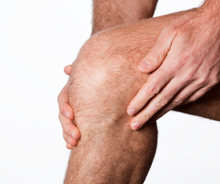
A new study followed adults with meniscus tears (in the knee), who were randomly assigned to either exercise only or meniscus repair surgery (arthroscopic partial meniscectomy) only. They found that after 2 years there was no difference between those  who just received exercise therapy compared to those who just received meniscus repair surgery. About 19% of the exercise only group decided to get surgery at some point, but the rest stayed in the exercise only group.

The study in BMJ says that the exercise therapy program consisted of progressive neuromuscular and strength exercises over 12 weeks, which were performed between two and a maximum of three sessions each week (24-36 sessions). Once again, a study shows that surgery for a condition may not be necessary. From Science Daily:

Most surgical meniscus repairs are unnecessary

Three out of four people could avoid knee surgery with a new form of exercise therapy, with significant cost savings for society. Injury to the menisci, the cartilaginous discs within the knee joint, can be painful when running, and can cause the knee to give way or 'lock'. Such injuries are troublesome and sometimes painful, and can prevent you from exercising or attending work. A new study shows that exercise therapy is just as effective for treating meniscus injuries as surgery. .

A total of 140 patients with meniscus injuries in Norway and Denmark took part in the study. They drew lots for treatment with either exercise or surgery. Nina Jullum Kise says, "Two years later, both groups of patients had fewer symptoms and improved functioning. There was no difference between the two groups." However, those who had exercised had developed greater muscular strength. This is consistent with previous research, which showed that surgery yielded no additional benefits for patients who had had exercise therapy.... Jullum Kise believes that as many as three in four could be spared surgery with the right exercise therapy programme. 

In the study, the patients attended training sessions with a physiotherapist 2-3 times a week for 12 weeks. "The exercise therapy programme involves a warm up and various types of strength training. It is built up in stages that become more challenging as the patient improves and becomes stronger," explains Dr Jullum Kise. Each patient receives a personalized training programme, and learns to do the exercises under the supervision of a physiotherapist.

Menisci are crescent-shaped discs of cartilage on both sides of the knee joint. The meniscus is a shock absorber that distributes weight across the joint and at the same time stabilizes the joint when you walk or run. "We hope that the stronger muscles of the exercise therapy group may counteract osteoarthritis, a type of arthritis that often occurs in patients who have undergone surgery for a meniscus injury," says Dr Jullum Kise.

Everyone lifting light weights during exercise workouts will be heartened by a study that found that lifting light  weights (many times) is just as good as lifting heavy weights in building muscle strength and size. 49 young men, who had been resistance training for at least 2 years, were randomly assigned to either the light weight or heavy weight group and followed for 12 weeks. All of the men gained muscle strength and size, and these gains were almost identical, whether they lifted heavy or light weights.
The researchers decided that the key to getting stronger was muscle fatigue - they had to weight lift until they had almost total muscle fatigue, which researchers refer to as "volitional failure". Whether it was with light or heavy weights didn't make a difference. From Science Daily:

Pumping iron: Lighter weights just as effective as heavier weights to gain muscle, build strength

New research from McMaster University is challenging traditional workout wisdom, suggesting that lifting lighter weights many times is as efficient as lifting heavy weights for fewer repetitions. It is the latest in a series of studies that started in 2010, contradicting the decades-old message that the best way to build muscle is to lift heavy weights. "Fatigue is the great equalizer here," says Stuart Phillips, senior author on the study and professor in the Department of Kinesiology. "Lift to the point of exhaustion and it doesn't matter whether the weights are heavy or light."

Researchers recruited two groups of men for the study -- all of them experienced weight lifters -- who followed a 12-week, whole-body protocol. One group lifted lighter weights (up to 50 per cent of maximum strength) for sets ranging from 20 to 25 repetitions. The other group lifted heavier weights (up to 90 per cent of maximum strength) for eight to 12 repetitions. Both groups lifted to the point of failure.

Researchers analyzed muscle and blood samples and found gains in muscle mass and muscle fibre size, a key measure of strength, were virtually identical....While researchers stress that elite athletes are unlikely to adopt this training regime, it is an effective way to get stronger, put on muscle and generally improve health.

Another key finding was that none of the strength or muscle growth were related to testosterone or growth hormone, which many believe are responsible for such gains."It's a complete falsehood that the short-lived rise in testosterone or growth hormone is a driver of muscle growth," says Morton. "It's just time to end that kind of thinking." 

A recent editorial in the journal Cardiology calls exercise the "magic bullet" in preventing all sorts of diseases, including cardiovascular disease and diabetes.

From Science Daily: Regular physical activity is 'magic bullet' for pandemics of obesity, cardiovascular disease

In an editorial published in the current issue of Cardiology, professors from the Charles E. Schmidt College of Medicine at Florida Atlantic University have evaluated the totality of evidence and conclude that regular physical activity bears the closest resemblance to a "magic bullet" to combat the worldwide epidemic of obesity and cardiovascular disease.

The statistics on regular physical activity in the United States are bleak; only about 20 percent of Americans (23 percent of men and 18 percent of women) engage in recommended levels of regular physical activity and about 64 percent never do any physical activity. In Europe, the statistics are not much better with only 33 percent who engage in physical activity with some regularity, while 42 percent never do any physical activity.

The authors also point out that physical activity confers important beneficial effects beyond body weight and include blood pressure, cholesterol, triglyceride, diabetes, heart attacks, strokes, colon cancer and possibly even breast and prostate cancers as well as arthritis, mood, energy, sleep and sex life.

Starting in their 30s, Americans and many Europeans tend to gain between 1 and 3 pounds of body weight per year, and by 55, many are between 30 and 50 pounds overweight....The authors note that brisk walking for only 20 minutes a day burns about 700 calories a week, results in a 30 to 40 percent reduced risk of coronary heart disease, and can be performed even by the elderly. They stress that regular physical activity also should include resistance exercise such as lifting weights, which can even be safely performed in the elderly and in patients with heart failure.

Get out there and start getting active NOW - the earlier you start in life, the better for your brain decades later. All physical activity or exercise is good, including regular walks. From Medical Xpress:

Regular exercise protects against cognitive decline in later years

Regular exercise in middle age is the best lifestyle change a person can make to prevent cognitive decline in the later years, a landmark 20-year study has found.

University of Melbourne researchers followed 387 Australian women from the Women's Healthy Ageing Project for two decades. The women were aged 45 to 55-years-old when the study began in 1992. The research team made note of their lifestyle factors, including exercise and diet, education, marital and employment status, number of children, mood, physical activity and smoking....They were also asked to learn a list of 10 unrelated words and attempt to recall them half an hour later, known as an Episodic Verbal Memory test.

When measuring the amount of memory loss over 20 years, frequent physical activity, normal blood pressure and high good cholesterol were all strongly associated with better recall of the words. Study author Associate Professor Cassandra Szoeke, who leads the Women's Healthy Ageing Project, said once dementia occurs, it is irreversible. "In our study more weekly exercise was associated with better memory." 

"We now know that brain changes associated with dementia take 20 to 30 years to develop," Associate Professor Szoeke said. "The evolution of cognitive decline is slow and steady, so we needed to study people over a long time period. We used a verbal memory test because that's one of the first things to decline when you develop Alzheimer's Disease."
Regular exercise of any type, from walking the dog to mountain climbing, emerged as the number one protective factor against memory loss. Asoc Prof Szoeke said that the best effects came from cumulative exercise, that is, how much you do and how often over the course of your life.  (Original study)

We've all heard of immunotherapy as a possible future treatment for many cancers, but other possible treatments are also being tested. Two possibilities caught my eye.

The first study is looking at exercise for advanced prostate cancer - to extend life, and the other is testing a vaccine for those with prostate cancer who haven't yet treated it (they've just been doing "active surveillance" instead).  And since the studies are occurring now, and people are still joining, then the results are still unknown and won't be known for years.

But one can hope.... Exercise as anticancer therapy? A vaccine after cancer diagnosis?

From Medical Xpress: Exercise, future anticancer therapy?

At age 70, Alfred Roberts plays hockey twice a week. Nothing special, right? Except that for three years he has had advanced prostate cancer, which has spread to his bones. "I've always been active. Hockey keeps me in shape and keeps my mind off things. I've got friends that have played until age 80, and my goal is to beat them!" said the veteran stick handler.

Several studies have demonstrated the benefits of exercise to improve the quality of life of people with cancer. But Dr. Fred Saad, urologist-oncologist and researcher at the University of Montreal Hospital Research Centre (CRCHUM), goes further. He believes that physical exercise has a direct effect on cancer, as effective as drugs, for treating patients with prostate cancer, even in advanced stages of the disease.

"Typical patients with metastases often become sedentary. It is thought that this affects cancer progression," he said. Together with Robert Newton, professor at the Edith Cowan University Exercise Medicine Research Institute in Australia, Dr. Saad is leading the first international study which aims to demonstrate that exercise literally extends the life of patients with metastatic prostate cancer....In the coming weeks, some sixty hospitals across the world will begin recruiting patients. In total, nearly 900 men with advanced prostate cancer will participate.

"We will study exercise as if it were a drug added to standard treatments. All patients will be treated within the latest scientific knowledge for this type of cancer. They will continue to follow their therapies and take their medications. But half of the patients will receive psychosocial support with general recommendations on physical exercise. The other half will also follow a high intensity exercise program," he explained.

The exercise medicine expert Professor Robert Newton has designed a specific strength and cardiovascular training program for patients in the "exercise" group. "They will have an hour of aerobic and resistance training three times a week. An exercise specialist will supervise them for the first 12 months, and then they will continue without direct supervision. We will evaluate quality of life, appetite, and treatment tolerance in relation to their improved physical condition," said Professor Newton, who is co-director of the Edith Cowan University, Exercise Medicine Research Institute.

The hypothesis is that exercise has a direct impact on cancer progression in addition to helping patients better tolerate therapy. Ultimately, they will live longer. The results of this large study, which involves some one hundred researchers in Canada, the US, Australia, Ireland, the Netherlands, and the UK, will not be known for five years. Could the findings be extended to other types of cancer? It is too early to tell, but researchers are betting that exercise could well become the next anticancer therapy. Alfred Roberts is also convinced that exercise helps defy the odds: "As long as I can skate, I'll play hockey!"

From Medscape:  A Treatment Vaccine for Low-Risk Prostate Cancer

A Louisiana-based biopharmaceutical company is betting that its experimental immunotherapeutic vaccine can keep previously untreated prostate cancer in check. The company, OncBioMune Pharnaceuticals, Inc, in Baton Rouge, is planning to test the vaccine, dubbed ProscaVax, in a phase 2 trial for patients with previously untreated prostate cancer and in a second trial for patients with recurrent or hormone-refractory disease. The trial of a treatment vaccine in untreated, low-risk prostate cancer patients is novel.

Another new study about lifestyle and the risk of cancer. Many earlier studies have established some lifestyle factors that increase cancer risk: smoking, alcohol use, obesity, and physical inactivity. In this study the researchers found that about 20% to 40% of cancer cases and about half of cancer deaths can be potentially prevented through lifestyle modification.

For some cancers the the effect is even larger - for example, approximately 80% to 90% of lung cancer deaths could be avoided if Americans adopted the lifestyle of the low-risk group, mainly by quitting smoking. For other cancers, from 10% to 70% of deaths could be prevented. Bottom line: making some lifestyle changes could change a person's cancer risk.

From Science Daily: Can a healthy lifestyle prevent cancer?

A large proportion of cancer cases and deaths among U.S. individuals who are white might be prevented if people quit smoking, avoided heavy drinking, maintained a BMI between 18.5 and 27.5, and got moderate weekly exercise for at least 150 minutes or vigorous exercise for at least 75 minutes, according to a new study published online by JAMA Oncology. Cancer is a leading cause of death in the United States.

Mingyang Song, M.D., Sc.D., of Massachusetts General Hospital, Harvard Medical School and the Harvard T.H. Chan School of Public Health, Boston, and Edward Giovannucci, M.D., Sc.D., of the Harvard T.H. Chan School of Public Health and Harvard Medical School, Boston, analyzed data from two study groups of white individuals to examine the associations between a "healthy lifestyle pattern" and cancer incidence and death.

A "healthy lifestyle pattern" was defined as never or past smoking; no or moderate drinking of alcohol (one or less drink a day for women, two or less drinks a day for men); BMI of at least 18.5 but lower than 27.5; and weekly aerobic physical activity of at least 150 minutes moderate intensity or 75 minutes vigorous intensity. Individuals who met all four criteria were considered low risk and everyone else was high risk. The study included 89,571 women and 46,399 men; 16,531 women and 11,731 had a healthy lifestyle pattern (low-risk group) and the remaining 73,040 women and 34,608 men were high risk.

The authors suggest about 20 percent to 40 percent of cancer cases and about half of cancer deaths could potentially be prevented through modifications to adopt the healthy lifestyle pattern of the low-risk group.The authors note that including only white individuals in their PAR estimates may not be generalizable to other ethnic groups but the factors they considered have been established as risk factors in diverse ethnic groups too.

A recent study pooled the data from over a million Europeans and Americans and found that higher levels of leisure-time physical activity was associated with a reduced risk of developing cancer in 13 of the 26 cancers looked at.

For that group of 13 cancers, the cancer risk reduction ranged from 10% to 42%. And most of these associations (leisure-time physical activity and lower risk of cancer) were evident regardless of body size or smoking history. Bottom line: getting active may lower your cancer risk.

From Science Daily: Physical activity associated with lower risk for many cancers

Higher levels of leisure-time physical activity were associated with lower risks for 13 types of cancers, according to a new study published online by JAMA Internal Medicine. Physical inactivity is common, with an estimated 51 percent of people in the United States and 31 percent of people worldwide not meeting recommended physical activity levels. Any decrease in cancer risk associated with physical activity could be relevant to public health and cancer prevention efforts.

Steven C. Moore, Ph.D., M.P.H., of the National Cancer Institute, Bethesda, Md., and coauthors pooled data from 12 U.S. and European cohorts (groups of study participants) with self-reported physical activity (1987-2004). They analyzed associations of physical activity with the incidence of 26 kinds of cancer.The study included 1.4 million participants and 186,932 cancers were identified during a median of 11 years of follow-up.

The authors report that higher levels of physical activity compared to lower levels were associated with lower risks of 13 of 26 cancers: esophageal adenocarcinoma (42 percent lower risk); liver (27 percent lower risk); lung (26 percent lower risk); kidney (23 percent lower risk); gastric cardia (22 percent lower risk); endometrial (21 percent lower risk); myeloid leukemia (20 percent lower risk); myeloma (17 percent lower risk); colon (16 percent lower risk); head and neck (15 percent lower risk), rectal (13 percent lower risk); bladder (13 percent lower risk); and breast (10 percent lower risk). Most of the associations remained regardless of body size or smoking history, according to the article. Overall, a higher level of physical activity was associated with a 7 percent lower risk of total cancer.

Physical activity was associated with a 5 percent higher risk of prostate cancer and a 27 percent higher risk of malignant melanoma, an association that was significant in regions of the U.S. with higher levels of solar UV radiation but not in regions with lower levels, the results showed.

The authors note the main limitation of their study is that they cannot fully exclude the possibility that diet, smoking and other factors may affect the results. Also, the study used self-reported physical activity, which can mean errors in recall."These findings support promoting physical activity as a key component of population-wide cancer prevention and control efforts," the authors conclude.

Study after study finds negative effects on the brain from playing football - here it is one season of high school football resulting in measurable brain changes. None of these players had a concussion during the season, and so the negative effects were from subconcussive head impacts or hits. Interestingly, those special helmets they wore to measure impacts showed no relationship with what the brain scans showed - so the helmets were basically useless in measuring subconcussive impacts. From Science Daily:

Head impacts from single season of high school football produce measurable change in brain cells

Repeated impacts to the heads of high school football players cause measurable changes in their brains, even when no concussion occurs, according to new research. Researchers gathered data from high school varsity players who donned specially outfitted helmets that recorded data on each head impact during practice and regular games. They then used experimental techniques to measure changes in cellular microstructure in the brains of the players before, during, and after the season.

"Our findings add to a growing body of literature demonstrating that a single season of contact sports can result in brain changes regardless of clinical findings or concussion diagnosis," said senior author Dr. Joseph Maldjian, Chief of the Neuroradiology Division and Director of the Advanced Neuroscience Imaging Research Lab, part of the Peter O'Donnell Jr. Brain Institute at UT Southwestern.

In the study, appearing in the Journal of Neurotrauma, a team of investigators at UT Southwestern, Wake Forest University Medical Center, and Children's National Medical Center evaluated about two dozen players over the course of a single football season.....During the pre-season each player had an MRI scan and participated in cognitive testing, which included memory and reaction time tests. During the season they wore sensors in their helmets that detected each impact they received. Post-season, each player had another MRI scan and another round of cognitive tests. 

Researchers then used diffusional kurtosis imaging (DKI), which measures water diffusion in biological cells, to identify changes in neural tissues. ....DKI also allowed the researchers to measure white matter abnormalities. White matter consists of fibers that connect brain cells and can speed or slow signaling between nerve cells. In order for the brain to reorganize connections, white matter must be intact and the degree of white matter damage may be one factor that limits the ability of the brain to reorganize connections following TBI.

Football has the highest concussion rate of any competitive contact sport, and there is growing concern -- reflected in the recent decrease in participation in the Pop Warner youth football program -- among parents, coaches, and physicians of youth athletes about the effects of subconcussive head impacts, those not directly resulting in a concussion diagnosis, researchers noted. Previous research has focused primarily on college football players, but recent studies have shown impact distributions for youth and high school players to be similar to those seen at the college level, with differences primarily in the highest impact magnitudes and total number of impacts, the researchers noted.

Makes sense that not driving to work in a car, but using mass transit (public transport), cycling, or walking to work results in lower body mass index (BMI) and body fat. They're moving more! From Science Daily:

Public transport, walking and cycling to work are all associated with reductions in body fat for adults in mid-life

Adults who commute to work via cycling or walking have lower body fat percentage and body mass index (BMI) measures in mid-life compared to adults who commute via car, according to a new study incThe Lancet Diabetes & Endocrinology journal. Even people who commute via public transport also showed reductions in BMI and percentage body fat compared with those who commuted only by car. This suggests that even the incidental physical activity involved in public transport journeys may be important.

The study looked at data from over 150000 individuals from the UK Biobank data set, a large, observational study of 500000 individuals aged between 40 and 69 in the UK. The study is the largest to date to analyse the health benefits of active transport.

The strongest associations were seen for adults who commuted via bicycle, compared to those who commute via car. For the average man in the sample (age 53 years; height 176.7cm; weight 85.9kg), cycling to work rather than driving was associated with a weight difference of 5kg or 11lbs (BMI difference 1.71 kg/m2). For the average woman in the sample (age 52 years; height 163.6cm; weight 70.6kg), the weight difference was 4.4kg or 9.7lbs (BMI difference 1.65 kg/m2). After cycling, walking to work was associated with the greatest reduction in BMI and percentage body fat, compared to car-users (BMI difference 0.98 kg/m2 for men; 0.80 kg/m2 for women). For both cycling and walking, greater travelling distances were associated with greater reductions in BMI and percentage body fat.

Commuters who only used public transport also had lower BMI compared to car-users (BMI difference of 0.70kg/m2 for men), as did commuters who combined public transport with other active methods (BMI difference 1.00 kg/m2 for men; 0.67 kg/m2 for women). The effect of public transport on BMI was slightly greater than for commuters who combined car use with other active methods (BMI difference 0.56 kg/m2 for men). The link between active commuting and BMI was independent of other factors such as income, area deprivation, urban or rural residence, education, alcohol intake, smoking, general physical activity and overall health and disability.