Skip to content

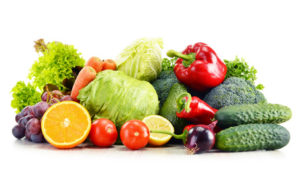
Recently the CDC (Centers for Disease Control and Prevention) released the  depressing news that very few Americans are eating recommended amounts of fruits and vegetables. Many studies show that eating several servings each day of fruits and vegetables has all sorts of health benefits (e.g., live longer, lower inflammation, lower risk of diabetes and some cancers).

The CDC reported in the Jan. 7, 2022 CDC weekly report that surveys of 294,566 adults in 2019 found that only 12.3% of American adults met fruit intake recommendations, and 10.0% of adults met vegetable intake recommendations.

What are the daily recommendations for fruits and vegetables? According to the CDC, current Dietary Guidelines for Americans advise eating more fruits and vegetables as part of a healthy dietary pattern. This means adults should consume 1.5 to 2 cups of fruit and 2 to 3 cups vegetables daily. (Note: A serving is usually about 1/2 cup of fruits or vegetables.)

Why should you follow these guidelines? The CDC states: "A healthy diet supports healthy immune function and helps to prevent obesity, type 2 diabetes, cardiovascular diseases, and some cancers." Also, having "some of these conditions can predispose persons to more severe illness and death from COVID-19."

Another reason, and one that they don't mention is research finding that eating more fruits and vegetables daily (as part of a healthy diet such as the Mediterranean diet) also improves the gut microbiome. What you eat feeds gut microbes - so you want to feed beneficial microbes associated with health, and not those microbes associated with chronic inflammation and some chronic diseases (e.g. heart disease, diabetes, some cancers).

CDC weekly report, Jan. 7, 2022: Adults Meeting Fruit and Vegetable Intake Recommendations — United States, 2019
1

Emulsifiers are in many of the processed foods we buy. They are added to the foods to enhance texture and extend shelf life. Animal and human studies find that some emulsifiers (e.g., soy lecithin, carrageenan, polysorbate-80) can promote gut inflammation and alter the gut microbiome in a negative or harmful way. Recent research adds to this list the common emulsifier carboxymethylcellulose (CMC), also known as cellulose gum.

A small study randomly assigned 16 healthy adults to either an emulsifier-free diet or an identical diet with added 15 g per day of CMC for 11 days. No one knew what diet they were eating, and for those 11 days the participants were inpatient - thus no chance for cheating or altering the diet. Extensive testing (even biopsies on day 1 and 11!) was done before, during, and after the study. The Univ. of Pennsylvania researchers found that CMC resulted in several harmful changes, including a negative effect on the gut microbiome (microbial community of bacteria, viruses, fungi).

Results: The researchers found that CMC increased abdominal discomfort after meals, disturbed the gut microbial community and reduced its diversity (not good!). It resulted in reductions of short-chain fatty acids and free amino acids (thus impacted how nutrients are absorbed). One of the beneficial microbes associated with good health, and that was reduced in number was Faecalibacterium prausnitzii.

Two of the subjects who had CMC in their foods had increased microbial "encroachment into the normally sterile inner mucus layer" of the gut, which is a central feature of chronic inflammation diseases (e.g., IBD, type 2 diabetes). They also had large "alterations in microbiota composition". This means that there is variation in how people respond to the emulsifier CMC, with some people more sensitive than others.

The scary part is that the intestinal changes happened after just 11 days with a daily intake of 15 g of CMC - a dose that is approximately the total emulsifier consumption for a person whose diet is largely highly processed food. Yes, that is many of us eating a Western style diet (e.g., highly processed foods, and low in fiber, fresh fruits, vegetables, and whole grains). The scientists believe that long-term consumption of emulsifiers, because they result in gut microbial disruption and inflammation, are contributing to chronic diseases.

Bottom line: Read the ingredients list on food labels. Try to avoid foods that have ingredients listed that you wouldn't normally have in your kitchen. That means soy lecithin, CMC, cellulose gum, carrageenan, artificial colors. Even "natural flavors" (which are laboratory concoctions) should be avoided as much as possible.

From Medical Xpress: Ubiquitous food additive alters human microbiota and intestinal environment

New clinical research indicates that a widely used food additive, carboxymethylcellulose, alters the intestinal environment of healthy persons, perturbing levels of beneficial bacteria and nutrients. These findings, published in Gastroenterology, demonstrate the need for further study of the long-term impacts of this food additive on health.  ...continue reading "Some Emulsifiers Harm the Gut Microbiome"

Eye. Credit: Wikipedia

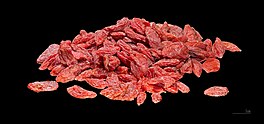
Eating a handful of dried goji berries appears to have health benefits for the eyes - they may prevent or slow down age related macular degeneration (AMD). Goji berries contain high levels of lutein and zeaxanthin. These carotenoids are essential components for eye health, and are associated with a reduced risk of cataract development and AMD.

University of California researchers found that 14 healthy middle-aged adults  eating a handful (28 grams or 1 ounce) of dried goji berries 5 days a week for 90 days increased the density of protective pigments in their eyes (macular pigment optical density or MPOD). This is an optical biomarker for AMD. Their skin carotene scores also increased.

However, the 13 persons taking lutein and zeaxanthin in the form of dietary supplements (6 mg lutein and 4 mg zeaxanthin) did not have these beneficial changes in the eye. Their skin carotene scores also did not increase. These results are similar to many studies finding the same thing - eating actual foods has many health benefits, but not dietary supplements.

Dried goji berries. Wikipedia

Bottom line: Eat more servings of foods rich in lutein and zeaxanthin.

Foods with high levels of both lutein and zeaxanthin include: dried goji berries, parsley, spinach, kale, collard greens, turnip greens, mustard greens, corn, basil, leeks, egg yolks, pistachios, peas, broccoli. Slightly lower levels are in: lettuce, green and red peppers, carrots, kiwi, grapes, squash, pumpkin, corn tortillas, corn chips, Einkorn wheat, and durum wheat.

Most fruits (tangerines, raspberries, papayas, peaches, oranges, cherries, blueberries) also contain lutein and zeaxanthin, but in smaller amounts.

From Science Daily: Dried goji berries may provide protection against age-related vision loss

Regularly eating a small serving of dried goji berries may help prevent or delay the development of age-related macular degeneration, or AMD, in healthy middle-aged people, according to a small, randomized trial conducted at the University of California, Davis.  ...continue reading "Goji Berries Benefit Eye Health"

Once again research finds health benefits from consumption of olive oil. A recent large study found that consuming more than 1/2 tablespoon of olive oil per day lowered the risk of death from heart disease, cancer, neurogenerative disease, and respiratory disease.

The Harvard T.H. Chan School of Public Health researchers also found that increasing intake of olive oil in the diet (replacing margarine, butter, mayonnaise, and dairy fat with 2 1/4 teaspoons or 3/4 tablespoons olive oil) lowers risk of early death in general. The study participants were followed for 28 years, and diet was assessed every 4 years.

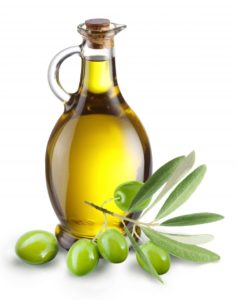
Earlier studies found that the best kind of olive oil to consume is extra virgin olive oil (EVOO). Extra virgin olive oil is considered anti-inflammatory, and contains oleocanthal, which has anticancer effects. Health benefits are both if eaten as is (e.g., dunk bread, in salad dressings) or cooked (e.g. roast vegetables, in sauces, cooking foods) - and this result was also found in this recent study.

From Science Daily: Higher olive oil intake associated with lower risk of CVD mortality

Consuming more than 7 grams (>1/2 tablespoon) of olive oil per day is associated with lower risk of cardiovascular disease mortality, cancer mortality, neurodegenerative disease mortality and respiratory disease mortality, according to a study publishing today in the Journal of the American College of Cardiology. The study found that replacing about 10 grams/day of margarine, butter, mayonnaise and dairy fat with the equivalent amount of olive oil is associated with lower risk of mortality as well.  ...continue reading "Olive Oil Lowers the Risk of Death From Several Diseases"

Intermittent fasting works! A recent study reviewed 130 studies and found that intermittent fasting could help reduce weight, body mass index (BMI), body fat, bad cholesterol, fasting blood sugar, and blood pressure.

Two types of intermittent fasting appear to be best and the most effective for weight loss: modified alternate-day fasting and the 5:2 diet. Modified alternate-day fasting is alternating days where one day you eat as usual, but no more than 600 calories the next day. The 5:2 diet is similar, but involves 2 days per week of zero or very low-calorie eating and 5 days of normal eating.

Less effective were time-restricted eating (can only eat during certain hours of the day, and fast the remaining  12 to 24 hours), and zero calorie alternate-day fasting (no food consumed every other day).

A second study (scroll down) found that while the 5:2 diet was initially effective, people had trouble keeping to it long-term.

At this point the medical advice is: find a type of intermittent fasting that you can stick with, and try it!

Excerpts from Medscape: Intermittent Fasting Works, at Least in the Short Term

Intermittent fasting can lead to weight loss and other health benefits, at least in the short-term, new research suggests.  ...continue reading "Intermittent Fasting Has Health Benefits"

The possibility of amniotic fluid being flavored by the foods a mother eats is wild! Makes sense, but it is not something normally mentioned anywhere. It turns out that in the last few years a few studies were published that looked at foods flavoring the amniotic fluid and breast milk, and which later influence the flavors and foods a child prefers.


Research finds that at least some of the foods (e.g., alcohol, anise, carrot, garlic) that a mother eats during pregnancy flavors the amniotic fluid and breast milk, and then these foods or flavors are more accepted during infancy and childhood. During the period a mother breastfeeds, there is evidence babies detect the flavors of alcohol, anise/caraway, carrot, eucalyptus, garlic, mint, a variety of vegetables, peaches, and vanilla. Foods with these flavors appear in breastmilk soon after eating them - within 1 hour!

The few studies done all found greater acceptance and willingness to eat foods in infancy and childhood that had flavors the children were exposed to during pregnancy and/or when nursed. The overall thinking of researchers Spahn and others is that the mother's diet during pregnancy and lactation provides "the earliest opportunity to positively influence child food acceptance and preferences."

Of course the studies are limited in that only a few flavors are looked at in each study. But thinking about it - of course that is how a child accepts new flavors. It's the exposure and getting used to them. Formula always tastes the same, but breast milk varies a little every day! Some researchers suggest that there may be a critical period early in life where exposure to sour and bitter tastes (e.g., broccoli) can be made palatable to the baby. [scroll down to study #3]

These results also support not giving bland and unappetizing single flavor foods in baby jars to babies - instead give them the actual foods the parents are eating! Mash it with a fork, or even use a blender or food mill, but give them the real foods, flavored how the parent likes it. After all, they've already been exposed to those tastes.

The following 3 studies discuss this topic in more detail:

1) A group of researchers reviewed studies related to the topic of the mother's diet during pregnancy and lactation (breastfeeding), amniotic fluid flavor, breast milk flavor, and children's food acceptability. From the American Journal of Clinical Nutrition (2019): Influence of maternal diet on flavor transfer to amniotic fluid and breast milk and children's responses: a systematic review

Limited but consistent evidence indicates that flavors (alcohol, anise, carrot, garlic) originating from the maternal diet during pregnancy can transfer to and flavor amniotic fluid, and fetal flavor exposure increases acceptance of similarly flavored foods when re-exposed during infancy and potentially childhood.  ...continue reading "Amniotic Fluid is Flavored by the Foods the Pregnant Woman Eats"

Breastfeeding
Credit: Wikimedia Commons/ Anton Nosik

A recent small study confirms what many nursing mothers already suspect - that what the mother eats has an effect on the flavor of breast milk. There has been a lot of anecdotal evidence of the taste of breast milk varying depending on foods eaten, but not much evidence. Earlier studies did find a taste effect from some foods (e.g. carrots, garlic), but not others.

Researchers at the Technical Univ. of Munich investigated whether dominant tastes of a curry dish (red chili, pepper, ginger) were transferred to the breast milk of 16 nursing mothers. They found that one hour after eating a curry dish, the breast milk of nursing mothers contained piperine (from pepper), but not substances from red chili and ginger. And it was still there in breast milk produced hours later.

Interestingly, while the researchers thought that even though the piperine could be detected with laboratory instruments, they doubted it could be tasted by infants. Hmm.. don't know if infants would agree. Humans are incredibly sensitive to tastes and odors. It is thought that early exposure to all sorts of different smells and tastes could have an effect on later food preferences.

Because only piperine (from pepper) was detected and not the other chemicals they looked for (curcumin, capsaicin, 6-gingerol, etc.), the researchers hypothesize that there is a barrier between the mother's circulation and the mammary glands - which only some compounds can cross (such as piperine). This would be comparable to the blood-brain barrier (BBB), which regulates and restricts compounds from getting to the brain.

They point out that caffeine and piperine both can cross the blood-brain barrier, and both have been shown to get into breast milk. [By the way, studies show other compounds also appear in breast milk such as lycopene (from tomatoes).] Bottom line: Eat a variety of foods when nursing.

From Science Daily: Spicy breast milk?

Breast milk is the first food that babies consume. Various studies have suggested that the "taste experience" in early childhood influences eating behavior in adults. Unlike standardized infant formula, natural milk does not taste and smell the same every day. The differences are largely due to the maternal diet.  ...continue reading "The Taste of Breast Milk Varies Depending On Foods Eaten"

Some good news - a recent study found that daily coffee and tea drinking is associated with lower rates of stroke and dementia. Just an association, not a definite cause and effect, but still... nice to hear some (more) good news for us coffee and tea drinkers.

Researchers analyzed data from a large group in the United Kingdom's Biobank (a large medical data base). The 365,682 participants (aged 50 to 74 years old) were followed for about 11 years. They found that drinking coffee and tea separately or in combination were associated with a lower risk of stroke and dementia. Coffee alone or in combination with tea was also associated with lower risk of post-stroke dementia.

Most interesting finding: Drinking 2 to 3 cups of coffee with 2 to 3 cups of tea daily was associated with a 32% lower risk of stroke and a 28% lower risk of dementia (when compared to those who do not drink coffee and tea).

How much was best in this study? Moderate amounts of coffee and tea consumption are best. Two to 3 cups of coffee per day or 3 to 5 cups of tea per day, or a combination of 4 to 6 cups of coffee and tea per day, were linked with the lowest rates of stroke and dementia.

From Science Daily: Coffee and tea drinking may be associated with reduced rates of stroke and dementia

Drinking coffee or tea may be associated with a lower risk of stroke and dementia, according to a study of healthy individuals aged 50-74 publishing Nov. 16 in the open-access journal PLOS Medicine. Drinking coffee was also associated with a lower risk of post-stroke dementia.  ...continue reading "Coffee and Tea Drinking Associated With Lower Rates of Stroke and Dementia"

Whether one eats organic foods or non-organic foods does make  difference, even when eating a healthy Mediterranean style diet. A recent study found a difference is in the amount of pesticides ingested, with much less in the organic diet. Which makes sense.

A Mediterranean style diet emphasizes fruits, vegetables, whole grains, nuts, and legumes - thus lots of produce and fiber, much more than in a Western style diet. However, the study found that just 2 weeks of a Mediterranean diet with either organic foods or non-organic (conventional) foods made a huge difference in the amount of pesticides ingested. They measured this by looking at pesticide residues excreted in the urine.

In persons eating an all organic Mediterranean style diet 91% lower pesticide residues were excreted in the urine when compared to those eating a non-organic Mediterranean style diet! The study also showed that pesticide exposure actually increased in 1 group (the non-organic Mediterranean diet group) when compared to their normal non-organic (conventional) Western diet.

Participants (British postgraduate students, all adults) in a small study ate their normal Western diet (e.g., hamburgers, french fries) both before and after a 2 week period in which they ate a Mediterranean style diet (e.g., Greek salad, sweet and sour chicken, vegetables, and whole grain rice). During the Mediterranean style diet phase (the middle 2 weeks) all foods eaten by one group (13 persons) were organic, and in the second group (14 persons) they were all non-organic (conventional).

Other studies have also found similar findings (organic foods lowers pesticide levels in body), and lower incidence of cancer in those eating organic foods.

Bottom line: Yes, a Mediterranean style diet (whether non-organic or organic) is still considered healthiest for us all sorts of ways, including our gut microbiome. But.. try to eat as many organic foods as possible to lower exposure to all sorts of pesticides.

Excerpts from Beyond Pesticides: Unless You Go Organic, Switching to ‘Healthier’ Mediterranean Diet Increases Pesticide Exposure Three-fold

Replacing a modern, ‘western’ diet of highly processed foods with a Mediterranean diet filled with conventional, chemically-grown fruits and vegetables triples exposure to toxic pesticides, according to research recently published in The American Journal of Clinical Nutrition. However, this disturbing change can be eliminated by eating a Mediterranean diet consisting entirely of organic food, which is not sprayed with synthetic pesticides.  ...continue reading "Pesticides and the Mediterranean Style Diet"

Oil palms Credit: Wikipedia

An interesting and potentially important cancer study was just published, but will the results hold up in humans? Researchers found that a diet rich in palm oil, which contains palmitic acid, promoted the spread (metastasizing) of two cancers - oral carcinomas and melanoma skin cancer. In mice.

Palm oil is very commonly used in foods. However, the international team of researchers did not find this occurring with fatty acids that are found in olive oil or flaxseeds. (They contain oleic acid or linoleic acid, which are omega-9 and omega-6 fats.)

What does this mean? In this study, dietary palm oil promoted the spread of existing cancers in mice. If you want to be extra cautious, especially if you already have cancer, avoid palm oil and perhaps instead use olive oil. Professor Benitah, one of the researchers said:

"I think it is too early to determine which type of diet could be consumed by patients with metastatic cancer that would slow down the metastatic process. That said, based on our results one would think that a diet poor in palmitic acid could be effective in slowing down the metastatic process, but much more work is needed to determine this."

Of course further studies are needed in humans. But... it is important to note that extra virgin olive oil is viewed as anti-inflammatory and linked to a lower incidence of some cancers, including breast cancer.

From Medical Xpress: Researchers discover link between dietary fat and the spread of cancer

The study, published in the journal Nature and part-funded by the UK charity Worldwide Cancer Research, uncovers how palmitic acid alters the cancer genome, increasing the likelihood the cancer will spread. The researchers have started developing therapies that interrupt this process and say a clinical trial could start in the next couple of years.  ...continue reading "Possible Link Between Palm Oil and Cancer Spread"