
 Even though many, many personal care products contain parabens, the evidence is accumulating that parabens have negative health effects. And now research suggesting that perhaps they may be a factor in developing breast cancer. This latest study was done "in vitro" - meaning looking at the effects of chemicals on human breast cells (in culture dishes), but the results absolutely should make someone think twice about all the parabens in products, and how they accumulate in us. Research has already found parabens in the human breast, but many thought that the levels were too low to promote cancer.
Parabens are common ingredients in cosmetics, shampoos, body lotions and sunscreens, where they are used to prevent microbial growth and prolong shelf life. Common names of parabens are: methylparaben, ethylparaben, propylparaben, and butylparaben. Detectable levels of multiple parabens are present in human urine and breast tissue. Bottom line: Parabens are endocrine disrupting chemicals that mimic estrogens and may have effects at very low doses to stimulate breast cancer cell growth. So read labels of personal care products and avoid those with parabens. From Futurity:
New Tests Suggest Parabens Carry Cancer Risk
A group of chemicals called parabens—common ingredients in personal care products—may interact with growth factors in the body to increase the risk of breast cancer, according to new research. Parabens are preservatives widely used in everything from shampoos and cosmetics to body lotions and sunscreens. The chemicals have generated increasing health concerns, however, because they mimic estrogens, which have been linked to an increased risk of breast cancer and reproductive problems.
“Although parabens are known to mimic the growth effects of estrogens on breast cancer cells, some consider their effect too weak to cause harm,” says lead investigator Dale Leitman, a gynecologist and molecular biologist at the University of California, Berkeley, and an adjunct associate professor of nutritional sciences and toxicology. “But this might not be true when parabens are combined with other agents that regulate cell growth.”
Existing chemical safety tests, which measure the effects of chemicals on human cells, look only at parabens in isolation, he says. They fail to take into account that parabens could interact with other types of signaling molecules in the cells to increase breast cancer risk.
To better reflect what goes on in real life, Leitman and his colleagues looked at breast cancer cells expressing two types of receptors: estrogen receptors and HER2. Approximately 25 percent of breast cancers produce an abundance of HER2, or human epidermal growth factor receptor 2. HER2-positive tumors tend to grow and spread more aggressively than other types of breast cancer.
The researchers activated the HER2 receptors in breast cancer cells with a growth factor called heregulin that is naturally made in breast cells, while exposing the cells to parabens. Not only did the parabens trigger the estrogen receptors by turning on genes that caused the cells to proliferate, but also the effect was significant. The parabens in the HER2-activated cells were able to stimulate breast cancer cell growth at concentrations 100 times lower than in cells that were deprived of heregulin.
The study demonstrates that parabens may be more potent at lower doses than previous studies have suggested, which may spur scientists and regulators to rethink the potential impacts of parabens on the development of breast cancer, particularly on HER2 and estrogen receptor positive breast cells. The findings also raise questions about current safety testing methods that may not predict the true potency of parabens and their effects on human health.
 According to a new report, it looks like most people under the age of 50 (throughout the world) have herpes simplex virus infections - whether type 1 or type 2. (Picture is of a herpes simplex virus type 1, at www.virology.net). From Medical Xpress:
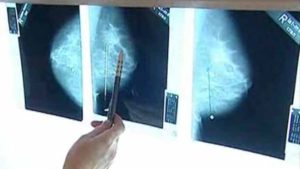 A report by 3 prominent specialists (including Gilbert Welch - who has been discussed in earlier
  This study showed that children reducing sugar consumption (but not fruits), and without reducing calories, after 10 days improved all sorts of metabolic health markers: blood pressure, LDL cholesterol, triglycerides, liver function, fasting blood glucose, and insulin levels. As one of the researchers said: "I have never seen results as striking or significant in our human studies; after only nine days of fructose (sugar) restriction, the results are dramatic and consistent from subject to subject." Once again, not all calories are the same.
 Beware of nail polish because it may be contaminating your body with an endocrine disrupting chemical. A study co-authored by researchers at Duke University and Environmental Working Group (EWG) detected evidence of a common nail polish chemical called triphenyl phosphate, or TPHP, in the bodies of every woman who volunteered to paint her nails for the study.There is growing evidence suggesting that TPHP may affect hormone regulation, metabolism, reproduction and development. Unfortunately, even if it is not listed on the label, it may still be in the product. It is also used as a fire retardant (and the evidence from studies says to avoid fire retardants). Go to the
 Research for a doctoral thesis found that thousands of chemicals (from manufacturing the textiles and clothes) remain on finished clothes, and many of these remain after washing. Bottom line: wash new clothes before wearing! From Science Daily:
 Another study providing evidence that the Mediterranean diet is good for the brain. In elderly dementia-free adults (mean age 80 years) - those that generally followed a Mediterranean diet (higher adherence) had a
  Why are huge (42+ pound) bags of lawn chemicals being sold with foods in stores? Should stacked bags of pesticides ever be placed next to foods in stores? Is this legal? Why is this happening in warehouse stores that call themselves environmentally conscious and brag about carrying organic foods?
 Next to refrigerated foods
 Contains 2,4-D and Mecoprop-p
 Next to bakery goods
 By the meat
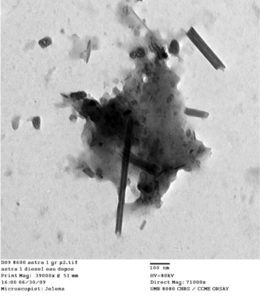 Carbon nanotubes (the long rods) and nanoparticles (the black clumps) appear in vehicle exhaust from tailpipes of cars in Paris.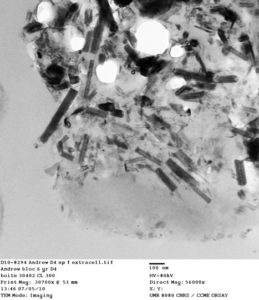
 Several studies have found that when children eat organic foods, especially fruits and vegetables, the amount of pesticides in their bodies declines significantly. Most organophosphorus pesticides have been phased out for residential use, but they are still widely used in agriculture, and so these pesticides are detected in both foods and people.