Skip to content

Intermittent fasting works! A recent study reviewed 130 studies and found that intermittent fasting could help reduce weight, body mass index (BMI), body fat, bad cholesterol, fasting blood sugar, and blood pressure.

Two types of intermittent fasting appear to be best and the most effective for weight loss: modified alternate-day fasting and the 5:2 diet. Modified alternate-day fasting is alternating days where one day you eat as usual, but no more than 600 calories the next day. The 5:2 diet is similar, but involves 2 days per week of zero or very low-calorie eating and 5 days of normal eating.

Less effective were time-restricted eating (can only eat during certain hours of the day, and fast the remaining  12 to 24 hours), and zero calorie alternate-day fasting (no food consumed every other day).

A second study (scroll down) found that while the 5:2 diet was initially effective, people had trouble keeping to it long-term.

At this point the medical advice is: find a type of intermittent fasting that you can stick with, and try it!

Excerpts from Medscape: Intermittent Fasting Works, at Least in the Short Term

Intermittent fasting can lead to weight loss and other health benefits, at least in the short-term, new research suggests.  ...continue reading "Intermittent Fasting Has Health Benefits"

Some good news for women who had a Covid-19 infection during pregnancy - one small study found reassuring results about the growth and development of the babies. The Northwestern University researchers found that at the 6 month checkup the babies overall had normal growth patterns and developmental milestones. This is great, great news!

Yes, it was a small study (33 low-income women and their babies). Three infants (10%) did receive development-related referrals (one had an underlying genetic diagnosis) - but the "referrals not higher" than what the physicians said they normally see. More good news: none of the babies tested positive for COVID-19.

From Science Daily: Normal 6-month outcomes in babies of women with COVID-19 during pregnancy

Babies born to women who had COVID-19 during pregnancy showed reassuring patterns of growth and development at 6-month follow-up, according to a study from Ann & Robert H. Lurie Children's Hospital of Chicago and Northwestern Medicine in partnership with Erie Family Health Center, a Federally Qualified Health Center (FQHC) that serves a diverse and low-income patient population.  ...continue reading "COVID-19 During Pregnancy and Some Reassuring News About the Baby"

As we get older, we may notice that we're forgetting things, or we're having trouble remembering names, or... And we wonder if we're starting to "lose our mind" and developing dementia.


A recent study has good news - even in persons labeled as having Mild Cognitive Impairment (MCI), 2 1/2 years later about half had improved and no longer fit the criteria of mild cognitive impairment. Back to normal! (Other studies have similar results.)

The big question is why do so many improve, and why do others get worse?

This study conducted by Columbia University researchers was part of a long-term study looking at aging in older adults (65 years old or older) and living in New York City (thus the study was "community based"). All 2903 participants (white, black, and Hispanic) did not have Mild Cognitive Impairment or dementia at the start of the study (the baseline), were followed for 6 years, and evaluated (including physical and neurological tests) every 18 to 24 months.

After an average 2.4 years follow-up after MCI diagnosis: 12.9% of individuals progressed to dementia, 9.6% declined in functioning (but did not meet the criteria for dementia), 29.6% continued to meet MCI criteria, and 47.9% no longer met MCI criteria. This last group was now "cognitively normal". (!!)

The  researchers found that the presence of the APOE4 gene (which increases the risk of Alzheimer's disease) and having more medical problems ("medical burden") increased the risk of MCI. On the other hand, more years of education, more leisure activities (e.g., reading, socializing, taking walks), and higher income decreased the risk of developing MCI. But MCI across several domains, being a carrier of the APOE4 gene, depressive symptoms, and antidepressant use increased the risk of progression to dementia

Bottom line: Older adults should try to be active, get exercise (walking counts!), have a healthy lifestyle, socialize, and be busy - it's good for mental health. Studies also find participation in arts, crafts, and using computers all lower the risk of older adults developing MCI.

From Medical Xpress: 'Mild cognitive impairment' in older age often disappears, study finds

A diagnosis of mild cognitive impairment (MCI) might worry an older adult, who could see it as a stepping stone to dementia. But a new study suggests one does not necessarily lead to the other.  ...continue reading "Mild Cognitive Impairment In Older Adults Can Improve"

Drawing of colon seen from front (the appendix is colored red). Credit: Wikipedia.

What a difference a few years makes in medical opinion in how appendicitis should be treated! Not routinely with surgery (appendectomy), but trying a course of antibiotics first.

Researchers from Duke University Medical Center reviewed studies and found that antibiotics successfully treat up to 70% of uncomplicated appendicitis cases. For this reason the researchers state that antibiotics should be tried first in uncomplicated appendicitis cases. And if needed (e.g., if there are recurrences of appendicitis) surgery can be done.

Back in 2015 a Finnish study found that antibiotics alone can treat the majority of cases of uncomplicated appendicitis in adults. No need for surgery. That same year another study was published finding antibiotics to be a successful treatment for uncomplicated appendicitis in children - and that at one year follow-up 75.6% of the antibiotics group had not had any recurrences of appendicitis.

This is a major shift in how to treat an ailment, and it happened quickly. Most people with appendicitis would definitely (probably) opt for a course of antibiotics rather than surgery and see if that works..

From Science Daily: Antibiotics can be first-line therapy for uncomplicated appendicitis cases

With numerous recent studies demonstrating that antibiotics work as well as surgery for most uncomplicated appendicitis cases, the non-surgical approach can now be considered a routine option, according to a review article in JAMA.  ...continue reading "Treating Appendicitis With Antibiotics"

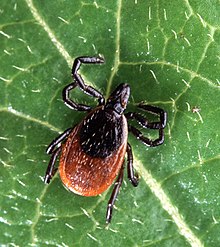
Deer tick Credit:Wikipedia

Lyme disease and other tick borne diseases are on the rise in the United States. Not only are the number of cases rising year after year, but where the diseases are occurring is spreading (geographic spread). Thus the establishment of a Lyme and tick-borne disease dashboard by a team of researchers at John Hopkins is welcome news.

The site has a map where people can finally see what the risks are in their area (at the state and county level) and take precautions as needed. The site (which gets updated) also has lots of information and links. Note that diseases are spread by different types of ticks, and that the number of diseases spread by ticks has been increasing.

To give you a sense of how serious tick borne diseases are, the site states: "Using health insurance claims data, CDC has estimated that around 476,000 Americans are diagnosed and treated for Lyme disease each year – a figure that is more than ten times the number of reported cases! The disease is estimated to cost the US health care system between $712 million and $1.3 billion each year, but this cost burden could be even higher if cases are underestimated." [Technical journal article explaining background, methods.]

One current problem not discussed is that a course of antibiotics taken soon after being diagnosed with Lyme disease may fully treat most cases, but not the remaining 10 to 20%. Yikes! Tulane University researchers found that live bacteria (B. burgdorferi spirochetes) can still be there in different organs of the body even after 28 days of antibiotic treatment. [See all Lyme disease, tick posts]

From Medical Xpress: Johns Hopkins team creates Lyme and tick-borne disease dashboard

A team of researchers at Johns Hopkins Bloomberg School of Public Health has created and posted online a free Lyme and tick-borne disease dashboard. The group has published a paper describing the information available on the dashboard and how to use it on the open-access site PLOS ONE. 

As the researchers note, tick-borne diseases are on the rise in the U.S., likely due to a warming climate.  ...continue reading "New Lyme and Tick-borne Disease Dashboard"

Another study found that increased sun exposure in children and young adults is linked to lower levels of multiple sclerosis. This was the main finding of a study conducted at multiple centers in the United States by a team of American and Australian researchers.

The researchers in the study stated that not only does sunlight boost vitamin D levels, it also "...stimulates immune cells in the skin that have a protective role in diseases such as multiple sclerosis." In addition, they found an association with the intensity of sunlight and estimated that residents of Florida would be 21 percent less likely than residents of New York to have multiple sclerosis. Sun exposure appears to be dose dependent - the longer the exposure, the lower the risk of multiple sclerosis.

Earlier studies also found immune boosting properties of sunlight. Sunlight has low levels of "blue light" which energizes T cells that play a central role in human immunity. T cells are a type of white blood cell, are part of the immune system, and help protect the body from infection and cellular abnormalities (cancer). 

Bottom line: In this study getting at least 30 minutes (up to 1 hour) of sunshine daily, especially in the summer, seems to be key in terms of protective effects.

From Medical Xpress: Sunshine may shield children, young adults from MS

Living in sunny locations and spending time outdoors may raise the risk for skin cancer, but a new study led by UC San Francisco and the Australian National University shows that in children and young adults, sun exposure may protect against multiple sclerosis. The study follows previous work by other researchers that has demonstrated an association between increased ultraviolet exposure in childhood and lower odds of adult MS ...continue reading "Sunshine and Multiple Sclerosis in Children and Young Adults"

The possibility of amniotic fluid being flavored by the foods a mother eats is wild! Makes sense, but it is not something normally mentioned anywhere. It turns out that in the last few years a few studies were published that looked at foods flavoring the amniotic fluid and breast milk, and which later influence the flavors and foods a child prefers.

Research finds that at least some of the foods (e.g., alcohol, anise, carrot, garlic) that a mother eats during pregnancy flavors the amniotic fluid and breast milk, and then these foods or flavors are more accepted during infancy and childhood. During the period a mother breastfeeds, there is evidence babies detect the flavors of alcohol, anise/caraway, carrot, eucalyptus, garlic, mint, a variety of vegetables, peaches, and vanilla. Foods with these flavors appear in breastmilk soon after eating them - within 1 hour!

The few studies done all found greater acceptance and willingness to eat foods in infancy and childhood that had flavors the children were exposed to during pregnancy and/or when nursed. The overall thinking of researchers Spahn and others is that the mother's diet during pregnancy and lactation provides "the earliest opportunity to positively influence child food acceptance and preferences."

Of course the studies are limited in that only a few flavors are looked at in each study. But thinking about it - of course that is how a child accepts new flavors. It's the exposure and getting used to them. Formula always tastes the same, but breast milk varies a little every day! Some researchers suggest that there may be a critical period early in life where exposure to sour and bitter tastes (e.g., broccoli) can be made palatable to the baby. [scroll down to study #3]

These results also support not giving bland and unappetizing single flavor foods in baby jars to babies - instead give them the actual foods the parents are eating! Mash it with a fork, or even use a blender or food mill, but give them the real foods, flavored how the parent likes it. After all, they've already been exposed to those tastes.

The following 3 studies discuss this topic in more detail:

1) A group of researchers reviewed studies related to the topic of the mother's diet during pregnancy and lactation (breastfeeding), amniotic fluid flavor, breast milk flavor, and children's food acceptability. From the American Journal of Clinical Nutrition (2019): Influence of maternal diet on flavor transfer to amniotic fluid and breast milk and children's responses: a systematic review

Limited but consistent evidence indicates that flavors (alcohol, anise, carrot, garlic) originating from the maternal diet during pregnancy can transfer to and flavor amniotic fluid, and fetal flavor exposure increases acceptance of similarly flavored foods when re-exposed during infancy and potentially childhood.  ...continue reading "Amniotic Fluid is Flavored by the Foods the Pregnant Woman Eats"

Breastfeeding
Credit: Wikimedia Commons/ Anton Nosik

A recent small study confirms what many nursing mothers already suspect - that what the mother eats has an effect on the flavor of breast milk. There has been a lot of anecdotal evidence of the taste of breast milk varying depending on foods eaten, but not much evidence. Earlier studies did find a taste effect from some foods (e.g. carrots, garlic), but not others.

Researchers at the Technical Univ. of Munich investigated whether dominant tastes of a curry dish (red chili, pepper, ginger) were transferred to the breast milk of 16 nursing mothers. They found that one hour after eating a curry dish, the breast milk of nursing mothers contained piperine (from pepper), but not substances from red chili and ginger. And it was still there in breast milk produced hours later.

Interestingly, while the researchers thought that even though the piperine could be detected with laboratory instruments, they doubted it could be tasted by infants. Hmm.. don't know if infants would agree. Humans are incredibly sensitive to tastes and odors. It is thought that early exposure to all sorts of different smells and tastes could have an effect on later food preferences.

Because only piperine (from pepper) was detected and not the other chemicals they looked for (curcumin, capsaicin, 6-gingerol, etc.), the researchers hypothesize that there is a barrier between the mother's circulation and the mammary glands - which only some compounds can cross (such as piperine). This would be comparable to the blood-brain barrier (BBB), which regulates and restricts compounds from getting to the brain.

They point out that caffeine and piperine both can cross the blood-brain barrier, and both have been shown to get into breast milk. [By the way, studies show other compounds also appear in breast milk such as lycopene (from tomatoes).] Bottom line: Eat a variety of foods when nursing.

From Science Daily: Spicy breast milk?

Breast milk is the first food that babies consume. Various studies have suggested that the "taste experience" in early childhood influences eating behavior in adults. Unlike standardized infant formula, natural milk does not taste and smell the same every day. The differences are largely due to the maternal diet.  ...continue reading "The Taste of Breast Milk Varies Depending On Foods Eaten"

Some good news - a recent study found that daily coffee and tea drinking is associated with lower rates of stroke and dementia. Just an association, not a definite cause and effect, but still... nice to hear some (more) good news for us coffee and tea drinkers.

Researchers analyzed data from a large group in the United Kingdom's Biobank (a large medical data base). The 365,682 participants (aged 50 to 74 years old) were followed for about 11 years. They found that drinking coffee and tea separately or in combination were associated with a lower risk of stroke and dementia. Coffee alone or in combination with tea was also associated with lower risk of post-stroke dementia.

Most interesting finding: Drinking 2 to 3 cups of coffee with 2 to 3 cups of tea daily was associated with a 32% lower risk of stroke and a 28% lower risk of dementia (when compared to those who do not drink coffee and tea).

How much was best in this study? Moderate amounts of coffee and tea consumption are best. Two to 3 cups of coffee per day or 3 to 5 cups of tea per day, or a combination of 4 to 6 cups of coffee and tea per day, were linked with the lowest rates of stroke and dementia.

From Science Daily: Coffee and tea drinking may be associated with reduced rates of stroke and dementia

Drinking coffee or tea may be associated with a lower risk of stroke and dementia, according to a study of healthy individuals aged 50-74 publishing Nov. 16 in the open-access journal PLOS Medicine. Drinking coffee was also associated with a lower risk of post-stroke dementia.  ...continue reading "Coffee and Tea Drinking Associated With Lower Rates of Stroke and Dementia"

Whether one eats organic foods or non-organic foods does make  difference, even when eating a healthy Mediterranean style diet. A recent study found a difference is in the amount of pesticides ingested, with much less in the organic diet. Which makes sense.

A Mediterranean style diet emphasizes fruits, vegetables, whole grains, nuts, and legumes - thus lots of produce and fiber, much more than in a Western style diet. However, the study found that just 2 weeks of a Mediterranean diet with either organic foods or non-organic (conventional) foods made a huge difference in the amount of pesticides ingested. They measured this by looking at pesticide residues excreted in the urine.

In persons eating an all organic Mediterranean style diet 91% lower pesticide residues were excreted in the urine when compared to those eating a non-organic Mediterranean style diet! The study also showed that pesticide exposure actually increased in 1 group (the non-organic Mediterranean diet group) when compared to their normal non-organic (conventional) Western diet.

Participants (British postgraduate students, all adults) in a small study ate their normal Western diet (e.g., hamburgers, french fries) both before and after a 2 week period in which they ate a Mediterranean style diet (e.g., Greek salad, sweet and sour chicken, vegetables, and whole grain rice). During the Mediterranean style diet phase (the middle 2 weeks) all foods eaten by one group (13 persons) were organic, and in the second group (14 persons) they were all non-organic (conventional).

Other studies have also found similar findings (organic foods lowers pesticide levels in body), and lower incidence of cancer in those eating organic foods.

Bottom line: Yes, a Mediterranean style diet (whether non-organic or organic) is still considered healthiest for us all sorts of ways, including our gut microbiome. But.. try to eat as many organic foods as possible to lower exposure to all sorts of pesticides.

Excerpts from Beyond Pesticides: Unless You Go Organic, Switching to ‘Healthier’ Mediterranean Diet Increases Pesticide Exposure Three-fold

Replacing a modern, ‘western’ diet of highly processed foods with a Mediterranean diet filled with conventional, chemically-grown fruits and vegetables triples exposure to toxic pesticides, according to research recently published in The American Journal of Clinical Nutrition. However, this disturbing change can be eliminated by eating a Mediterranean diet consisting entirely of organic food, which is not sprayed with synthetic pesticides.  ...continue reading "Pesticides and the Mediterranean Style Diet"