
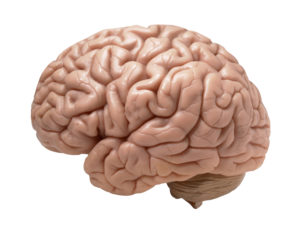
 Something to ponder: Are tiny plastic particles (microplastics) that enter the human body traveling to the brain and causing harm? An article by the science writer Erica Cirino examines that question by looking at existing research and comes to the disturbing conclusion of: Yes, they are.
Yes, that plastic particles are inhaled or ingested (in food, water, and air), that many are excreted, but some travel to organs in the body, are absorbed in the bloodstream, and some eventually cross into the brain. Research in fish shows that this ultimately results in abnormal (dysfunctional) behavior. [Note: she is the author of the book Thicker Than Water, which addresses the plastics pollution problem.]
One problem is that plastic particles contain all the chemicals in the original plastic, which includes endocrine (hormone) disruptors. Another is that the plastic particles accumulate once they are in the organs. Yes, studies find plastic particles in humans (e.g., the placenta, the lungs, and other tissues) and also that many microparticles are excreted in feces. But much is still unknown.
A study by Canadian researchers estimated that the consumption of microplastics by Americans ranges from 39,000 to 52,000 particles (depending on age and sex) each year. When they added in inhalation of microplastic particles, the numbers increased to 74,000 to 121,000. And those who only drink bottled water may be getting an additional 90,000 microplastics (versus about 4000 microplastics from tap water). Yikes!
Since more and more plastics are entering the environment each year, then this does not bode well for humans. We need to deal with plastic pollution!
Excerpts from an article by Erica Cirino in The Scientist: Opinion: Plastic Pollution May Endanger Brains
In 1950, 2 million metric tons of plastic were produced globally; in 2015, petro-chemical companies churned out 381 million metric tons. Most plastic waste—more than 6.3 billion metric tons of it has been generated by humans over the last 80 years—is never recycled. And to scientists’ best knowledge, petroleum-based plastic will never biodegrade. Instead, it breaks up into ever-smaller particles that always remain plastic. ...continue reading "Microplastics Are Entering Our Bodies"
 For years pregnant women were told that taking acetaminophen (also known as paracetamol) during pregnancy is OK - that it doesn't harm the baby. And more than half of pregnant women worldwide report taking acetaminophen (in Tylenol) during pregnancy, whether for pain, fever, or headaches. Ooops! It may not be harmless.
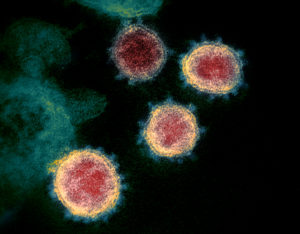 Many people somehow think that COVID-19 is just another flu virus and not that bad. Wrong! The deadly flu epidemic of 1918 killed an estimated 675,000 persons in the United States. But COVID-19 has already killed more than 690,000 persons - and these are the confirmed cases! It is now officially the deadliest disease event or pandemic in American history.


 Congratulations America! The contiguous (lower 48 states) United States just had its hottest summer ever! This is not something to brag about, but a taste of coming attractions due to climate change. This year we've had heat wave after heat wave, drought in the west, humid tropical-type heat in the east, hurricanes, tornadoes, tropical storms, and so on. Whew...
 Those who enjoy a little "potty humor" will like the results of a recent
  It's finally over. One hundred years after leaded gasoline was first introduced, it is finally no longer used in automobiles and road vehicles anywhere in the world. Algeria was the last country to use leaded gas (it had stockpiles of it and wanted to use it up), and in July 2021 they made the switch to unleaded gas. Finally.
 Another recent study found an association with pesticide exposure (both herbicides and insecticides) and leukemia risk in infants and children.