Skip to content

Atrial fibrillation (a quivering or irregular heartbeat) can be very frightening for the person experiencing it. This heart arrhythmia disorder can be treated with medicines or surgical ablation, but new research suggests that it also can be improved after 6 months of exercise - about 3.5 hours per week.

Researchers at the University of Adelaide randomly assigned 120 patients with atrial fibrillation (AF) to either receive an exercise regimen for 6 months or no exercise regimen. All persons received "usual medical care". [Note: it is not clear what usual medical care involved.] After 6 months and at 12 months, the exercise group had a lower incidence of recurrent AF  and less severe AF symptoms. The exercise helped maintain normal heart rhythm.

The exercise group had supervised exercise once per week for 3 weeks, and then every other week for 3 months, as well as an exercise plan to follow at home. The goal was to increase aerobic exercise up to 3.5 hours per week. Supervised exercise session were higher intensity to increase cardiorespiratory fitness, and home based  exercise was of moderate intensity (e.g. walking, indoor cycling, swimming).

Bottom line: Exercising up to 3.5 hours per week might improve and control AF so that medications or surgery are not necessary.

From ScienceDaily: Exercise maintains normal heart rhythm in patients with atrial fibrillation

A six-month exercise programme helps maintain normal heart rhythm and reduces the severity of symptoms in patients with atrial fibrillation, according to late breaking research presented at ESC Congress 2021. ...continue reading "Atrial Fibrillation Can Be Improved With Exercise"
Antibiotics can be life-saving, but there are also unintended consequences. One of them is that they disrupt and alter the gut microbiome (the microbial community of the millions of microbes living in the intestines). A large study found that use of antibiotics is linked to a higher risk of colon cancer 5 to 10 years later.

The researchers thought this was due to the antibiotics having negative effects on the gut microbiome. Antibiotics reduce numbers of beneficial bacteria in the intestines, while allowing bacteria linked to colorectal cancer to increase.

Researchers at Unea Univ. in Sweden compared 40,545 colon cancer cases to 202,720 controls (no cancer), and found that as antibiotic use increased, colon cancer increased in those persons during the next 10 years. It is unknown what happens after 10 years, because that is when the study ended. Interestingly, in women - increased use of antibiotics was linked to a lower incidence of rectal cancer.

The researchers analyzed the results with respect to different classes  of antibiotics, and found the strongest association with the use of quinolones, sulfonamides, and trimethoprims. These antibiotics have an effect on bacterial diversity - specifically allowing anaerobic Fusobacteria and Bacteroidetes species to live and become more abundant. Other studies also support the view that Fusobacteria (e.g., Fusobacterium nucleatum) and Bacteroidetes species contribute to colorectal cancer development.

What to do? To increase beneficial species in the gut and lower levels of inflammation in the body, studies support eating a diet rich in fruits, vegetables, whole grains, nuts, seeds, legumes, and fish - which also results in a high fiber intake (e.g., Mediterranean diet). Also, to quickly improve the diversity of microbes in the gut (a sign of health!) and to lower inflammation in the body, increase your intake of fermented foods.

Fermented foods include: yogurt, buttermilk, sour cream, cheese, kefir, fermented vegetables, kimchi, natto, miso, sauerkraut, traditional pickles, traditional sourdough bread, apple cider vinegar, and kombucha. To quickly improve the gut microbiome, try to eat six 1/2 cup servings each day for a few months.

From Science Daily: Antibiotics linked to increased risk of colon cancer

There is a clear link between taking antibiotics and an increased risk of developing colon cancer within the next five to ten years. This has been confirmed by researchers at Umeå University, Sweden, after a study of 40,000 cancer cases. The impact of antibiotics on the intestinal microbiome is thought to lie behind the increased risk of cancer.  ...continue reading "Antibiotics and Colon Cancer"

Over the years many studies have found that eating nuts is good for health and good for the gut microbiome. Now, a study that looked at the effect of adding pecans to the daily diet can be added to the list.

The Univ. of Georgia researchers found that adding about 1/4 cup (68 grams) pecans to the daily diet for 8 weeks improved cholesterol levels. A conclusion is that pecans can be viewed as good for the heart or "cardioprotective".

In the study they randomly assigned 52 adults who were at risk for heart disease (they were overweight or had hypercholesterolemia) to 1 of 3 groups, including a control group with no pecan intake. As one of the researchers (Dr. Cooper) said: "We had some people who actually went from having high cholesterol at the start of the study to no longer being in that category after the intervention.

After 8 weeks of eating 1/4 cup pecans daily, there were lower levels of fasting total cholesterol, LDL cholesterol, triglycerides, TC/HDL cholesterol ratio, non-HDL cholesterol, and apolipoprotein B in the blood There were no changes in the control (no pecan) group.

By the way, do you remember years ago when doctors cautioned people about eating nuts?  That they were very high calorie and should be avoided? Hah! ... The view nowadays: Pecans are high in healthy fatty acids and fiber, both of which are linked to lower cholesterol. Eating nuts frequently also reduces the risk of several chronic diseases, including heart disease, type 2 diabetes, some cancers, and are beneficial for cognitive health.

From Science Daily: Pecan-enriched diet shown to reduce cholesterol

While the proper pronunciation of pecan remains a subject of debate, University of Georgia researchers have shown the tree nut can dramatically improve a person's cholesterol levels.  ...continue reading "Pecans Are A Healthy Addition to the Diet"

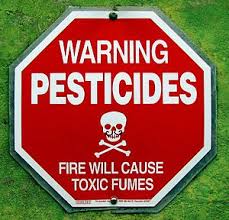
Finally, finally...  the US Environmental Protection Agency (EPA) is banning the use of the pesticide chlorpyrifos on food crops. This is important because we get exposed to the pesticide various ways, but especially from pesticide residues on food. This pesticide should have been banned years ago for the reason that it is dangerous for children - has neurological effects and lowers IQ.

Why did the EPA finally ban it? Back in 1999 the EPA banned “residential” uses of chlorpyrifos, of course with lots of exceptions. Finally, in 2017 the EPA was going to ban it for food use (e.g. crops)  - this was recommended by EPA's own scientists due to huge amounts of research showing harm.

But that decision was reversed by the incoming Trump administration (business interests first!). Of course, that business interests of the pesticide industry come first is not surprising and has been going on for years - it only got worse during the Trump administration.

This year the EPA was forced into the decision banning chlorpyrifos by a court order. The U.S. Court of Appeals for the 9th Circuit in San Francisco in its ruling in May, 2021said, “The EPA has had nearly 14 years to publish a legally sufficient response to the 2007 Petition [filed by environmental and farmworker groups].” The court continued, “During that time, the EPA’s egregious delay exposed a generation of American children to unsafe levels of chlorpyrifos.”

What exactly is chlorpyrifos? It is an organophosphate insecticide that is currently registered for use on a range of food crops, golf courses, and for public health mosquito control (in cases of mosquito-borne diseases). It is highly acutely toxic.

It is chronic low level exposure (typically through residues on food) that is especially harmful - especially to pregnant women, the developing fetus, and children. In utero exposures to chlorpyrifos can impair a child’s learning ability and increase risk of developmental delays, ADHD, and is associated with IQs that are up to 7 points lower than those with little or no chlorpyrifos exposure.

How to avoid toxic pesticides in foods: Eat organic foods as much as possible. Many pesticide levels (e.g. glyphosate and chlorpyrifos) will rapidly decrease - within a week. Pesticide residues can be measured in the blood and urine.

From AP news: EPA bans pesticide linked to health problems in children

The Biden administration said Wednesday it was banning use of chlorpyrifos, a widely used pesticide long targeted by environmentalists, on food crops because it poses risks to children and farm workers. ...continue reading "A Dangerous Pesticide Will Finally Be Banned On Food Crops"

Some mental abilities actually improve with age! This is great news, because the general view is that our brain volume shrinks and mental abilities decline with age (especially after age 70).


A large Georgetown Univ. Medical Center study of 702 participants (58 to 98 years old) found that two important brain functions actually improve with age, probably due to lifelong experience using them. They were attention and executive functions - which allow us to attend to new information and to focus on what's important in a situation. They underlie  memory, decision making, self-control, navigation, language, and reading.

Is this why there is a saying that wisdom comes with age?

From Science Daily: Key mental abilities can actually improve during aging

It's long been believed that advancing age leads to broad declines in our mental abilities. Now new research from Georgetown University Medical Center offers surprisingly good news by countering this view.  ...continue reading "Some Thought Processes Improve With Age"

More bad news regarding climate change. Scientists have been warning for years that it appears that the Gulf Stream is weakening or slowing down. But now, a report has been released saying that the ocean current (and the Atlantic Meridional Overturning Circulation) is in danger of collapsing. Which would mean catastrophic climate changes. Uh-oh.
The Gulf Stream and Florida Current are part of the Atlantic Meridional Overturning Circulation (AMOC) which transports warm, salty water from the tropics to northern Europe and then south along the ocean floor towards Antarctica.. This is why the UK, Ireland, Iceland, and other European countries have relatively mild temperatures, even though they are so far north.

What would a collapse mean? It could result in extremely cold temperatures in Europe (as well as parts of North America), sea level rise in feet (not inches) among the North American coast, change in rain and monsoons, and on and on. In other words, a catastrophic effect.

What to do? Greenhouse gases (e.g. carbon dioxide) need to be reduced. Pronto. Some articles to read:

Washington Post: A critical ocean system may be heading for collapse due to climate change, study finds

Human-caused warming has led to an “almost complete loss of stability” in the system that drives Atlantic Ocean currents, a new study has found — raising the worrying prospect that this critical aquatic “conveyor belt” could be close to collapse.  ...continue reading "Gulf Stream Is Slowing Down And May Be On Verge Of Collapse"

Something protective that we all can do! A large study of patients found that getting an annual flu shot appears to provide some protection from severe COVID-19 effects.

The study suggested that the annual flu vaccine reduces the risks of stroke, sepsis, and deep vein thrombosis (DVT) in persons with COVID-19. These patients are also less likely to visit the emergency department and to be admitted to the intensive care unit (ICU) in persons with COVID-19.

The Univ. of Miami researchers looked at medical records of 74,754 persons throughout the world with COVID-19. Patients either received a flu shot within the 6 months to 2 weeks before receiving a COVID-19 diagnosis, or no flu shot.

Why is this occurring? The researchers propose a number of reasons for the protective effect, including that perhaps the flu vaccine stimulates the activation of natural killer cells (these cells are decreased in moderate and severe COVID-19 cases).

From Science Daily: Flu shot protects against severe effects of COVID-19, study finds

In a newly published study, physician-scientists at the University of Miami Miller School of Medicine have shown that the flu vaccine may provide vital protection against COVID-19. ...continue reading "Annual Flu Vaccine Reduces Risk of Severe COVID-19 Effects"

Recently there have been studies with conflicting results about the health benefits or harms from coffee consumption. Overall, it seems like moderate intake is OK and beneficial for adults, but too much may cause harm. And avoid caffeinated coffee if pregnant. Yesterday I posted about several recent studies finding health benefits from daily coffee consumption.

Coffee has anti-inflammatory effects, and contains more than a thousand chemical compounds. Over the years many studies found health benefits with regular and decaffeinated coffee, especially when a filter is used in the brewing process (e.g. drip coffee). But when the coffee is made by methods that don't filter the coffee (e.g. French press) the results may show harm, especially if large quantities are consumed daily.

The following are two recent studies finding that coffee consumption is associated with health benefits, and two studies finding potential harm from coffee consumption of over 6 cups a day. Note that whether the coffee is filtered or not may make a difference in results (the last 2 studies).

From (Jan. 11, 2021) Science Daily: Higher coffee intake may be linked to lower prostate cancer risk ...continue reading "Coffee Can Have Health Benefits, But Perhaps Harmful In Large Amounts"