
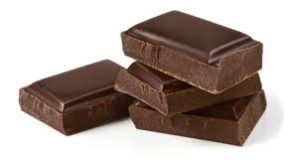
 Today a study was published finding health benefits to frequent (daily!) consumption of cocoa - improved walking in older persons with peripheral artery disease (PAD). Another reason to drink cocoa and eat dark chocolate!
The study, conducted in Chicago, Illinois, randomly assigned persons, over the age of 60 years with PAD, to different groups. Those who drank a cocoa beverage for 6 months (3 times a day) were able to walk further in a 6 minute walk at the 6 month follow-up (when compared to the placebo/no cocoa group).
The researchers also found that the cocoa significantly improved a number of measures of the calf muscle (e.g. capillary density, calf muscle perfusion), which suggested that there is a durable benefit on the calf muscles from the cocoa beverage. In other words - it's not just a quick sugar-cocoa high that boosted their walking.
On the other hand, the placebo (no cocoa) group deteriorated in how far they could walk over the 6 months, which is consistent with peripheral artery disease. Yes, it typically gets worse over time.
PAD (also called peripheral arterial disease) is a common circulatory problem, due to atherosclerosis, in which there is reduced blood flow to the limbs due to narrowed arteries.Typically the legs don't receive enough blood flow and there is pain when walking (which goes away after resting a bit). Treatments include lifestyle changes (e.g. diet, exercise) and medicines.
What is so beneficial about cocoa? Both regular dark chocolate and cocoa contain flavanols, including epicatechin, which have therapeutic properties and may improve walking in people with PAD. Evidence from other studies of people with and without PAD suggests that cocoa may increase "limb perfusion" and "improve skeletal muscle mitochondrial activity and muscle regeneration".
Can you imagine a prescription for dark chocolate and cocoa on a daily basis? Fantastic! From Medical Xpress: Cocoa could bring sweet relief to walking pain for people with peripheral artery disease ...continue reading "Enjoy Some Cocoa Or Dark Chocolate Daily"
 Taller men have a lower rate of dementia? Apparently a number of studies have found a link between height of men and risk of dementia.
 Will eating certain vegetables prevent or improve fatty liver disease? Non-alcoholic fatty liver disease goes hand in hand/is a consequence of being overweight or
  Another study finding that eating an egg each day is totally fine for our health. Of course it is! For years nutritionists were obsessed with the cholesterol in eggs, thinking it must translate into being bad for heart health. Remember the advice to only eat egg whites?
 The past year has resulted in disappointments for the vitamin and mineral supplement industry as study after study didn't find health benefits from routinely ingesting them. Instead, study after study found health benefits from eating a good diet, specifically one that has as few as possible highly processed foods, but lots of whole foods, and rich in whole grains, fruits, vegetables, nuts, seeds, and legumes (beans). And in this way, also high in fiber. Think along the lines of a Mediterranean diet.
 Another great reason to lose weight if you are really overweight (let's be honest, the term is "obese") is a lower risk of two types of skin cancer: squamous cell carcinoma and melanoma. Obesity is considered a cancer risk, that is, it increases the risk of cancer, and after bariatric surgery there is a lower risk of cancer.
 Drinking
  Another great option for losing weight and better health may be to only eat within a 10 hour window, and then not eat for 14 hours (thus a nightly 14 hour fast). Many may find this easier than traditional dieting (counting calories and restricting eating). Just eat breakfast later, supper earlier, and no snacks in the evening. (But water is OK.)
 Once again a study finds an association between a Western diet (lots of processed meat, red meat, fried food, desserts, low fiber, high in refined grains, sugar sweetened beverages, and high-fat dairy) and a poor health outcome - this time a significantly higher incidence of late-stage age-related macular degeneration (AMD).
 Americans are eating so much ultra-processed food that it's now more than 50% of their daily calories. And why shouldn't they eat these foods? They're easy to get (fast foods, prepackaged foods, take out foods), they taste good, and they're great for people pressed for time. That's why they're called "convenience foods" and include fast foods, prepackaged foods, many frozen meals, take out foods, soda, packaged snacks, and many cakes, candies, and cookies.