Skip to content

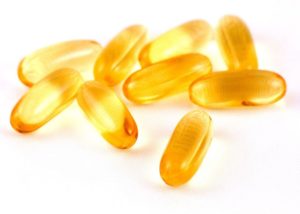
A recent large study found that getting high levels of vitamin D from foods, but not supplements, is linked to a lower rate of a common skin cancer (squamous cell carcinoma) years later. Once again: the beneficial health effect is associated with eating real foods, but not supplements.

Researchers found an inverse relationship with vitamin A intake and squamous cell carcinoma - those that had the highest dietary intake of vitamin A had a 17 % reduction of the skin cancer during the next 26 years. The inverse associations were highest among those with moles and those who had sunburns during childhood or adolescence.

The high intake group had the vitamin A amount equivalent to one medium baked sweet potato or 2 large carrots each day. Most of their intake came from fruitsand vegetables. Vitamin A (retinoids) is important in keeping skin cells healthy, and retinoids are considered cancer protective (or anticancer) for several cancers.

What foods are high in vitamin A?  Plant-based sources of vitamin A (carotenoids, including lutein and lycopene) include orange and yellow fruits  and vegetables, such as sweet potatoes, carrots, butternut squash, pumpkin, apricots, cantaloupe, red peppers, tomatoes, as well as broccoli, spinach, and leafy dark vegetables. Animal based sources of vitamin A  (retinol) are dairy foods (milk, cheese, yogurt), eggs, some types of fish (e.g. herring), and beef liver. (More information at National Institutes of Health.)

From Futurity: CAN GETTING MORE VITAMIN A CUT SKIN CANCER RISK?  ...continue reading "Vitamin A and Skin Cancer Risk"

The Paleo diet has been around for years and yet it continues to be controversial. The debate is whether following the Paleo diet long-term has health benefits or not? Supporters of the Paleo (Paleolothic) diet say it promotes gut health and is good for gut microbes, but recent research findings are a strike against this claim. The Paleo diet is based on the hypothesis that humans have not adapted to eating products of agricultural farming such as grains, dairy products, or legumes (beans), as well as all processed foods, so they should be avoided. Instead it stresses eating meat, fish, eggs, nuts, (some) fruits, and vegetables.

So what were the new research findings?  Australian researchers found that people who had been on a Paleo diet for more than a year ate lower amounts of resistant starch, and so had a different bacteria profile in the gut - with lower levels of some beneficial species. They also had high levels of a biomarker in the blood (trimethylamine-n-oxide or TMAO) that is linked to heart disease.

The problem seems to be the lower intake of resistant starch - which is a carbohydrate that resists digestion in the small intestine and ferments in the large intestine. As the fibers ferment they act as a prebiotic and feed the beneficial bacteria in the gut. More than one type of resistant starch can be present in a single food. And what foods contain resistant starches? Precisely some foods avoided in the Paleo diet: grains, rice, beans, peas, lentils, plantains, and green bananas. A number of studies find health benefits (e.g. gut health) from eating foods with resistant starches.

From Medical Xpress: Heart disease biomarker linked to paleo diet

People who follow the paleo diet have twice the amount of a key blood biomarker linked closely to heart disease, the world's first major study examining the impact of the diet on gut bacteria has found.  ...continue reading "Problems With Paleo Diet?"

New research once again confirms that raw fruits and vegetables result in a person ingesting lots of microbes. Millions of bacteria. Which is considered beneficial for our gut microbiome! What's interesting in the latest study looking at bacteria in both conventionally and organically grown apples is that organic apples are a better source of bacteria - that their bacteria are more diverse, distinct, and balanced (when compared to conventionally grown apples).

The Austrian researchers (Wassermann et al) wrote in the Frontiers In Microbiology: "Our results suggest that we consume about 100 million bacterial cells with one apple. Although this amount was the same, the bacterial composition was significantly different in conventionally and organically produced apples."

Interestingly, there were a lot of beneficial Lactobacillus species in the organic apples, but not conventionally grown ones. The researchers thought that the diverse microbiome of organic apples probably limits or hampers harmful microbes (human pathogens). The researchers also wrote: "The described microbial patterns in organic apples resemble the impact of apple polyphenols on human health, which have not only been shown to alleviate allergic symptoms (Zuercher et al., 2010), but also to promote growth of Lactobacillus and Bifidobacterium in the human gut and to reduce abundance of food-borne pathogens."

Another bonus of eating organic apples is that it means avoiding pesticides that are routinely sprayed on conventional fruit. So eat away! Microbes, fiber, and nutrients all in one small fruit!

Fun fact: The researchers write that apples are the most consumed fruit world-wide. Excerpts from Science Daily: An apple carries about 100 million bacteria -- good luck washing them off  ...continue reading "Excellent Reason To Eat Apples: The Bacteria"

For years researchers have been finding links between vitamin D and all sorts of health benefits, including lower incidence of cancer with higher vitamin D levels. A recent study by Michigan State physicians found that taking vitamin D supplements for at least 3 years resulted in cancer patients living longer, that is, "having significant reduction of cancer-related mortality" . However, it did not prevent cancer.

One issue with much of the vitamin D research that has been done is whether vitamin D is really  causing these health benefits or is it just an association? Perhaps people who take vitamin D are also different in some way from those who  don't, or something else is going on, and this may be confusing the results.What was nice about this  study is that it was a review of studies already done, but the researchers only included vitamin D studies  that used randomly controlled trials (RCT).

In the RCTs  included in the study, people were randomly assigned to different groups and either they were 1) given vitamin D supplements for 3 years or more, or 2) they did not take vitamin D supplements (the placebo group). Thus they evaluated 10 RCT studies with 79,055 persons who were followed for 4 years or more. Vitamin D was associated with significant reduction of cancer-related deaths (when compared with the placebo group). But there was no reduction in cancer incidence. Meaning the vitamin D did not prevent cancer (have a protective effect) in the studies they looked at.

The researchers did not say what they thought was an optimal vitamin D supplement dose or optimal levels in the blood. By the way, keep in mind that vitamin D can easily be gotten from exposure to sunshine. After all, it is called the sunshine vitamin.

From Science Daily: Vitamin D could help cancer patients live longer   ...continue reading "Vitamin D and Cancer"

More bad news about the toxic class of chemicals called PFAS chemicals, which are used in a wide variety of consumer products, such as Teflon non-stick cookware and Scotchgard. The problem is that the chemicals don't stay in the products, but leach out (migrate out) and spread further - even into us. Unfortunately these chemicals persist in the environment. Earlier studies had already detected PFAS  (per- and polyfluoroalkyl substances) chemicals in water, soil, some foods, and in the bodies of almost all Americans. Now some recent research studies and the efforts of investigative journalists have uncovered more disturbing findings about the spread of these chemicals in the environment, in foods, and us.

The site Intercept has done a series of investigative reports highlighting these new findings about PFAS chemicals For example, these chemicals are found in fertilizers that contain sewage sludge (or biosolids) that farmers use on their farms. Farmers have been been doing this for decades. And it's in milk from dairy farms that spread this compost (fertilizer) made from sewage sludge on their fields. Of course! What is spread on the fields gets into food and which humans then ingest. The chemicals are also found in breastmilk from women in every country that has been studied.

Environmental Working Group (EWG) also has a series of articles on these chemicals, including the results of a recent FDA study of foods. The FDA found PFAS in many foods, including meat, seafood, dairy products, sweet potatoes, pineapples, leafy greens, and chocolate cake with icing. But the FDA has not publicly disclosed the results. Why not? Especially since the EPA has already said that "dietary exposure" (what we eat) is a main way that people get these chemicals into their bodies.

Why should we be concerned? PFAS chemicals are called  by some as "persistant chemicals" because of their persistence in the environment and humans. PFAS chemicals are linked to all sorts of serious health risks, including reproductive harm (e.g.poorer semen quality), cancers, lowered sex and growth hormones in children, immune effects,  thyroid disease, liver and kidney damage, and high cholesterol.

PFAS chemicals (such as PFOA, PFOS, PFBS) are used in a wide variety of consumer products because they have stain, water, and grease repellent properties. They are used in nonstick cookware, in food packaging (especially the paper wrappers and cardboard containers), stain-resistant carpets, furniture, floor waxes, textiles, water-proof and stain-resistant clothing (such as Gore-tex fabric), and performance gear. Remember Teflon? That's one. Some have been banned, phased out of use because of their dangers, but the replacements appear to be just as bad. The chemicals migrate out of food packaging into food, or can be released into the air and dust from carpets and upholstery treated with stain-resistant coatings.

I want to point out that sewage sludge (also called biosolids), are found in many commonly available fertilizers, such as Milorganite fertilizer.  It's not just farmers who've been using the stuff for years. Note that organic fertilizers and organic farmers can NOT use sewage sludge (biosolids). It turns out that even compostable food containers contain PFAS chemicals that leach out. Yikes!

What can you do to lower exposure to PFCs? These are chemicals that are hard to totally avoid, but one can lower exposure to them. And some have been phased out. The good news is that research shows that after a while levels in blood and breast milk should drop. What to do?? First of all, don't use non-stick pots and pans, and definitely not older Teflon ones. Use stainless steel or cast iron instead. Avoid the use of non-stick smooth dental floss made with a "non-stick" coating such as Oral-B Glide dental floss (use plain waxed or unwaxed floss instead). Try to not eat prepared foods in coated containers frequently. Avoid Scotchgard or other stain-proofing or stain-resistant treatments on upholstered furniture or rugs. Avoid water-proof treated fabric. It's also best to avoid drinking PFAS-contaminated water (which may be hard to do in places such as NJ where so much of the water supply is contaminated by PFAS chemicals).

From the Intercept - TOXIC PFAS CHEMICALS FOUND IN MAINE FARMS FERTILIZED WITH SEWAGE SLUDGE ...continue reading "Why Are We Still Using These Dangerous Substances In Consumer Products?"

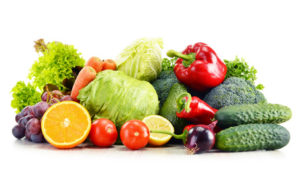
Do you trust food labels? This past month several people have expressed doubts to me over the organic label found on many foods.  But actually the organic label on American grown foods is one that people can trust, and it means that a government agency (the US Department of Agriculture) has certified that the food was grown organically. Yes, there are standards for organic food.
The worst label on a food is "natural' - it is totally meaningless. View it as a marketing term and nothing more. I personally look for the organic label on all foods whenever possible, and I like meat and dairy products also labeled grass fed.

Here is a great article about some of the terms now used on food labels and what they mean. The food labels discussed are: organic, non-GMO, cage free, free range, pasture raised, grass-fed, and Fair Trade. I would add that I trust food labeled as organic from the USA, Canada, and Europe the most. Unfortunately many (most? almost all?) organic foods from China and Turkey may not really be organic.

Excerpts from the Washington Post: Why Food Reformers Have Mixed Feelings About Eco-Labels  ...continue reading "Can You Trust Organic and Other Food Labels?"

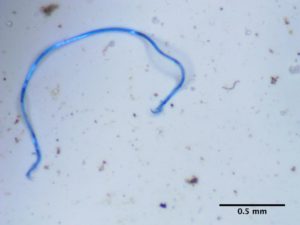
Did you know that you are eating teeny tiny bits of plastic in your food every day? And inhaling the pieces floating in the air? These tiny bits of plastic are called microplastics, and are from all the plastic breaking down (degrading) in the environment. They have entered the food chain (e.g. from fish and other animals ingesting bits of plastic, food preparation, or from plastic packaging), and in this way we are also ingesting microplastics. They vary in shape and size, but some pieces can be so small that they can only be seen with a microscope.
The problem is that microplastics can enter our body several ways (through ingestion get into the gut and so get into human tissues, or through inhalation into the lungs). They could trigger an immune response, or the plastic could release chemicals, such as carcinogens or endocrine disruptors. Unfortunately, the health effects from microsplastic ingestion are unknown.

A study by Canadian researchers looked at all available evidence from 26 studies to try to get some idea of how many microparticles of plastic Americans ingest over one year. The researchers estimate that annual consumption of microplastics ranges from 39,000 to 52,000 particles (depending on age and sex). When they added in inhalation of microplastic particles, the numbers increased to 74,000 to 121,000. And those who only drink bottled water may be getting an additional 90,000 microplastics (versus about 4000 microplastics from tap water).

These numbers are for about microplastics found only in certain foods (fish, shellfish, sugars, salts, honey, alcohol) that add up to about 15% of the diet. But the number of microplastics in other foods (such as fruits, vegetables, meats, grains) have not been studied. The researchers point out that we ingest microplastics that are in the air and settle on our food during meal preparation and during meals. So the actual numbers of microplastics that are ingested each year are certain to be much higher! [Microplastics are even in our house dust.]

What can one do to lower the number of microplastics that we eat? Number one, drink tap water or bottled water in glass bottles, and less water from plastic bottles. Since no one knows about how many plastic particles are in other foods, one possibility may be to eat more foods and beverages that come in glass containers, rather than plastic containers. As the researchers point out, microplastic research is still in its infancy. They also felt that since this study only looked at certain foods, then they really underestimated how many microplastics Americans ingest each year.

From Science Daily: Americans consumer 70,000 particles of microplastics per year    ...continue reading "Americans Ingest More Than 74,000 Microplastic Particles Each Year"

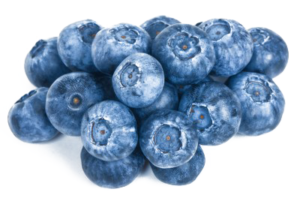
What's with the blueberry obsession in medical studies? Another study finding health benefits with frequent eating of blueberries was recently published in the American Journal of Clinical Nutrition. Researchers at the Univ. of Anglia in the United Kingdom found that eating one cup of blueberries daily for 6 months reduced risk factors for cardiovascular disease (e.g. improvements in endothelial function, systemic arterial stiffness, and HDL cholesterol concentrations). They predicted that this would result in 12 to 15% reductions in heart (cardiovascular) disease risk.

The nicely done study was conducted on 138 overweight or obese men aged 50 to 75 years, all with Metabolic syndrome (e.g. hypertension, low levels of HDL cholesterol, impaired fasting glucose) - thus a group at risk for heart disease. Interestingly, ingesting 1/2 cup of blueberries a day did not have health benefits  - only 1 cup of blueberries a day did. So it was dose dependent -the more, the better. However, the study did not find any improvements in blood pressure or insulin resistance (glucose control) at the end of 6 months.

Remember, one should not focus on individual foods (e.g. blueberries), but should strive for a good dietary pattern, such as the Mediterranean diet. That means a diet rich in fruits and vegetables, whole grains, seeds, nuts, and legumes. These foods have lots of fiber and feed the beneficial microbes in the gut. Eating one beneficial food such as blueberries won't overcome an entire unhealthy dietary pattern, such as the Western one (lots of highly processed foods, low in fiber, lots of fast food, sugary drinks, etc).

BOTTOM LINE: While this study focused on blueberries, research shows that eating all types of berries (blueberriesblackberries, raspberries, lingonberries, bilberries, strawberries, etc.) have health benefits. One should actually try eating a variety of berries, if possible, because they all have different nutrients, microbes (to feed beneficial bacteria in the gut), and different health benefits.

From Medical Xpress: Eating blueberries every day improves heart health   ...continue reading "Eating Blueberries Frequently and Heart Health"

There has been a lot of discussion recently about whether older adults form new neurons in the brain. Neurons are specialized cells transmitting nerve impulses in the brain - they are nerve cells. In other words, if elderly people form new neurons in the brain, then this is excellent news for brain function. This means we can look for ways to enhance neurogenesis (formation of new neurons) and slow or prevent cognitive decline, whether in diseases such as Alzheimer's or normal age-related cognitive declines. Because yes, it is normal to have age-related declines, but some people have more declines while others far, far less.
Researchers at the University of Illinois at Chicago studied the hippocampus of 18 elderly brains (mean age 90.6 years!) after death (post-mortem). They found both new neural stem cells (neural progenitor cells) and developing neurons in each person's brain, but the numbers varied a lot between the brains. For example, brains with evidence of Alzheimer's disease and cognitive impairments had significantly fewer developing neurons than those without cognitive declines.

These results go hand in hand with studies showing a number of known age related brain changes, such as the volume of the brain shrinking a little as we age (this is considered normal). Studies find that there are ways to slow down this shrinkage such as good nutrition (including nuts, fruits and vegetables, coffee or tea containing caffeine, eating seafood), physical activity, exercise, having mentally stimulating activities. Also, avoiding medicines with anticholinergics, and avoiding air pollution and an unhealthy Western style diet (highly processed foods, low fiber, lots of meat).

From Medical Xpress: New neurons form in the brain into the tenth decade of life, even in people with Alzheimer's  ...continue reading "New Neurons Form In the Brains Of Older Adults"

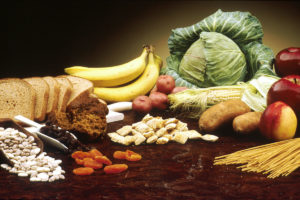
Eat real foods, not supplements. Study after study has found beneficial health effects from eating real foods, but not from taking supplements. Now another large study found similar effects - eating real foods was linked to a lower risk of death for any reason (all cause mortality) and death from heart disease (cardiovascular), which was not found with supplements. The only dietary supplement that was associated with a lower risk of death and cancer was lycopene.

In fact, the Tufts University researchers also found that excess intake of calcium from supplements (exceeding 1,000 mg/day) was associated with a 62% increased risk for dying from cancer, but this was not found with foods. And even in persons with a low intake of nutrients from foods, the use of dietary supplements had no effect on the risk of death.The study conclusions were that: "Use of dietary supplements is not associated with mortality benefits among U.S. adults."

From Medical Xpress: Nutrients from food, not supplements, linked to lower risks of death, cancer

...continue reading "Getting Nutrients From Food (But Not Supplements) Linked to Lower Risk of Death"